THE NEW ZEALAND MAORIS

5%

Review and Herald Publishing Company · Battle Creek, Mich. · Jul 20, 1899

FromThe Youth’s Instructor, Vol. 47, No. 29.

Read the full edition

THE NEW ZEALAND MAORIS.

The Maoris are said to be the most interesting and intelligent of any of the native peoples inhabiting the South Sea Islands. The Mormons of Utah have found in these natives a fruitful field for their missionary operations.
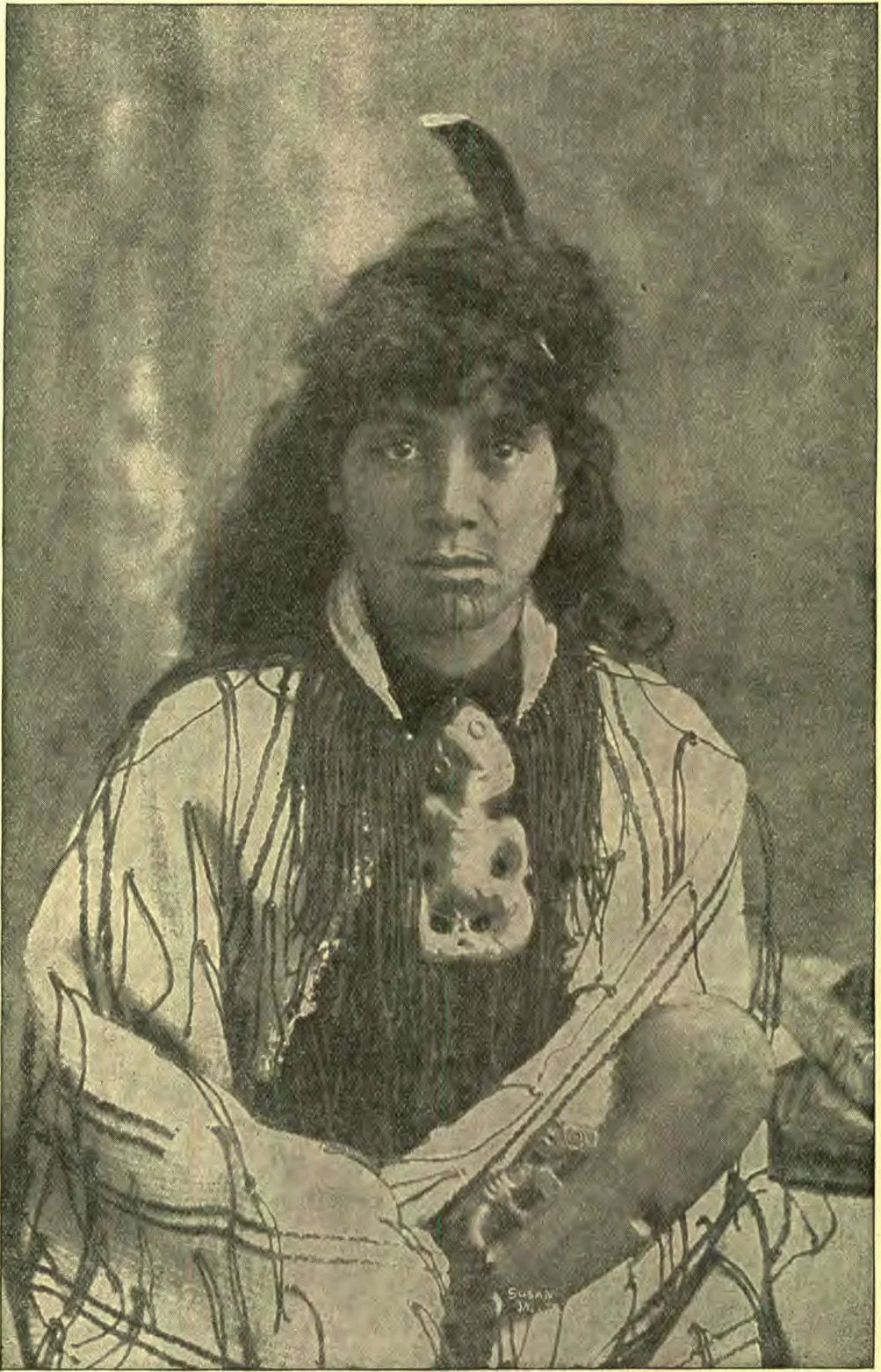
A MAORI BELLE.
A MAORI BELLE.
In April, 1899, their annual conference was held at Tologa Bay, and this gathering gave those present an opportunity to study native manners and customs.
The place where the meeting was held is situated on a small bay on the east coast. Here Captain Cook, on one of his voyages, found shelter and spent considerable time. An old well is still shown, which he dug, and from which he drank. Before leaving the locality, he gave the Maoris some gunpowder; and they, ignorant of its nature, thought it must be some kind of valuable seed. They labored industriously to clear some land, and carefully prepared a large field, in which they sowed the supposed seed. Contrary to their expectations, and greatly to their disappointment, it did not grow.
The only way to reach Tologa is by a small coast-steamer or by coach. There may be twenty houses in the community, and nearly every family is Maori or half-caste. The conference was held in a grassy paddock on the bank of a river. A large building about one hundred and fifty feet long and forty feet wide was used as an assembly hall. It was built of poles, and thatched on roof and sides with coarse grass. There were several openings, which served as doors on one side, and as windows on the ends. More than half the building was used as a dining-room. Three long tables were provided, at which about two hundred could be seated at one time.
There was no floor; but in the meeting-room the ground was covered with the branches of a small, bushy shrub, and over these were spread native mats made of grass. Another large building near by was used as a lodging-house.
This was better than the one just described, the front part being made of wood, the roof and sides thatched, and the inside woven in fine, tasteful patterns, which gave it a beautiful appearance. No doubt the carving outside appears very artistic to a Maori; but though it is executed at the cost of much time and labor, most observers would find little to admire in it.
The floor of this second building was also covered with branches and mats; and along the sides, blankets and clothing were folded away. Everything looked neat enough, but one sniff of the air inside proclaimed in no uncertain way that the Maori has no use for ventilation. In this large building, where as many as two hundred slept each night, ranged in a long row on each side, there were only two small windows, and one door, all at the front end of the building. One can hardly imagine how a person could live, much less sleep, in such an atmosphere. A few lived in small tents; but by far the larger number occupied this building. One of the superstitions of this people is that if a draft circulates through a dwelling, it admits evil spirits; hence, so far as possible, they rigidly exclude the air.
The Maoris came from many parts of the colony to attend this conference, some traveling hundreds of miles, most of them on horseback. Judging from appearances, their motive was certainly not a religious one, but to enjoy the pleasure of visiting and feasting.
There were but few Maoris of the Mormon faith in Tologa, where the conference was held; yet the provision for entertaining all who came to the hui (meeting) was provided by the persons living there; they not only furnished the food, but cooked and served it, without money and without price, to all who came. It was as if a Methodist camp-meeting should be appointed in some locality, and the resident Baptists and Presbyterians should provide free entertainment for the whole encampment. From this it will be seen that hospitality is one of the Maori virtues; they would rather go without food themselves for a long time, than that there should be any stint in the provision for one of these occasions of feasting.
Nor is the provision and preparation of this food a light task; for the Maori appetite is by no means delicate. For this conference, which lasted four days, they used thirty-nine hogs, fifty fat sheep, three oxen, thirty geese, three tons of Irish potatoes and two tons of sweet potatoes, two tons of flour, one ton of sugar, besides large quantities of shell-fish, butter, jam, tea, coffee, and cocoa.
The manner of cooking was interesting to the uninitiated. It was all done outdoors and without a stove of any kind. Shallow circular holes, about two feet across the top and ten inches deep, were dug in the sandy soil. Fine, dry wood was placed in order over each, and small stones were arranged on the wood. The wood was lighted, and allowed to burn till it was consumed, thus heating the stones, and causing the heap to sink into the cavity. The stones were then rinsed with water; and meat, potatoes, and other vegetables were placed on them, a clean cloth was folded over them, and heavy sacking placed over all. Where a whole sheep or pig was cooked, earth was thrown over the sacks. It is surprising to see in how short a time food can be cooked in this way.
Bread and cakes were baked in large iron kettles with heavy lids, called “camp-ovens.” Hot coals and ashes were placed beneath and above them, and the baking was as nicely done as if the best oven or range had been used.
Meals were announced by the vigorous ringing of a small bell; and at its call any service, however important, was immediately postponed, and due attention given to the food provided. The different tribes and families were called by name to take their places at table. There was no rush, no crowding to be first, or to get the best place; in this respect the conduct of these people might be imitated with profit by those who profess to be more civilized.
The Maori men dress much like Europeans, and some of the younger ones appear quite dandified. Most of the women have forms fashioned after nature’s model, and they are usually attired in a simple sacque and full skirt. They delight in bright colors and pronounced patterns. One was seen at this meeting clad in an orange-colored plush gown, trimmed with bright plaid velvet; others appeared in costumes equally showy if not so expensive.
The Maori women have beautiful hair, as can be seen by the accompanying illustration. It is often worn in two braids, or plaits. Some have the lips and chin tattooed a kind of blue color, as they fancy this makes them beautiful, and they do not like the natural red color. Tattooing, by which the dye is pricked into the skin with fine needles, is a very painful operation, the face often becoming swollen and distorted; but they gladly endure the pain, in order that they may become “beautiful.” Years ago the men had their faces and bodies tattooed in various fantastic patterns, as shown in the illustration; but this custom has almost entirely disappeared.
MRS. V. J. FARNSWORTH.
(Conclusion in next number.)