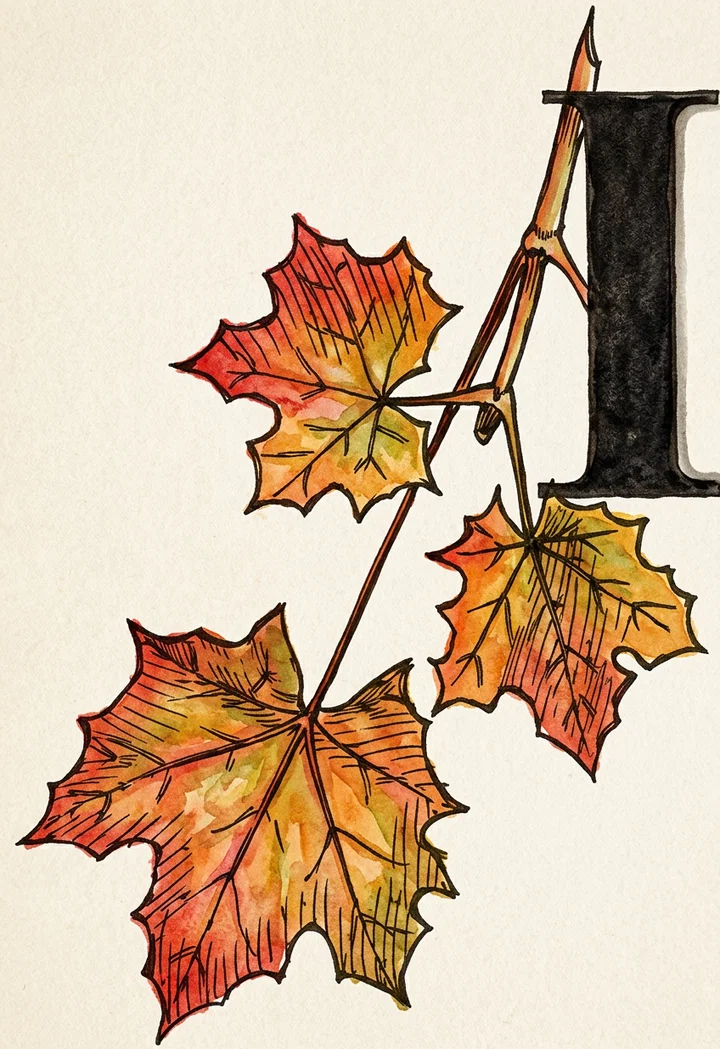
In cold climates at the approach of autumn the leaves fall, and from this fact we call autumn the “fall” of the year. In warmer countries the leaves of the trees do not all fall thus at once. Some trees, because they ever have some leaves, are called “evergreen;” but even these trees lose in time their old leaves, but not until they have gotten other new ones. As the new ones grow, the lower, older ones wither up and decay; this phenomenon of the fall of the leaves is quite gradual, and takes place all through the year.
But in our own climate it is quite different. Trees and shrubs and many smaller plants shed the whole of their foliage in a few days at certain yearly, recurring periods, and then remain for a considerable time with bare branches, apparently quite lifeless.
“Before the leaves fall, many of them, you know, become very beautifully colored. The variety of colors that you see in different trees is very pleasing to the eye. The maple leaf is colored bright red, the oak a deep red, the walnut yellow, and other trees have their leaves variously colored.
“Some leaves change their color earlier than others, and some at first are only partly changed. So you see the green mingled beautifully with the bright red, yellow, and other colors. I have often admired a single tree standing by itself when it is partly changed. The maple is particularly beautiful. The top generally changes first. You often see the top bright red, and then the red is mixed with the green here and there in other parts of the tree. A little way off it looks as if the top were a cluster of red flowers. And the other parts of the tree look as if the flowers were coming out among the green leaves.
“When the sun shines bright, the different colors of the leaves make the woods look at a little distance as if they were all covered with blossoms. It is a very splendid sight that you see when you look off from a high hill, over the woods on the hills and valleys. It looks as if monstrous bouquets of flowers had been stuck down thick together in the ground.
“Such a sight is especially splendid when the sun is nearly down. Then the light and shade vary the scene. Here, you see the top of a tall tree standing bright in the sun, while the other trees around are in the shade; there, you see a whole cluster of tall trees lighted up on one side. Here, is a shaded spot; and there, close by, is a very bright spot, the sun shining upon it through some break in a hill. The colors in the lighted spots look the brighter for the shaded spots near by.
“So, too, it is very beautiful when, with the sun overhead, broken clouds are passing quickly in the sky. The swift shadows of the clouds give constant changes to the scene. One shadow seems to be chasing another over a bed of flowers.
“When the leaves put on these bright colors, it is the beginning of their death. It is something like the ripening of fruit, which has hung so long on the tree green. In a few days they ripen, grow rich in color, and then fall and decay, and become a part of the earth. Some one has said that flowers are God’s smiles. So we may say that God smiles upon us in the dying leaf, when he makes it so much like a flower.”—Hooker, pages 96–98.
We do not know how these colors are made, but they please us. God, had he so chosen, could have made the leaves black, or gray, or some other dull, unpleasing hue. But he has given the falling leaves the colors of the sky when the day is passing. All this beauty is to please us, and make us glad and happy. I know that when I do anything to please another, and make him glad and happy, I do it because of my kind feelings for him; and when God does thus to please us and make us happy, I am assured that he has so done because of his great kindness toward us. Truly in the beauty of the world he smiles upon his children, and all this gorgeous glory is but a token of his uncounted love. L. A. REED.