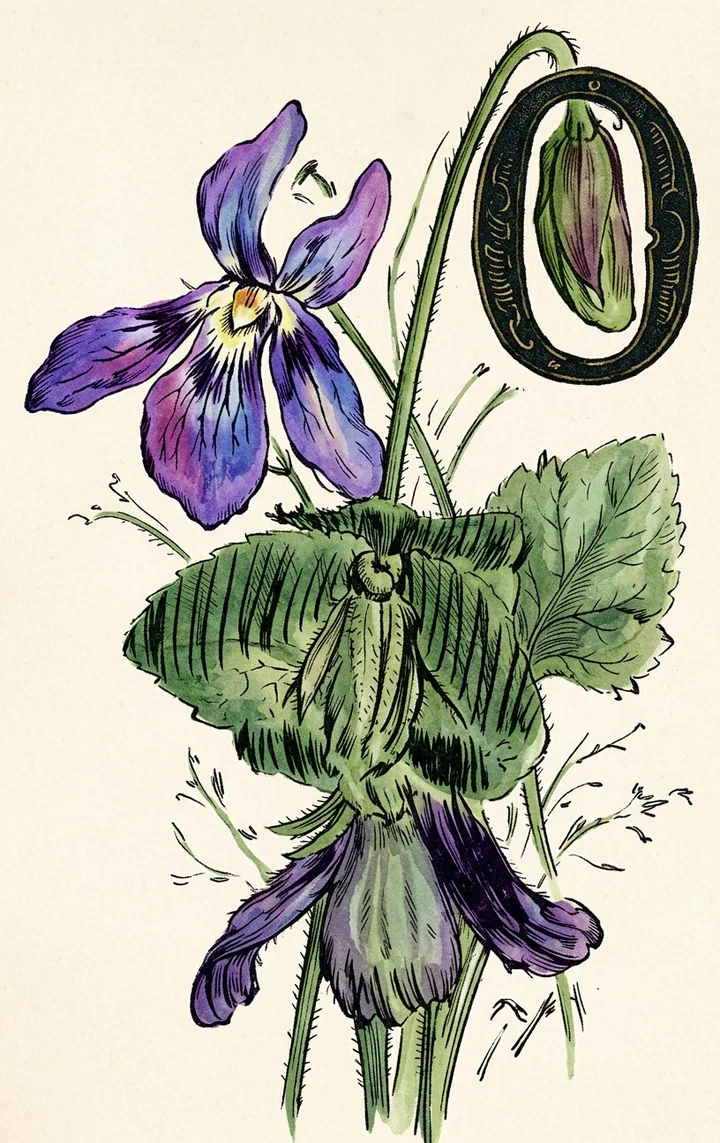
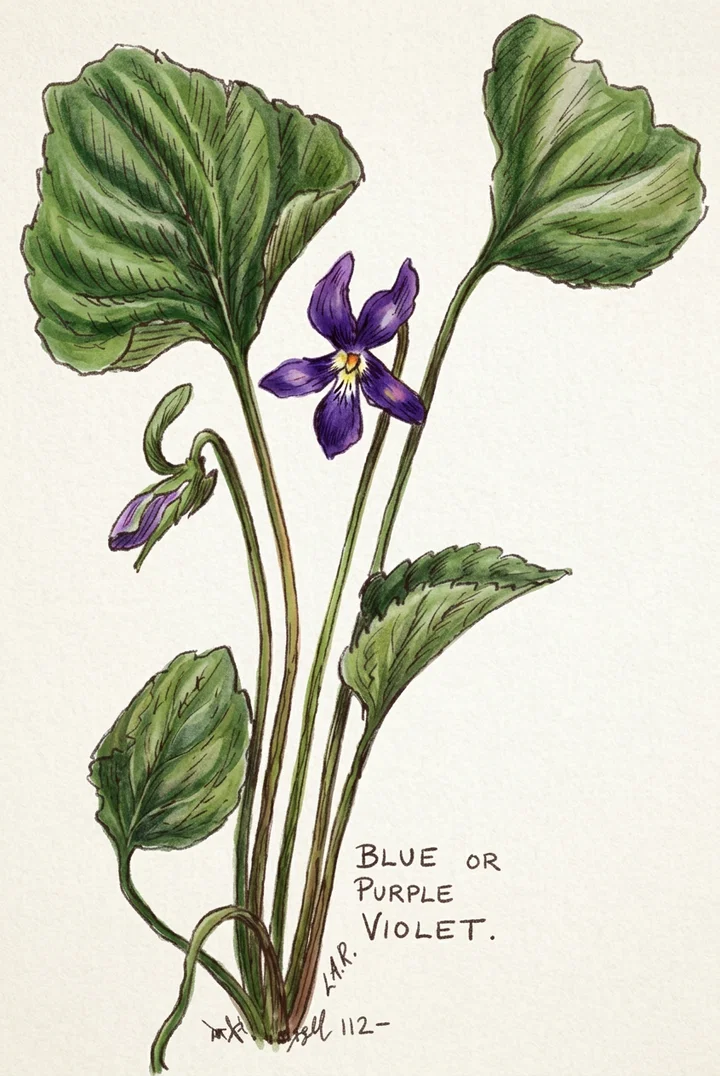
Of all our spring flowers, none are more dearly loved than the violets. Beautiful but humble, fragrant but unassuming, they are at once types of humility and of constancy. I give drawings of three of our most common representatives of this family.
The Downy Yellow Violet I have not pictured. Its flowers grow from the axils of the leaves; while in the blue violet the flowers grow from the roots.
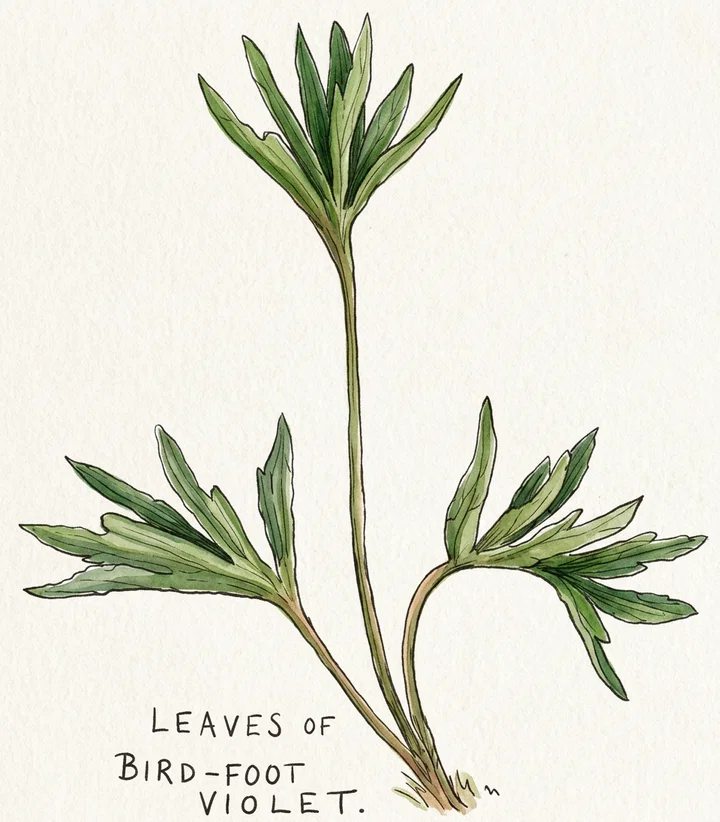
The Bird's-foot Violet has a very peculiar leaf, easily distinguishing it from all the others. The branching, slender leafage has somewhat the appearance of a bird's foot; hence its name.
The Sweet White Violet has small flowers, and a faint, sweet odor. It is very common in many of our woods.
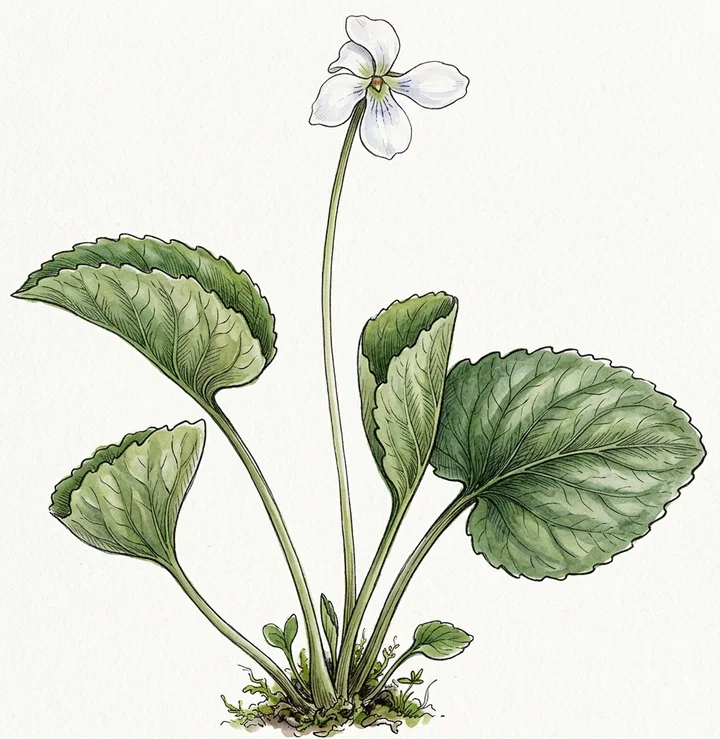
The Lance-leaved Violet has white flowers, larger than those of the Sweet White Violet. Its lance-shaped leaves taper into long petioles.
There is another, but still larger, white violet called the Canada Violet. It is the largest of the violets, often reaching a height of two feet. It blooms all summer. The two upper petals of this violet are purple underneath.
The Round-leaved Violet is a pale-yellow variety. The lateral petals are veined with brown; and the leaves are roundish, crenate, lying flat on the ground, and becoming very large and shiny as the season progresses. It is not leafy stemmed.
I am told that on the Atlantic Coast there is a violet somewhat resembling the Bird's-foot Violet, called the Atlantic Violet. It is readily distinguished by its leaves. “They are ovate and reniform in outline, and deeply parted into linear or oblanceolate lobes; the middle one being somewhat wider than the others.”
It is not generally known that the violet was once highly prized as a medicine. It was supposed to be an aid in treating diseases of the lungs. L. A. REED.