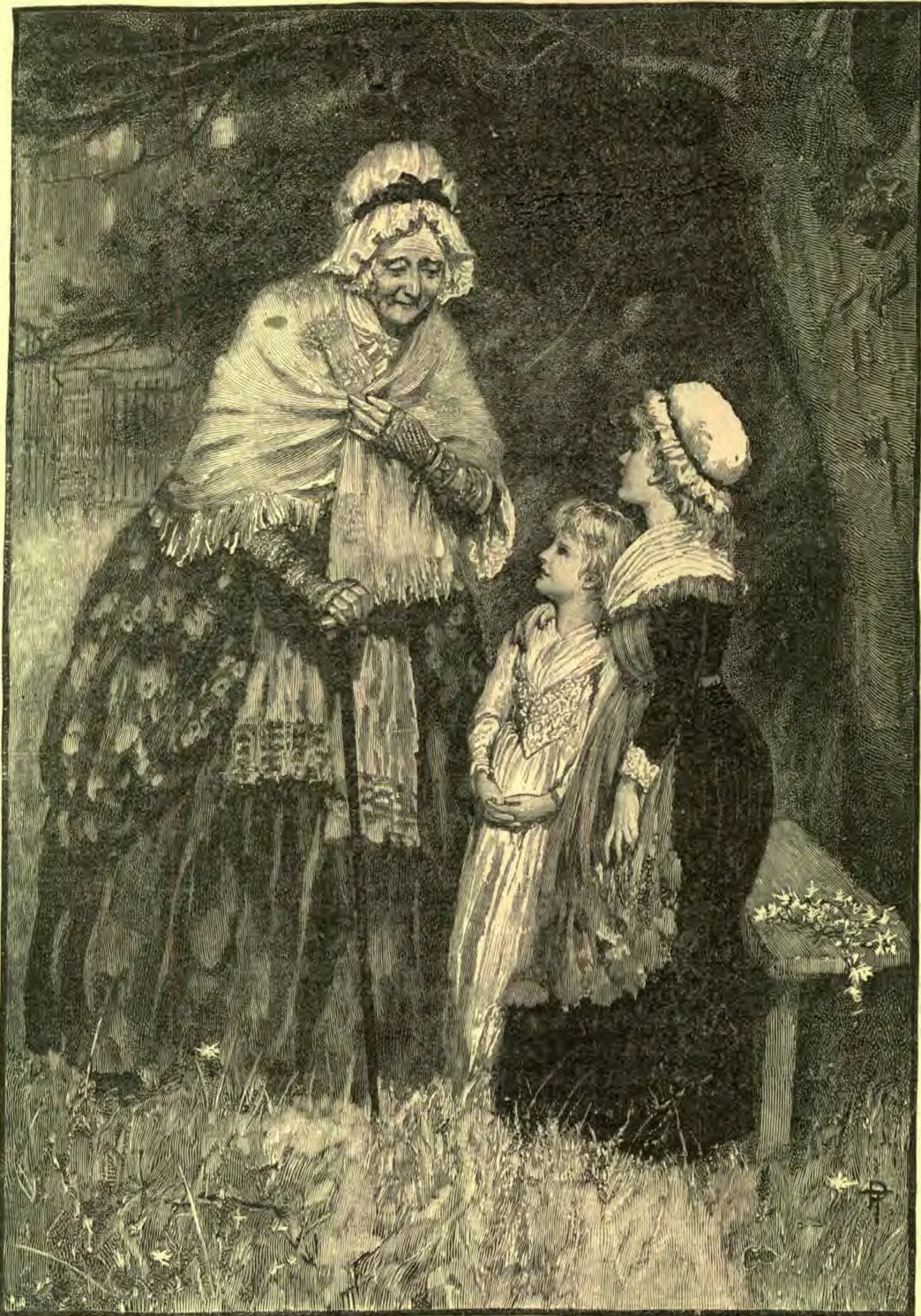
“What queer names the little girls of olden times used to have!” said Angelia. “Just listen, Aunt Dora,—‘Thankful,’ ‘Mercy,’ ‘Faith,’ ‘Hope,’ ‘Charity’! Wouldn’t you like to know why the parents gave such names to their dear little baby girls?”
“WE’LL BE HER GENTLE MINISTERS.”
“I hope their names fitted them better than some girls’ names I know now,” slyly whispered Tom.
But Aunt Dora shook her finger at him, and said: “My grandmother’s name was Thankful. I wonder if you can guess why her parents gave her that name?”
“Because they were so thankful she was a girl!” quickly cried Angelia, casting a triumphant look at her brother.
But that young American, not at all abashed, said: “Humph! don’t you know that she was born in 1782, and that her parents were so thankful the Revolutionary War was over, and we had won, that they called her Thankful?”
“I know,” continued Aunt Dora, “why one little girl was named Deliverance; for she was my great-great-aunt, and lived a long time before Thankful’s day. Would you like to hear about her?”
“Yes, yes!” cried the children; and, as they drew their chairs up to Aunt Dora’s, she began: “In the early part of the last century, a great number of people came from Pennsylvania to North Carolina, seeking a home where they could worship God as they pleased. Among them was a young man, who, on account of his religion, had been banished from his old home in Scotland. He fled to Ireland, but stayed there only a short time; for, hearing of this beautiful country across the seas, he determined to bring his young wife hither. “In those days there were no fine ocean steamers, and it took long, dreary months to cross the ocean in clumsy little sailing-packets. After a rough voyage, the young exile and his wife reached America. They first thought of making their home in Pennsylvania, where many of their friends and relatives had settled; but it was winter when they reached there, and everything was so cold and bleak and bare that they resolved, early the next spring, to seek a warmer and more genial climate. Long before the winter snows had disappeared, a little band of settlers started on their southward journey. For weeks and weeks they plodded on their weary way. Every path had to be cut, often through dense forests, rivers had to be forded, wild animals killed, and fierce Indians constantly warded off.
“At last they reached North Carolina, and resolved to settle there. So the men all went to work felling trees and clearing the ground. Each man lent a willing hand to his neighbor; and by summer all the rude little cabins were built, and things were beginning to look quite homelike and comfortable.
“One bright summer morning Zedekiah went, as usual, to the fields to work, leaving Mistress Mary in the house all alone. But she was not afraid; for many a time had she been all day beyond the sound of a human voice, so she went cheerily about her household duties.
“But for some time two hideous-looking Indians had been prowling around the place. They looked this way, and they looked that way. No one was in sight. They crept up to the little window, and peeped in. Mistress Mary was sweeping the hearth. They crept noiselessly into the room, and before she could cry out for help, they seized her, tied up her mouth and eyes, and led her away.
“Over rough roads, through briars and bushes, in and out of creeks, they carried her. At last they halted; and when her eyes were6unbound, she saw that she was in a dirty Indian wigwam.
“For many weary weeks she was kept there. At first she was treated unkindly, but after a while her gentle ways and sweet smiles won the hearts of the children. She would gather them about her, and in her broken Indian language tell them sweet stories of Jesus. The women, too, would come and listen when the men were off fishing and hunting. At last the rude women felt sorry for the beautiful white squaw who had been stolen from her husband. They wished to help her escape, but what could they do? The men would kill them if they let the pale-face go back to her people.
“But God put it into the heart of a poor half-witted Indian lad to restore her to her husband. In the dead of night he carried her safely to her home. Then swiftly he sped back to his own wretched wigwam.
“The next morning the escape of Mistress Mary was found out, but of course no one thought of blaming Half-Wit. So, after a time, the matter was dropped. But Mistress Mary and her husband did not forget their terrible experience with the Indians; and when their baby girl was born, they said, ‘We will call her Deliverance, for the Lord delivered us in time of trouble.’”—Sunday-School Times.