Nearly every country has one or more national songs, which represent the spirit of the nation. England has “Britannia Rules the Wave;” and wherever British soldiers are stationed, there may be heard the song “Annie Laurie,” the singing of which by the English soldiers in the trenches before Sebastopol, on the night preceding the assault on the Russian works, has been so graphically described by the American poet Bayard Taylor in the poem entitled the “Song of the Camp.” Germany has the “Watch on the Rhine,” which reflects the spirit of her people against the aggression of France. France has the “Marseillaise,” written in the heat of the early days of the French Revolution by a young French officer, and carrying in its impassioned call to arms (aux armes) the spirit of France, when she sent out her fourteen armies, and toppled to the ground the thrones of so many European tyrants.
The United States of America, too, has her national hymns. The “Star Spangled Banner” was written by Francis Scott Key while on a British ship of war, when, after having listened during the night to the bombardment of Fort Mc Henry, he saw in the morning the flag of his country still floating over its battered walls. There is another American national hymn, and just now public attention is attracted to its venerable author.
In 1832 a young student at the college in Andover, Mass., was poring over a book of German patriotic songs, which had been sent him to translate by the well-known music publisher, Lowell Mason, of Boston. As he read them over, sang the music, and saw how perfectly the words and music blended together, the impulse came to him to write an American patriotic song. Half an hour later the national hymn, “America,” was upon paper, and soon after it was sent, with the translations, to Mr. Mason. The next the author heard of it, the school children of Boston were singing it at a Fourth of July celebration. Since then it has become as widely known as any poem in the English language, and is generally considered to be the American national hymn. A copy of this song in the author’s handwriting was exhibited at the World’s Fair in Chicago, and since then the managers of various institutions of learning in Europe have asked for copies, which he has granted them, one going to the Vatican library.
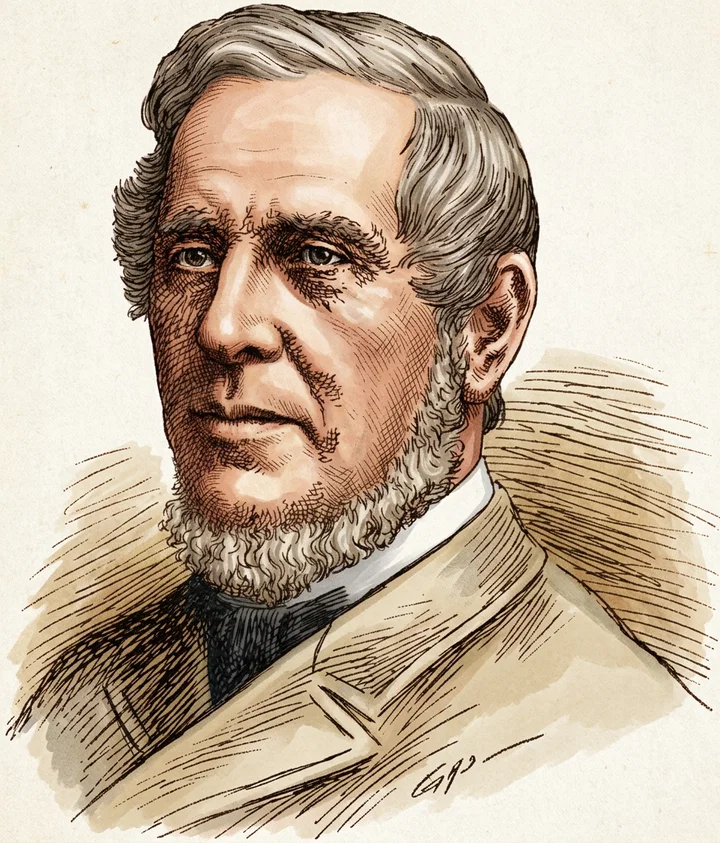
The author, Rev. S. F. Smith, now in his eighty-sixth year, is one of the best living representatives of the New England people of former days. Born in 1808, he is a living, connecting link between the past and the present. He was a classmate of other men of world-wide fame, among whom were James Freeman Clark, William Ellery Channing, and the genial poet, wit, and philosopher, Dr. Oliver Wendell Holmes. The latter was the class poet when they were in college, and in a poem descriptive of the different members of the class, he introduced Dr. Smith, then a young man like himself, in the following manner:—
“And there’s a nice youngster of excellent pith; Fate tried to conceal him by naming him Smith! But he chanted a song for the brave and the free— Just read on his medal, ‘My country,’ of thee!”
However, Fate failed to conceal him; for if he had never written anything but the hymn “America,” he would be remembered as long as the United States flag shall float over a free and enlightened nation. But Dr. Smith has written much besides the song “America,” and has all his lifetime been engaged in literary work. He was ordained to the Christian ministry of the Baptist Church in 1834, and has been the editor of several Baptist publications. His writings include some fine missionary hymns.
He was the son of a widow, and supported himself through college by translating and other work, and at the time of his graduation, had not only entirely paid his own way, but had a small sum of money saved. So it may be seen that Dr. Holmes’s estimate of his character, when he said he was of “excellent pith,” was not overdrawn. He reads fifteen languages, converses in several of the principal modern languages with ease and fluency, and now, at the advanced age of eighty-six, he is studying Russian, one of the most difficult to acquire of modern languages.
April 3 a large assemblage of people from many parts of the United States gathered at Boston, Mass., to do honor to the author of “America.” Dr. Smith lives in an unpretentious house at Newton, Mass., which he has occupied for fifty years. He came to Boston at the solicitation of his friends, as the exercises in his honor could better be carried out in that city. There was an address by ex-Governor Long, letters were read from distinguished men who were unable to be present, and the aged poet and his wife were made to feel that their friends were not numbered simply by their acquaintances.
It gives sadness to know that the high ideal breathed in this song is not cherished by all the people of the United States, and that because of this, some sections of our beloved country are far from being at the present time a “sweet land of liberty.”