BEAUTIES OF SOUTHERN CALIFORNIA

7%

Review and Herald Publishing Company · Battle Creek, Mich. · May 31, 1900

FromThe Youth’s Instructor, Vol. 48, No. 22.

Read the full edition
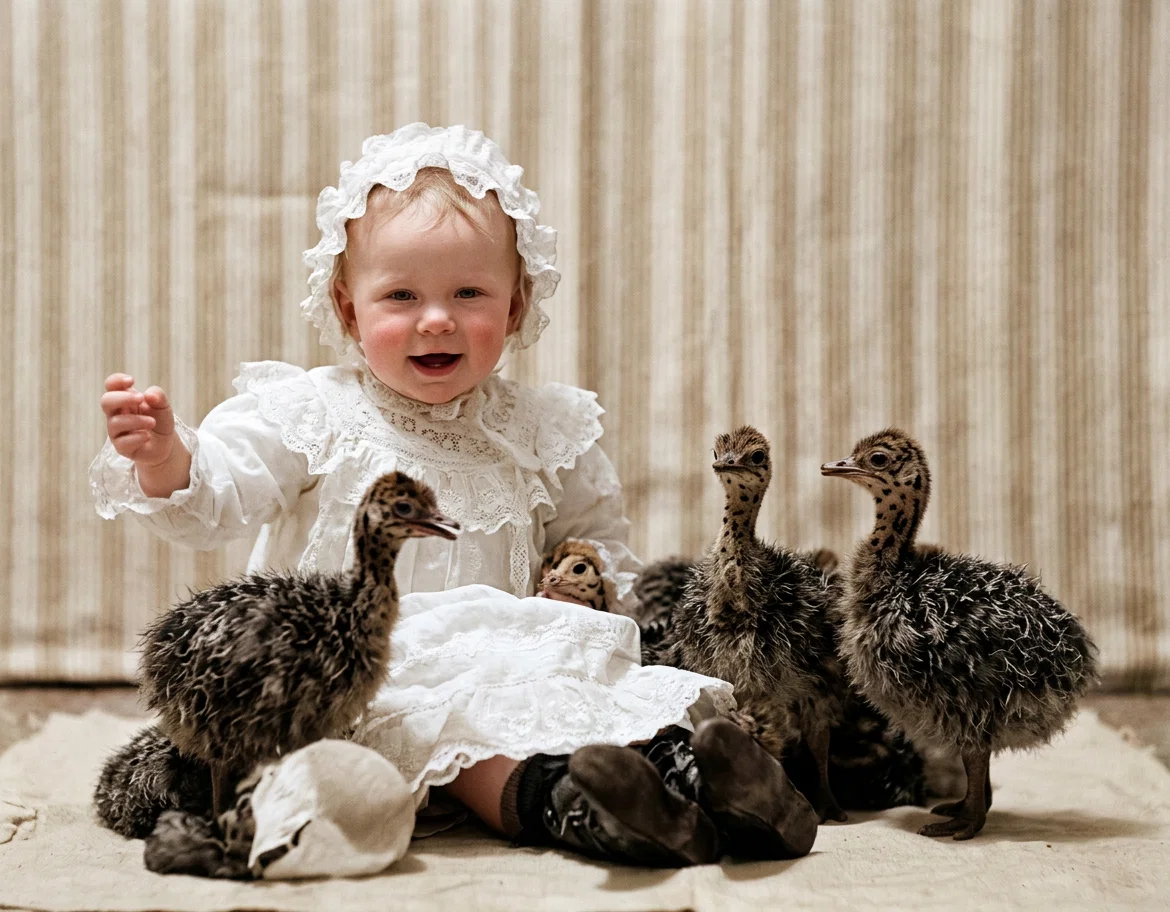
PRIZE BABIESRestored with AI
PRIZE BABIES

BEAUTIES OF SOUTHERN CALIFORNIA

VII
Among the beauties of this country I am going to name one of the ugliest creatures that can be found in the wilds of Africa, or that wanders over the deserts of Arabia, and that is the ostrich. Yet the tourists who come here to see and enjoy the beauties of this region seldom miss visiting an ostrich farm; and could you see them apparently admiring these ungainly creatures, you would certainly conclude that to those who are looking for the beautiful, all things appear beautiful. However, I would not say that these huge birds are admired because of their physical charms,—for surely ostriches are as unlovely here as in their native homes,—but rather because they are a relic of an earlier epoch.
There are several ostrich farms in Southern California,—one at Los Angeles, one at Pasadena, and another at Coronada, and two at Norwalk. We will notice the one at Pasadena, where we shall see stalking proudly about, in their respective pens, Mr. and Mrs. Mc Kinley, Mr. and Mrs. Bryan, Mr. and Mrs. Dewey, and many others bearing names with which we are familiar.
When full-grown, the ostrich is nearly eight feet high. Its massive body is supported by two long, stout legs. The great, stiff neck, which is more than a third the full height of this ungainly bird, ends in an abrupt turn, and is finished off with dark eyes and a flat, clumsy beak. This is its apology for a head. When the beak opens, there seems to be nothing there but a great cavity leading to the canal that is always ready to take in almost anything, from a rock half the size of an orange to an old newspaper, with the same relish.
The ostrich is not so polite as he might be. For instance, if Mr. Mc Kinley should luckily receive his allotted portion of alfalfa, grain, chopped beets, and pieces of rock first, you would be likely to hear Mr. Dewey send forth from the adjoining yard a succession of hissing, sputtering notes that would be anything but euphonious; or he might roar out as vociferously as a wild beast. These birds do not chew their food, but swallow it just as it is given to them. It is amusing to see them eat oranges, and to watch a dozen of the juicy balls working their way down the bird’s long neck at one time. After the ostriches have swallowed their supply of food, they turn to the pile of broken rock, and with the same apparent zest gulp down great pieces of stone.
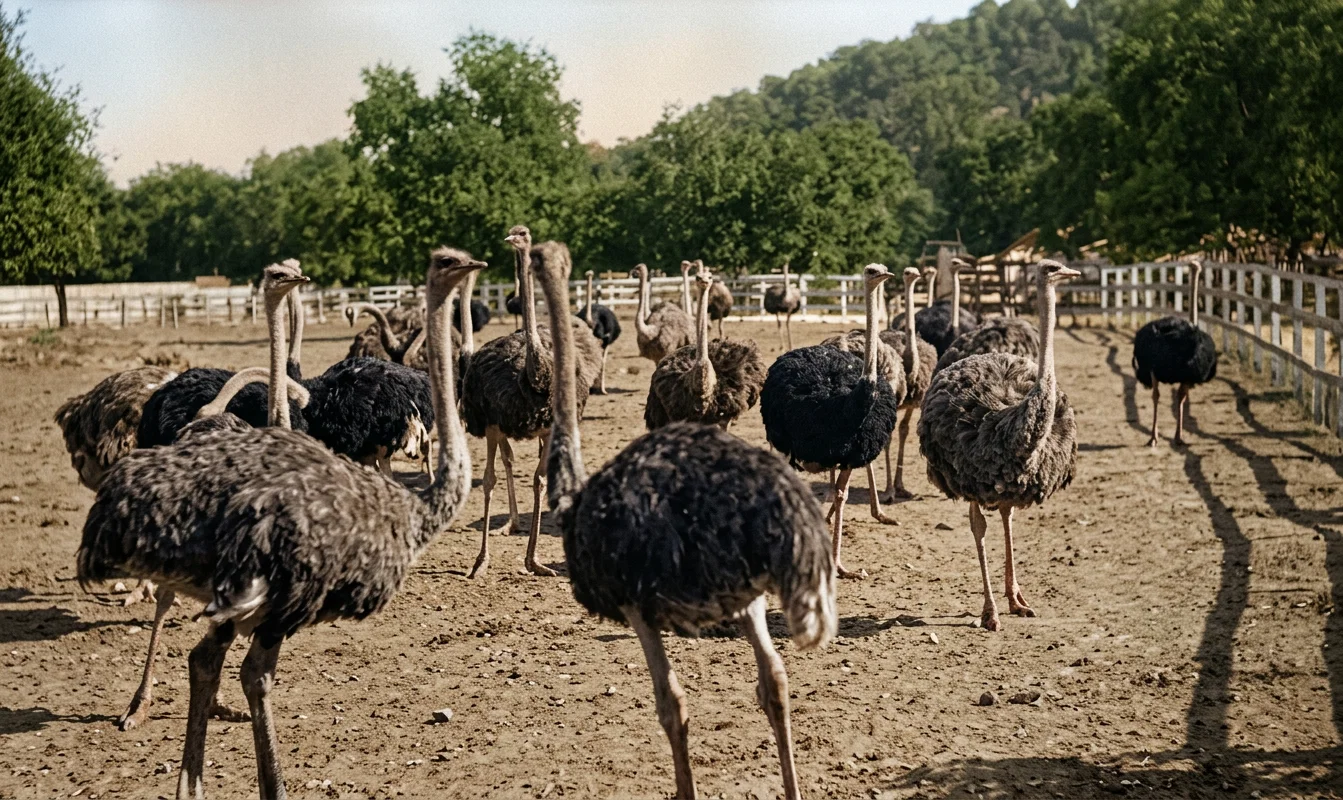
IN THE OSTRICH PARK AT PASADENARestored with AI
IN THE OSTRICH PARK AT PASADENA
A full-grown ostrich weighs between two and three hundred pounds, and the birds are valued at five hundred dollars a pair. There are about two hundred birds on the Pasadena farm, in an inclosure of five acres. At this season may be seen in the breeding department barrels of eggs, many incubators in operation, and dozens of young birds in almost every stage of development, from those just out of the shell to those varying in age from a few months to a year. When just out of the shell, one of these birds is almost as large as a common-sized chicken. It reaches its full height and weight when two years old.
The habits of ostriches differ somewhat from those of other members of the great bird family. Mrs. Ostrich will lay between fifty and sixty eggs during the season, which lasts from March to September. During this time she and her mate will sit whenever a sufficient number of eggs are left in the pen. When there are a dozen or more eggs, they are not put in a nest, but partly buried in the sand in the sunniest place that can be found; then while the sun’s rays beat upon them, the birds enjoy themselves promenading in apparent indifference about the yard. When the eggs are in the shade, the two birds take turns keeping them warm.
Ostrich eggs vary from six to eight inches in diameter, and weigh about four pounds each. An omelet made of one egg will make a meal for eleven persons.
The ostrich is noted for its strength, and the rapidity with which it gets over the ground. When teased, it will stamp and kick with as much force as a mule; and if frightened, it will easily outdistance a horse.
The only beauty about these birds is their lovely plumes, which they carry about with as much pride and far more grace than do the daughters of fashion, who rob them of their only charm.
MRS. KATHLEEN WAGNER-GILMORE.