WE will now study that class of animals known as “Mollusca.” These creatures usually have a soft body, protected by a shell. We have all heard of the oyster, the clam, and the fresh-water mussel, and probably most of us have seen them. They have two shell-covers, called “valves,” which are fastened together on the back of the animal by a hinge. When seeking for food, they open the shell, and gather in their food with a long foot-like arrangement. They also use this foot in pushing their bodies along. In time of danger they close their shell-doors with strong muscles attached to the inner surface. These muscles are so powerful that all the strength of a strong man is often required to open the shell.
Clams, oysters, and other similar animals are often called “headless animals.” They have no head, but consist of a mass of soft, jelly-like material, enclosed in a shell-box, which prevents the body from getting away. While the animals just described have two shell-covers, fastened together by a hinge, many have but a single shell, often spiral-shaped. Those that have two shells are called “bivalves,” and those having but one are called “univalves.”
The shells of the mollusca are composed of limestone. No doubt many of you have seen limestone along small streams or on the shore of some lake, that was filled with the fossilized shells of the common clam. The oyster is a salt-water creature, while clams and mussels live in fresh water.
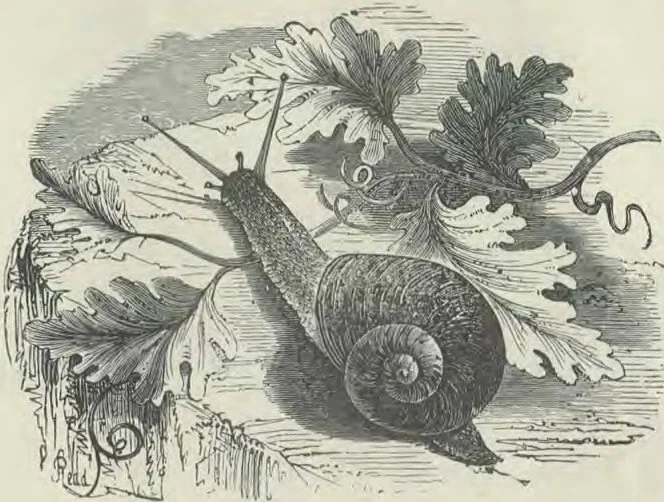
The snail is a mollusk also, but it has a head, with little horns, or feelers, on it. If you touch the feelers, the snail immediately draws itself back into its house. Snails live on land as well as in the water. Probably you have seen them crawling around on old logs and stumps, which were more or less damp. They have no feet, yet they are able to crawl slowly about. They are slow, but sure. We can learn from the snail a lesson in perseverance.
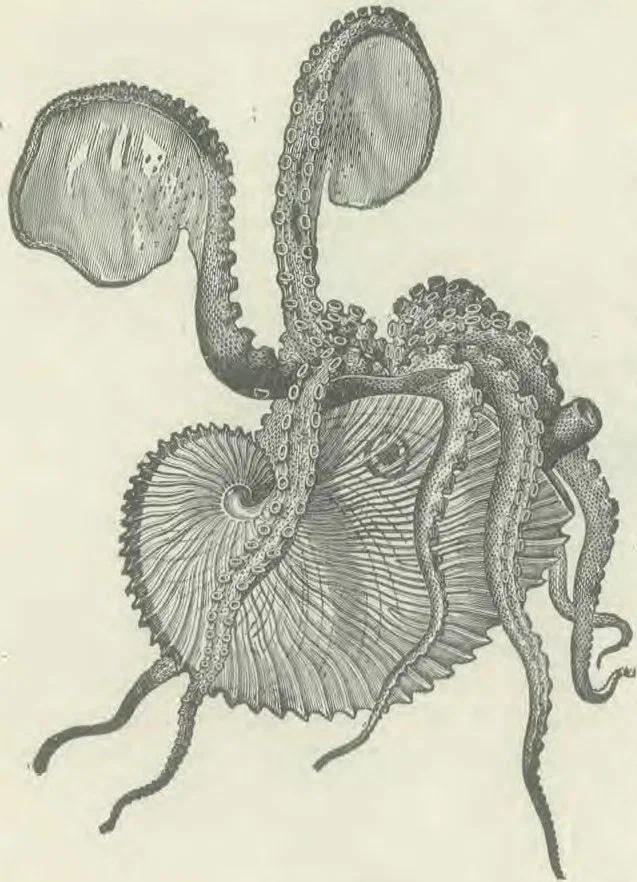
The nautilus, also a mollusk, has head and feet, which it projects from the shell when traveling or seeking food; but while resting, or in time of danger, the body is drawn into the shell-house. These soft-bodied animals are well protected by the shell which envelops their bodies.
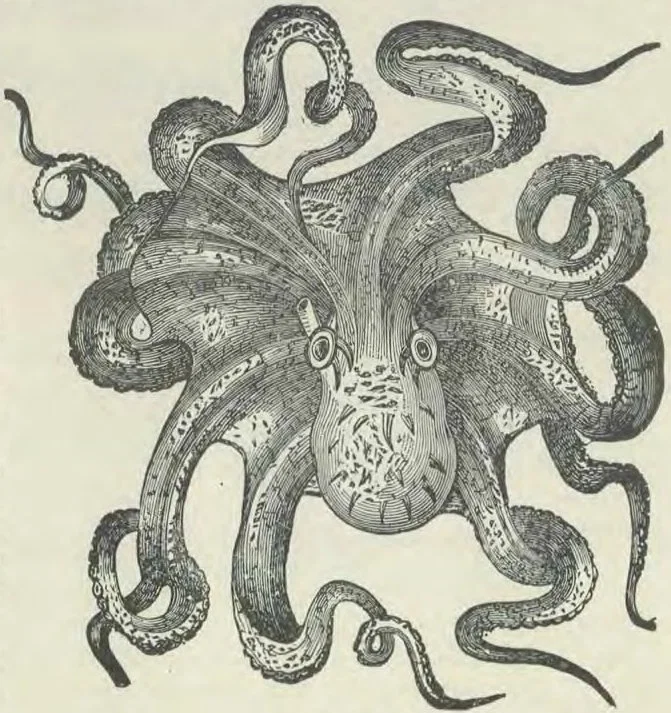
The octopus, as its name implies, is an eight-footed mollusk. Its near relatives are the cuttle-fish and squid. All these have soft bodies, and are provided with head and feet, but have no protecting shell. Their bodies being soft, they make a desirable meal for the shark or the whale; but the Creator has not left them without a means of self-defense. Just as a whale orp. 696 a shark is about to seize an octopus, expecting a delightful meal, behold! it is utter darkness all about him. What has happened? The octopus has discharged his ink from the ink-bag which he always carries with him. This has so blackened the water that his enemy is not able to see, and this gives the octopus an opportunity to escape. This ink, mixed with water, can be used in writing. M. E. CADY.