ANY one can “learn about” birds by sitting in his library and reading about them, or by going to illustrated lectures, and this is a desirable thing to do; but to get acquainted with them requires personal relations,—seeing and hearing and feeling them in their own haunts. If I can assist any one to this acquaintance by a general introduction, I shall be much pleased; but I warn him that he will not succeed unless he behaves courteously.
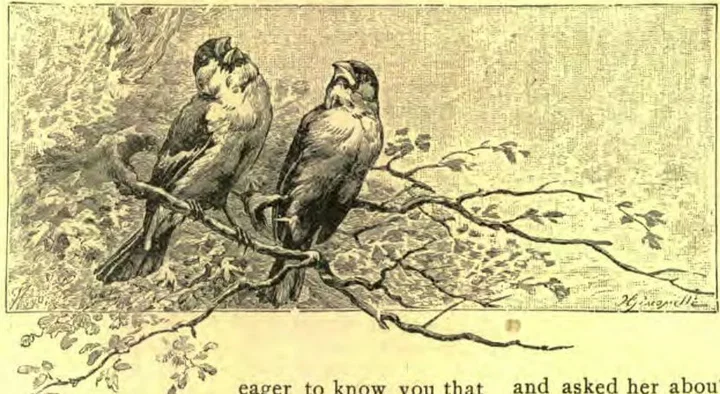
You would resent the rudeness of a person so eager to know you that he burst your door, and came into your parlor with a leap and a shout. So do the birds. You should go very quietly to their place of residence, and respect their timidity and desire for privacy. Remember that every bird looks upon you as an enemy until you have won its confidence; and you can never gain this unless you keep very quiet, avoiding noise and hasty movements.
Do this, and you will soon find that the birds’ little flutter of alarm has passed, and that they are almost as curious about you as you are in regard to them; a little later they will forget your presence, and go about their affairs.
Having secured their confidence to this extent, you can draw sufficiently near to see their size, shape, and markings, and so learn their names in the books. When I first began to study birds, I had no books, nor any friend who knew as much of the matter as I did. I had to fix peculiarities in my memory, and make my own names. Nowadays, a half-dozen small and convenient works, as well as larger, more costly ones, are at the command of every student who can spend a dollar and a half. Having a suitable book to help in naming the birds you find, you will need a good telescope or opera-glass to aid you in seeing the birds well.
MAY and JUNE are the best months for study. The resident species have then been reinforced by hosts of migrants from their winter home in the South, and all are in their newest and brightest dress, and in the most active and interesting period of their lives; for now they are busy with nest-building and egg-hatching, and soon will be full of happy domestic cares. This is their time for singing, and one of the first and most interesting things to do is to connect the song and the singer so thoroughly that you will make no mistake in recognizing the voices of the groves and meadows.
Birds are early risers. Find out which one is the first to begin his song, almost as soon as dawn appears, and in what order others awake. There is such an order. This is the best time for observing them, for several reasons. The air is cool; the light good; and the birds are hungry, and so busy in feeding that you not only have the best opportunity to learn what they eat, and how they find or capture it, but they are less timid than later in the day. Their songs, too, are never so joyous and frequently repeated as in the early morning hours.
Don’t try to do too much at once. Be content to keep one bird under observation until you get well acquainted with him. Find a comfortable seat in some retired garden, beneath an orchard-tree or beside a thicket; open your book and opera-glass; then keep quiet, and wait for whatever comes. You will not have long to wait, and you will get a nearer view, and see more of the bird and its behavior, than if you tried to follow it. If it goes away, never mind; it is likely to come back again, and the less you attract its attention, the more it will exhibit its natural manners to your eager eyes.—Well-Spring.