I
Some may think winter an inopportune time of year in which to begin the study of botany. It is true that plants have now ceased to grow in northern latitudes, and that flowers are scarce; but the majority of plants live through the winter, and there is therefore no month, no day, even, in the year when we may not pursue the study of plant life with profit.
Some of these days when you are outdoors, look about you to see if there are any seeds germinating. If you dig in the warm soil, and observe carefully, you will learn something that even some college-bred persons do not know; namely, that there is no day of the growing season in which some seeds, delayed for one reason or another, are not trying to sprout. The germination of seeds is closely associated with the spring; indeed, the season is so called because of the excessive growth springing from the earth at this time; and the seeds that then spring into life demonstrate the advantage of an early start, because those that germinate in the spring are the ones that become so conspicuous, later on, as almost to obscure those that are more tardy in making a beginning in life. Still, these later ones are only delayed; they do not cease trying, and at the first favorable opportunity they lift up their green heads, only to be nipped by frost, or to be crowded out by their more lusty companions.
September is the season of fruits. What is the purpose of fruits? I fear many readers of the INSTRUCTOR have thought that fruit fills its purpose when it becomes an article of food. There is such a purpose, but it is not the only purpose, and, indeed, it is not the final one. A certain teacher is supposed to ask his school this question about the use of fruits.
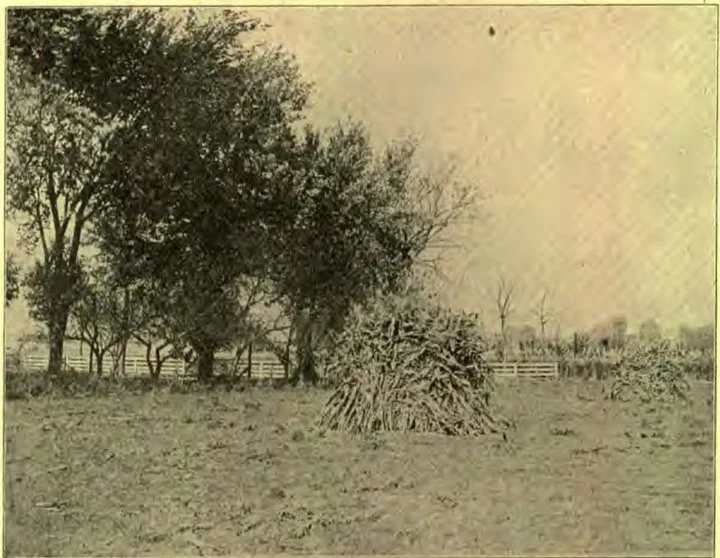
Teacher.—“Now, children,” addressing himself to the youngest, “I am going to ask you only one question to-day about this ear of corn. If you can answer it, I shall be very glad. If the little boys and girls on the front seat can not give the answer, I will let those in the next seat try; and so on till all have tried, unless our time should expire before the right answer is given. I shall not be surprised if none of you give the answer I am thinking of. As soon as I ask the question, those who are under seven years old, and think they can give an answer, may raise the hand. What is this ear of corn for?”
Several of the children raise their hands, and the teacher points to one after another in order, and they rise and give their answers.
Mary.—“It is to feed the geese with.”
John.—“Yes, and the hens and the pigs.”
Sarah.—“My father gives corn to the cows.”
By this time the hands of the youngest pupils are all down; for having been taken somewhat by surprise, their knowledge is exhausted. So the teacher says that those between seven and ten years of age may raise their hands. Several instantly appear. The teacher again indicates, by pointing, those who may give the answer.
Charles.—“My father gives corn to the horses when the oats are all gone.”
Daniel.—“We give it to the oxen and cows, and we fat the hogs on corn.”
Laura.—“It is good to eat. We shell it from the cobs, and send it to the mill, where it is ground into meal. Mother makes bread of the meal, and we eat it.”
Laura has looked a little further into domestic economy than those who answered before her; but the allotted time is nearly gone, though several hands are up, their owners’ faces beaming with eagerness to tell their thoughts. Let the teacher then say: “We will have no more answers to-day. You may think of this matter till to-morrow, and then I will let you try again. I am sorry to tell you that none of you have mentioned the use I was thinking of, though I confess I was expecting it every minute. I shall not be surprised if no one gives this answer to-morrow. I will now put the ear of corn in my desk, and no one must speak to me about it till to-morrow. You may now resume your studies.”
The children now breathe more freely, while the older ones take up their books, and the next class is called. In order to succeed, it is necessary that the teacher shall positively refuse to hold any conversation with the children on the subject till the time for the next “general exercise.”
During the remainder of the forenoon, the teacher will be likely to observe some signs of thoughtfulness on the part of those little children who have hitherto been habitually dull. And perhaps some child, eager to impart a new discovery, will seek an opportunity to make it known during the forenoon. “Wait till to-morrow,” should be the teacher’s reply. L. A. REED.