SHOULD you ever find your way into the studio of a sculptor, and have the privilege of looking about you there, some things will be revealed to you that you never dreamed of; and if you stay long enough, you will know the secret of how many great statues are begun.
Here and there about the studio you will notice large boxes of common clay. This substance is used in making the models from which the larger figures are wrought out later on. Clay was the first material used in this work; but wax, though more expensive, is now coming into common use among sculptors. The clay has to be kept well wet, so that it may be easily worked, and to keep it from drying and crumbling.
The sculptor, or modeler, first makes, of wood, wire, and iron, a rough frame, or armature, which shall correspond in some degree to the greater bones of the body, human or beast, whichever it is the intention to represent. The skeleton must be of great strength, and the wires connecting the different parts must be so affixed that the limbs can be moved into any desired position. Then the clay, or wax, is stuck and pounded on in large lumps, until the body of the figure is about the size that the modeler intends to work upon. Afterward comes the delicate task of modeling the curves and outlines, which must correspond as exactly as possible with photographs, as well as with the many peculiarities of expression, habit, pose, etc., of the person or object represented. This requires great care, and in the doing of it the genius of the sculptor is revealed. When the model is finished in every detail, it generally stands from one to two feet in height; and if accepted by the committees who have the direction of the work from beginning to close, it will thereafter be the basis of all the sculptor's work on that particular figure.
Now the work of the mechanic begins. The small model is made all over again, but on a gigantic scale throughout, making the measurements of height and girth conform to those required. The sculptor usually provides himself with an assistant who is handy with a blacksmith's anvil and carpenter's tools, and who is also an expert caster, and in some cases a modeler. Great joists now come into play, and there is built a heavy iron armature for the body and limbs of the figure—armature which must be of such strength as to bear many tons' weight in the building of heroic statues. The sculptor directs the whole of this rough, heavy labor, as well as the finer work that is to come later on. This calls for the finest judgment and foresight in the adjustment of the various parts that must balance so well the whole. Then comes the application of the clay,—clay, not wax, now, in any case. Day by day the labor goes on, the mass increasing in bulk as the work strengthens and develops. As the model takes shape, the care and anxiety of the sculptor continue, and inspiration burns within him as he pictures the possibilities of outline and beauty that will soon expand beneath his fingers.
Each handful of clay is applied with intelligent accuracy, and the whole mass is moistened at short intervals, to prevent its drying up and breaking; for clay is about as absorbent as sand. In spite of every precaution, accidents are likely to happen that necessitate doing the great work all over. Thomas Ball's equestrian statue of General Washington, which stands in Boston's Public Garden, and William Ordway Partridge's statue of General Grant, in Brooklyn, are two notable instances in point. The gigantic clay models of both these statues were nearly completed; and though in careful hands, at an unfortunate moment large portions of the mass fell away from their frames with a crash, thus undoing in an instant the toil of many months. If the sculptor or his workmen happen to be near the figure at such a time, serious accidents to human life are threatened. But if all goes well, the statue soon becomes almost human in expression, as well as herculean in proportion.
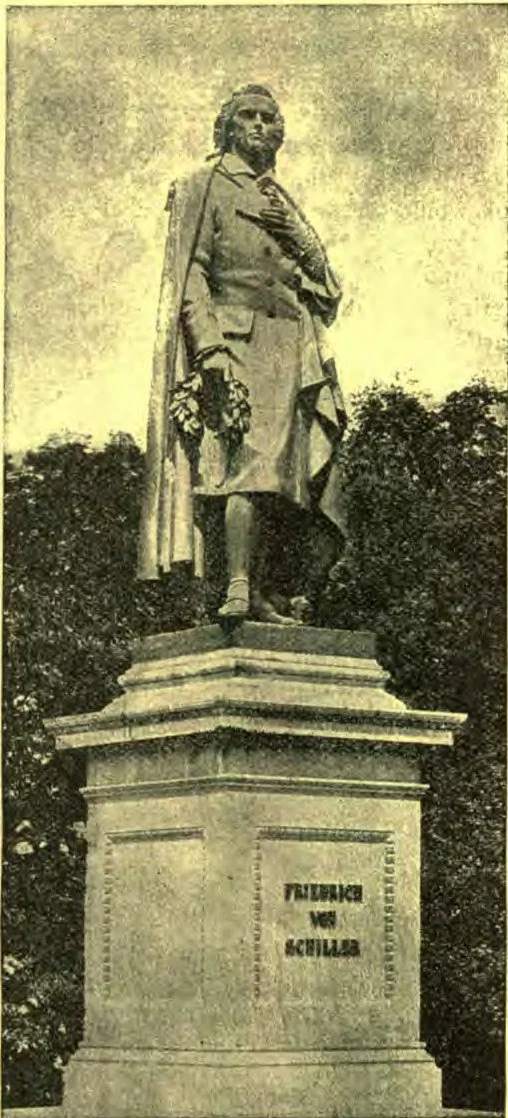
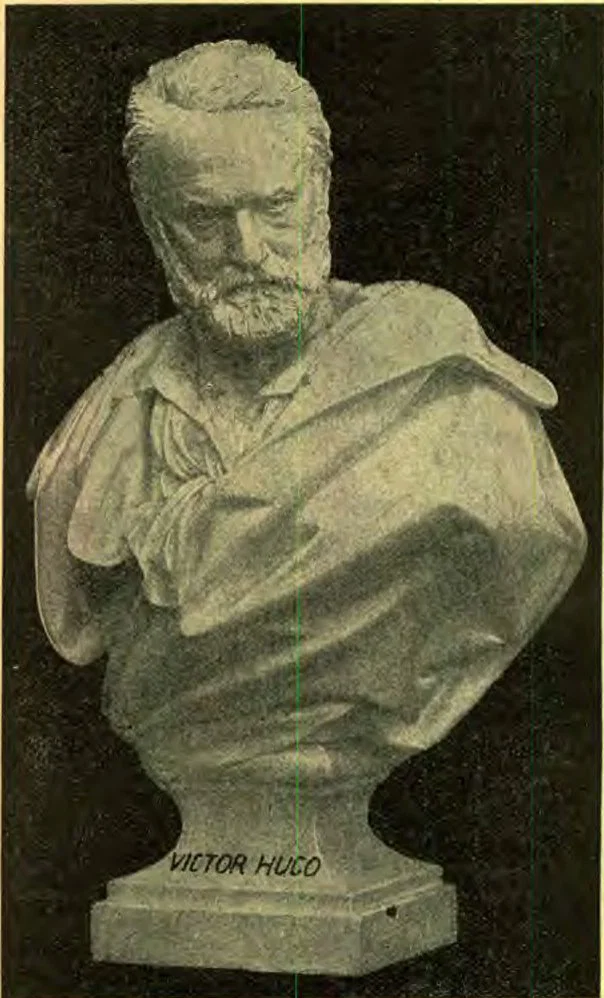
The work in clay finished, there follows the difficult task of casting, or taking an impression, or mold, of the whole model, in plaster. Of course the entire figure could not be molded at once. The work is done by portions; and the process is called the thread, or piece-mold process, of casting. The part to be cast first is selected, and a piece of common strong pack-thread is laid along the surface of the clay. The liquid plaster is then poured over both clay and thread, with the ends of the thread protruding. As soon as the plaster has dried a little, the thread is lifted away by both ends, thus dividing the plaster, and rendering it less likely to be broken than if it were one large piece. The operation is repeated until the entire figure has been molded.
This finishes the task of the sculptor, but it does not by any means complete his triumph. From his workshop the molds are packed with the greatest care and attention, the eye and the voice of the sculptor overseeing and directing the smallest details. The cast is then shipped to some bronze foundry, where the founders have made ready their furnaces for the final work of casting in bronze. Into the plaster molds, now hardened to the solidity of rock, isp. 226 run the liquid bronze, which takes the shape that grew in the brain of the sculptor months before. The plaster is pounded and cut away; the various parts are brought together, and bolted, so as to withstand the storms and changes of years; and the statue, completed, is ready to be placed upon its pedestal, and unveiled before the world.
FRANK WALCOTT HUTT.