JOHN HUSS

11%

S. D. A. Publishing Association · Battle Creek, Mich. · Mar 14, 1895

FromThe Youth’s Instructor, Vol. 43, No. 11.

Read the full edition

JOHN HUSS.

John Huss, the Bohemian reformer and martyr, was born at Hussinetz, a market-village not far from the Bavarian frontier, in the year 1378. His parents were well-to-do peasants. Of his early life nothing is recorded except that he obtained a good elementary education. He entered the University of Prague, where he became Master of Arts in 1396. In 1398 he began to lecture, and the philosophical writings of Wycliffe were his text-books. In 1402 he was made rector of the Bethlehem Chapel in Prague.
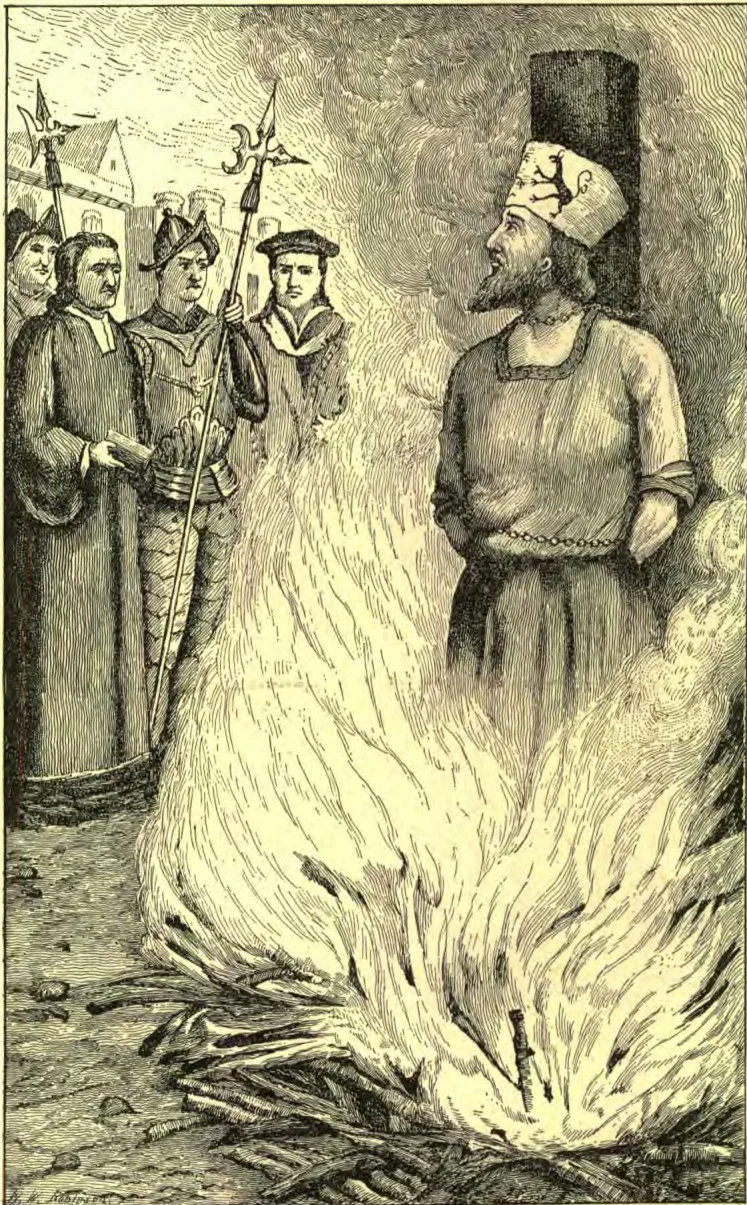
MARTYRDOM OF HUSS.
MARTYRDOM OF HUSS.
This appointment had a deep influence on the already vigorous religious life of Huss himself; and one of the effects of the earnest and independent study of the Scriptures into which it led him was a conviction of the great value not only of the philosophical but also of the theological writings of Wycliffe. But it was only slowly that the growing sympathy of Huss with Wycliffe unfavorably affected his relations with his colleagues in the priesthood.
In 1408, however, the clergy laid before the archbishop a formal complaint against Huss, and the result was that he was publicly forbidden the exercise of any priestly function throughout the diocese. He was finally excommunicated, and an interdict was laid on all cities that harbored him.
During the year 1414 arrangements for a general council at Constance were made, and for the satisfactory settlement of Bohemian affairs the presence of Huss was necessary. His attendance was requested, and he willingly accepted the invitation, as giving him a long-wished-for opportunity both of publicly vindicating himself from charges which he felt to be grievous, and of loyally making confession for Christ.
He made the journey under the famous imperial “safe conduct”; but notwithstanding, he was seized and thrown into prison before any accusation whatever had been formulated. The council showed itself inaccessible to all his arguments and explanations, and its final resolution was threefold,—first, that Huss should declare that he had erred in all the articles cited against him; secondly, that he should promise on oath neither to hold nor teach them in the future; thirdly, that he should publicly recant them. He declined; and as every effort was put forth to shake his determination, the spirit of the martyrs rose within him, and he steadfastly refused to swerve from the path which conscience had once made clear.
Sentence was pronounced upon him, as he had expected, and he was immediately led off to the place of execution. Many touching incidents recorded in the histories of that time make manifest the meekness, fortitude, and even cheerfulness with which he went to his dreadful death. When the flames had done their office, the ashes that were left, and even the soil on which they lay, were carefully removed and thrown into the Rhine.
Huss was much less remarkable for the amount of his mental endowments and acquirements than for the candor with which he formed his convictions, the tenacity with which he held them, and the unselfish enthusiasm with which he spoke them. He cannot be said to have added a single new item to the intellectual wealth of the world, but his contribution to its moral capital was immense. His is the honor of having been one of the bravest of the martyrs who have died in the cause of honesty and freedom, of progress and of growth toward the light. EVA L. BRION.