Part IV: The Unoccupied Fields of Eastern Asia
(February 25 to March 3)
1. Basis of Study.—Read “The Unoccupied Fields of Eastern Asia,” February Magazine, page 70. The map found on pages 71 and 72 will be useful in locating the places mentioned in this study.
2. Buddhism.—Buddhism is the prevailing religion of Ceylon, Siam, Burma, Nepál, Tibet, China, Japan, and the Mongolian population of Central Asia. It was founded by Buddha, in the fifth century before Christ. The number of Buddhists is estimated at about four hundred and fifty millions—nearly one third of the inhabitants of the globe.
3. Buddhist Praying-Machines.—A praying-flag is formed by fastening one or more pieces of rag or cloth by one end to a string, stretched across a road, or path, leaving the other end free to float to the breeze. When a road is crossed for the first time, a piece of cloth is cut up to form a praying-flag. A strip torn off the material for a new dress serves the same purpose. As long as the rags are in motion, there is prayer, according to the belief of the Buddhists. Flying prayers may sometimes be seen on trees and shrubs. Prayer-wheels consist of cylinders, over which are placed sheets of paper containing prayers. These wheels are of different sizes, from a hand-wheel to very large ones. One is described as being made of paper, and revolved by the hot air rising from a fire in a tent. Another, an immense one in a Buddhist temple, was sixty feet high, and contained shrines, images, books, and prayers.
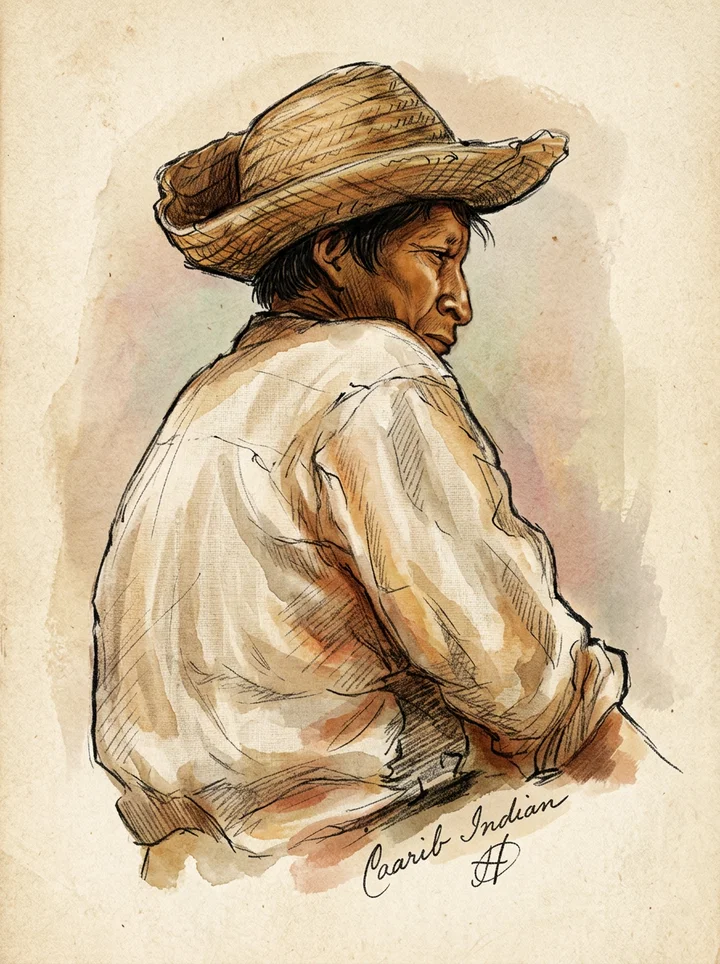
4. The Tibetans.—The inhabitants of Tibet are strong, with black, piercing, slightly oblique eyes, large mouth, brown hair, and a clear, ruddy, brownish complexion. Their noses are flat and broad, and their cheek bones high. They differ in height in various portions of the country. They speak the same language as do the Mongolians, a branch of the Chinese language. There are from fifteen to twenty times as many women as men.
5. Life among the Mongolians.—The inhabitants of Mongolia are a nomadic people. They usually travel on camels, taking their tents with them. The camel is the principal beast of burden. Horses and oxen are also used. Their wealth consists chiefly in their flocks and herds. They are fine horsemen. The children learn to ride at a very early age. There are no inns in Mongolia; and so it falls upon the people to entertain strangers in their tents. The man who refuses hospitality is considered “not a man, but a dog.”
6. The Kirghiz Steppes.—The Kirghiz Steppes of Russian Turkestan are large, uncultivated , barren plains. In spring and summer there is a little green herbage, which becomes parched in June from the heat and drought. In winter the steppes are covered with a thin layer of snow, which, when driven by the fierce winds, destroys every living creature within its reach. A few animals, such as wolves, foxes, antelopes, and hares, are found.
7. The Kirghiz.—The people who inhabit these steppes are wanderers. Some of them own as many as three thousand sheep and five hundred horses. To find pasturage for their flocks, and to escape the excessive heat, they move northward in the summer. Their flocks and herds provide them with food and clothing. The sparse vegetation furnishes fuel, the roots of the saksaul, a native grass, being used to burn. This grass reaches the height of six or eight feet. The roots, which are very hard, are collected during the autumn. Owing to the physical condition of the country that they inhabit, the Kirghiz have a fine sense of locality, and keen eyesight. To a stranger there is no landmark in this flat and unvarying country; but the native has no trouble in finding his way, even at night, and when there is no road.
8. Afghanistan Occupations.—The Afghanistans are divided into about twelve great clans, each of which is subdivided into others. Part of these people are nomadic, and part settled, in their manner of life. The latter form the villages. Their chief occupation is tilling the soil. They also constitute the main part of the army and navy.
9. Afghanistan’s Industrial and Agricultural Products.—The silk that is produced in several of the towns is used chiefly at home, although the best finds its way to India. The excellent carpets made are sold in India. From the wool of the sheep, goat, and Bactrian camel, fine felts and woven goods are made. The rosaries made find their chief market in Mecca. The wool trade is growing in importance. A large trade is carried on in horses. Almonds, raisins, fruits, and furs are exported to India.
10. Baluchistan’s Capital.—Khelat, the capital of Baluchistan, is seven thousand feet above the sea. It is built in oblong form. Three sides are defended by walls; the defense on the fourth side is completed by cutting away the face of the hill on which the city is built. The palace of the khan is in Khelat. There are about four thousand houses in the city and its suburbs. They are of brick or wood, and plastered over with mud and mortar. Most of the streets have a raised footpath on each side. In the center the filth is thrown, and there the rain-water collects.