PERHAPS most of the readers of the INSTRUCTOR have heard before this that the bubonic plague, or something closely allied to it, is present in Honolulu.
Restored with AI
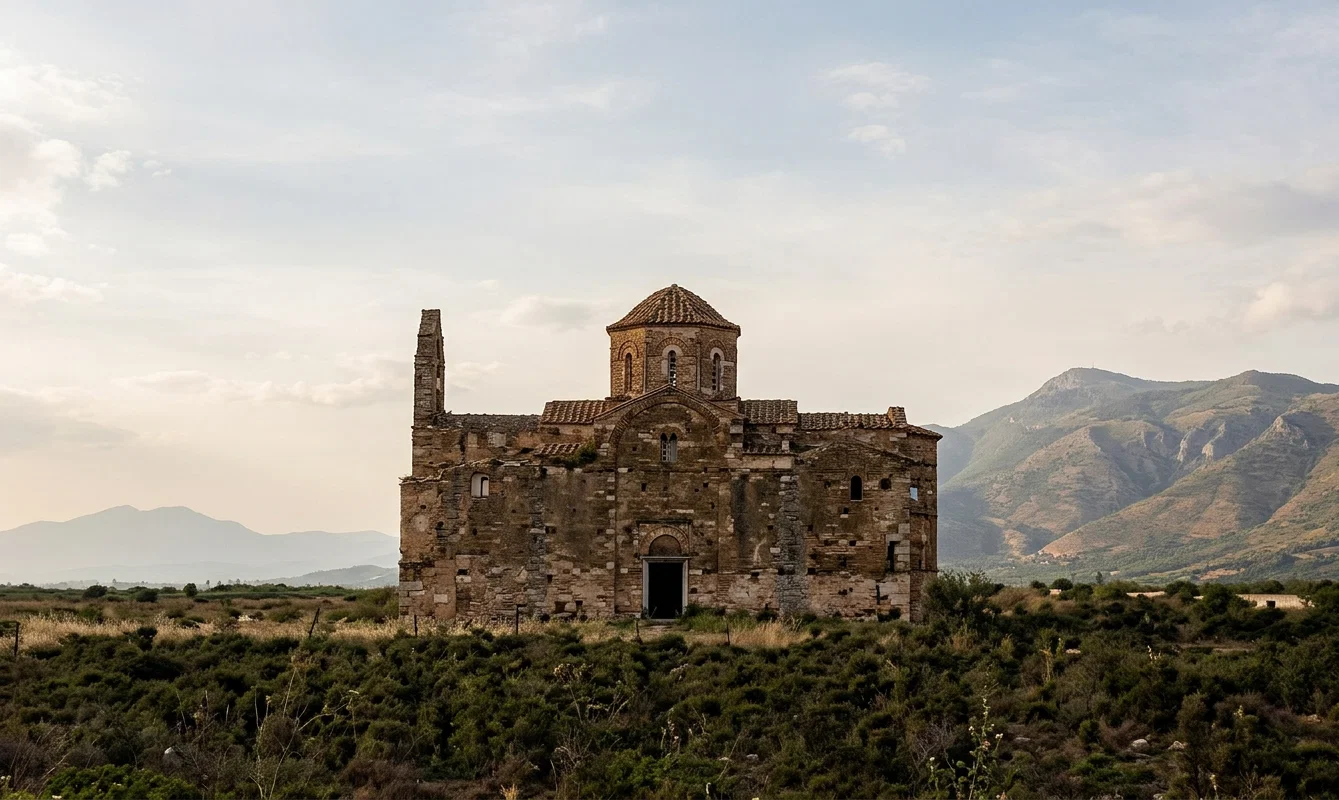
THE CHURCH FOURTEEN-HUNDRED YEARS OLD.
The city has never had a system of sewers; and in the older portions, especially the Chinese quarter, the soil has become so saturated with filth that disease and pestilence are but the natural outcome. This portion of the city has a population of about ten thousand Chinese, Japanese, and Hawaiians; and it was here that the plague started. As most of these persons go barefoot, many think that the plague was contracted by the feet coming in contact with the polluted soil. One of the leading physicians is reported as saying that he would rather sleep in the bed with a plague patient than walk barefoot through the streets of Chinatown.
About forty persons, only two of whom were white, have died of the disease thus far. One of the latter was a girl of thirteen years; it is thought she contracted the disease from eating candy bought at a Chinese store.
Physicians and the board of health have been untiring in their efforts not only to prevent the spread of the plague, but entirely to stamp it out. Inspectors have been appointed; and every house in the city is supposed to be visited twice a day. Every case of sickness is reported to the board of health, and a physician is sent immediately to investigate. All plague patients are at once removed to the pest hospital, and the doubtful cases are taken to the suspect hospital. At these places three of our own people are serving as nurses; and they report several cases as apparently on the road to recovery. Among the latter are two little children, one a Chinese boy, and the other a little Japanese baby. One of the merchants sent some toys to these little folks, and they were received with smiles of great satisfaction.
As one means of doing away with the sources of infection, the authorities have, as new cases have developed, immediately placed the neighborhood under quarantine, and finally burned the home of the victims, and, in Chinatown, all the houses in the vicinity. Many temporary buildings have been erected as places of detention for those who have been exposed to the disease. Here they are provided with clean beds and wholesome food, and kept until all danger of their infecting others is passed.
On Sabbath, January 20, the firemen started to burn a block where there had been several cases of plague. For about an hour all went well; but the rising wind carried the burning embers to the dry roofs of the closely packed houses in the neighborhood, and directly upon the towers of Kaumakapili church. Although the whole force of the fire department was present, and everything possible was done to quench the flames, the men were powerless to stay the onward march of the fire, and so turned their attention to the work of keeping it within prescribed limits. The fire raged in fury, jumping from block to block and from street to street. Reports from explosions of gasoline and kerosene were almost constant. Dynamite was used by the firemen, but all was in vain, and the work of the fire was not done until it had reached the sea on one side and90the river on the other. Bucket brigades were formed by the citizens, and the firemen were kept drenched with water. So fierce was the heat, that clouds of white steam enveloped them.
Restored with AI
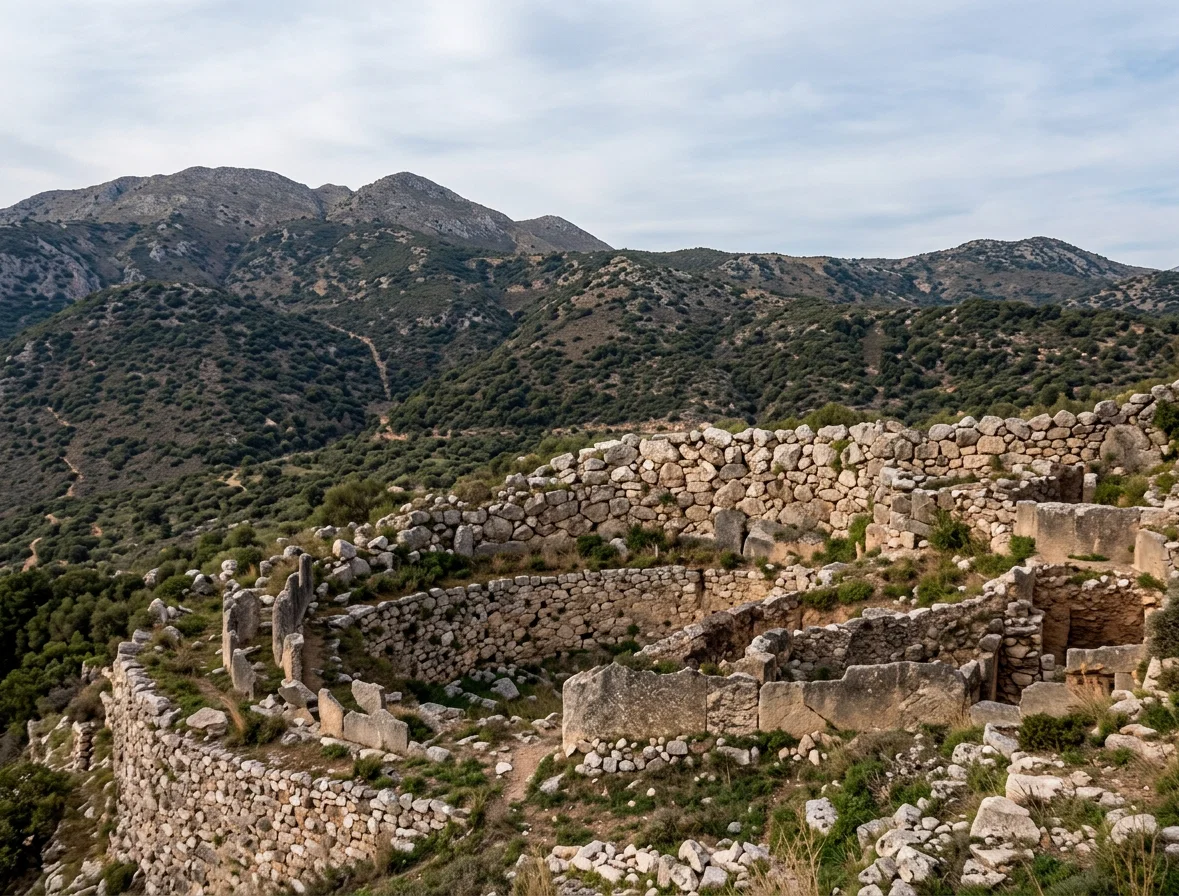
SCENE OF DR. SCHLIEMANN'S EXCAVATIONS.
Those in the quarantined districts ran in terror into the streets and to the guard lines. For a time it seemed as if they might try to break through the lines, and thus spread the contagion through the city, but the guards and citizens acted with coolness and dispatch, and the terrified victims were taken in order to a place of safety. It was indeed a queer-looking crowd that marched down King street—men, women, and children, some carrying sewing-machines, some beds, blankets, trunks, cooking utensils, lamps,—anything on which, in their terror and excitement, they could lay their hands.
Those who were sick, lame, or helpless were brought out of the burning district, some in rude carts, and others upon the backs of their more fortunate friends or relatives. Mothers, as they led their children through the crowded streets, looked back with tear-dimmed eyes to the place where their old homes and all their earthly possessions were turned to ashes. Chinese women with little feet hobbled painfully along, taking, perhaps, the longest walk of their shut-in lives. About four thousand persons were marched to Kawaiahao church. The women and children were sent into the building, where they would be comfortable; while the men swarmed over the grounds, kept in by the guards, who were stationed six feet apart all around the yard.
Despite their great misfortune, most of these poor people tried to be cheerful, and to make the best of a very bad matter. Soon after they arrived at the church, dray-loads of tents, bedding, and provisions began to arrive; at half-past seven in the evening, all those homeless persons had been fed and made comfortable for the night. After supper the Hawaiians spent the time in singing, and playing upon their guitars and other musical instruments, which were about the only things they had saved from the fire.
There is great opportunity for genuine Christian Help work in Honolulu, and nobly do the men and women of the city respond to the call. Money has been contributed, and women all over the city are engaged in making clothing for those who saved only the clothes upon their backs.
We ask those who read this to pray for these poor people, that their eyes may be opened to see Him whom to know aright is life eternal.