PROBABLY but very few of the readers of the INSTRUCTOR know how the metal types which printers use are made, or even of what material they are composed. But this is nothing strange; for hundreds of newspaper and book men, and even type-setters themselves, practically know but very little concerning the manufacture of the type with which newspapers and books are set up.
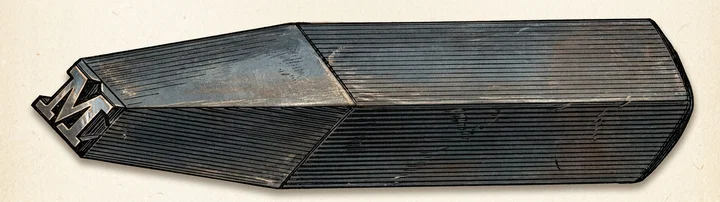
- PUNCH.
A prominent type-founder in Chicago awhile since published an interesting description of how type is made, and the same with additions was issued in a neat circular by William C. Gage, of this city; and it is through his courtesy that we are enabled to present the illustrations given in this article.
Type metal is a composition of lead, tin, antimony, and copper, all of which metals are necessary to give the required ductility, hardness, and toughness. No other composition has ever been found which so well answers all the purposes for type-making, although aluminum, gutta-percha, and some other substances have been tried.
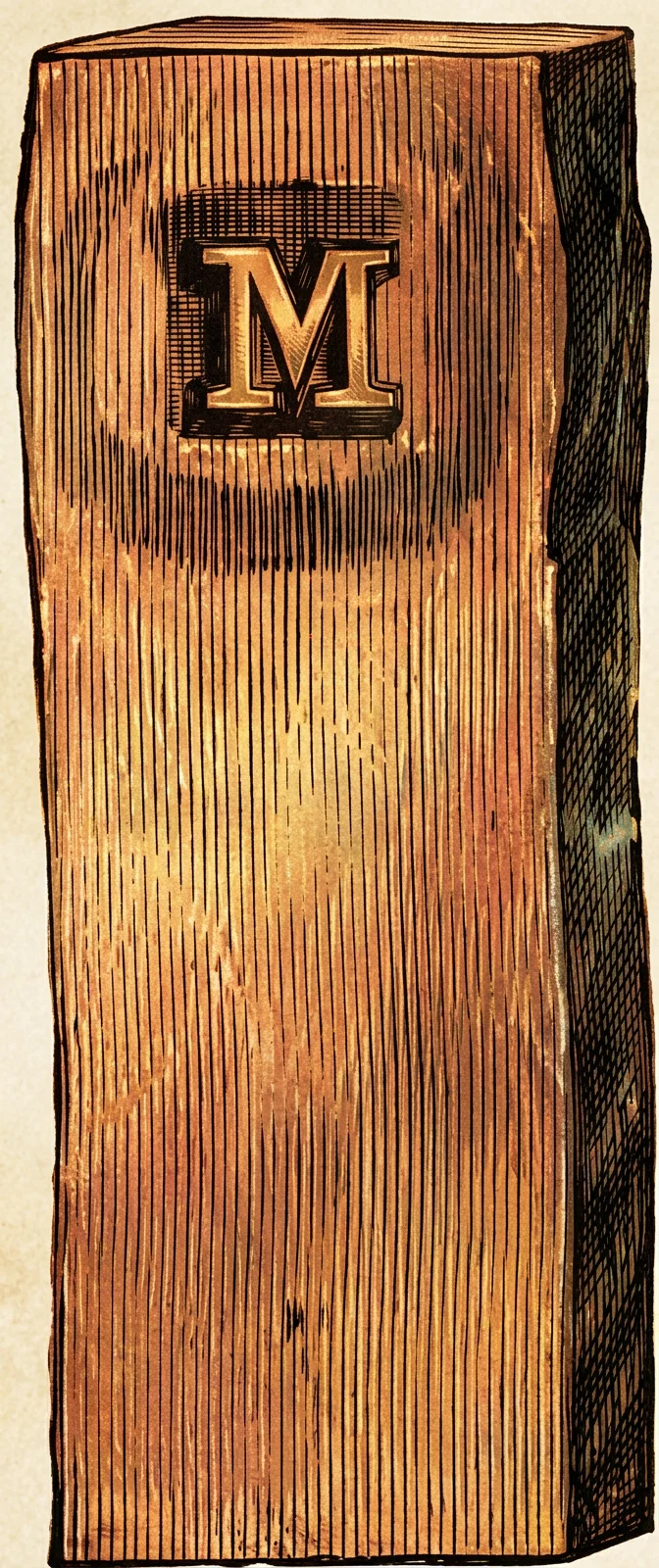
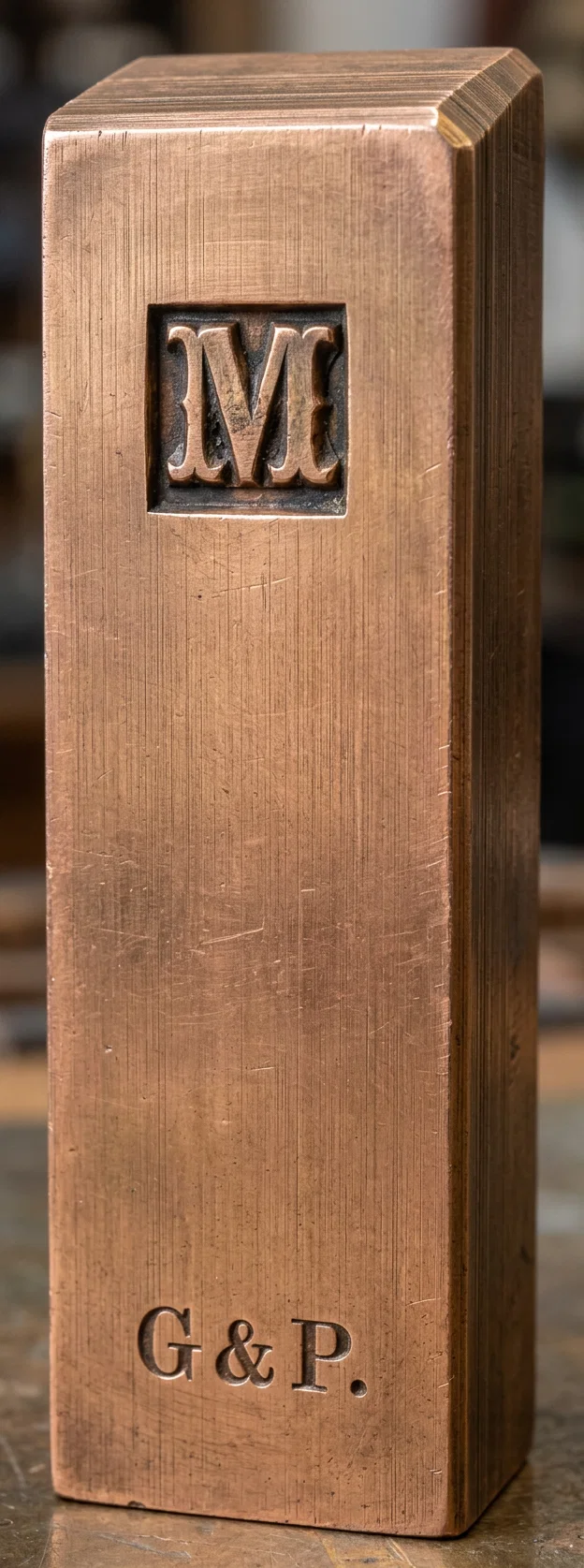
“The first step in the making of type is cutting the letter desired, on the end of a piece of fine steel, forming the punch, which is afterward hardened. This is an operation requiring great care and nicety—there being comparatively few adepts at it—so that the various sorts in a font may be exactly uniform in their width, height, and general proportion to each other. A separate punch is required for each character in every font of type, and the making of them is the most expensive portion of type-founding.
“During the process of its manufacture, the punch is frequently tested or measured by delicate gages, to insure its accuracy. When finished, a smoke proof is taken, and if the letter is pronounced perfect, it is driven into a piece of polished copper called the drive. This passes to the fitter, who makes the width and depth of the faces uniform throughout the font. They must then be made to line exactly with each other. [The reader will notice how perfectly the letters in a line of print line with one another.] When thus completed, the drive becomes the matrix, wherein the face of the type is made.
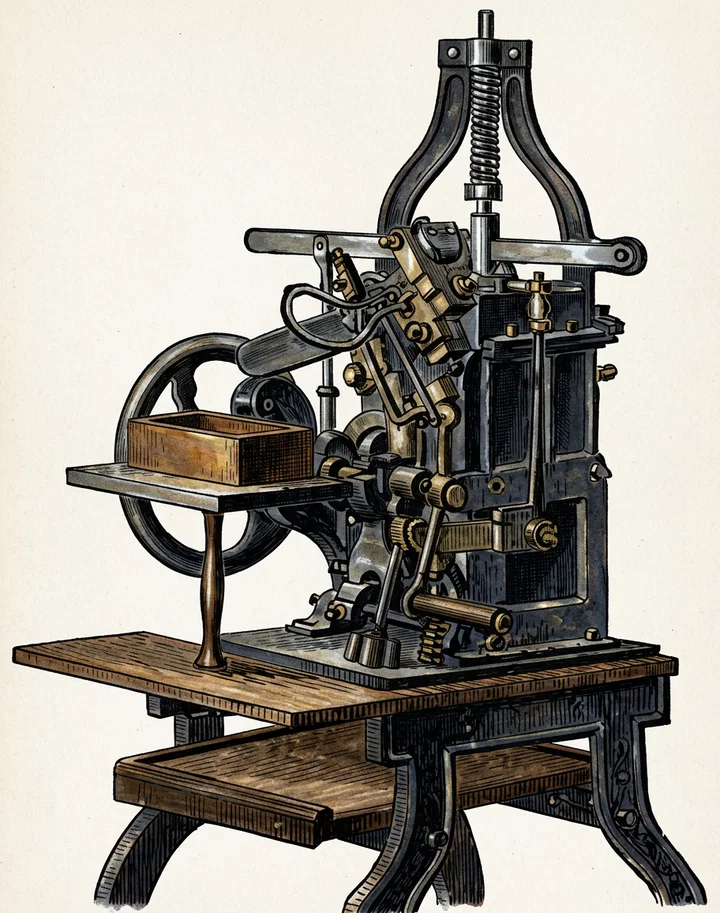
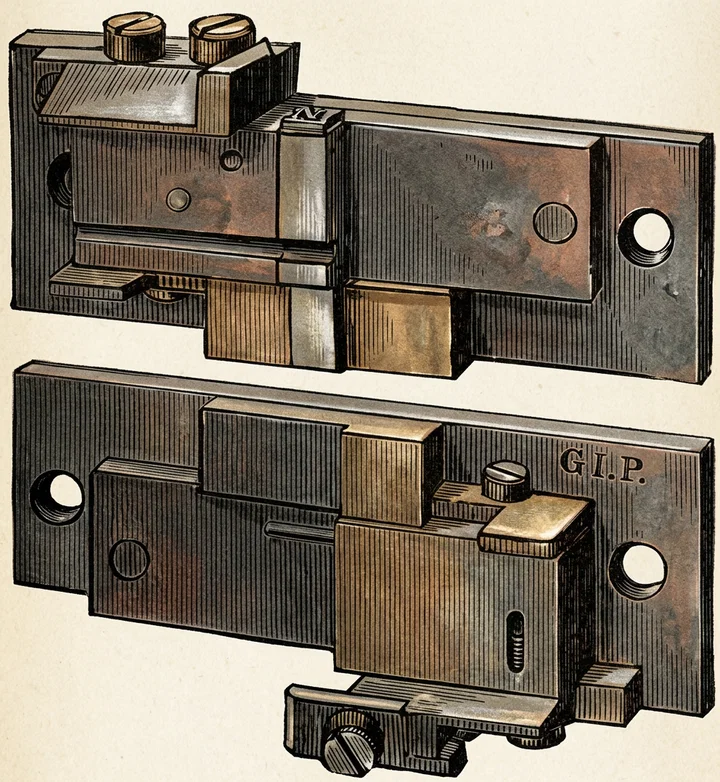
“This undergoes other processes in fitting and finishing, to make it true and square with the body of the type. Matrices are also made by the electotype process, for the purpose of copying and multiplying certain faces without incurring the great expense of cutting new punches. The mold in which the body is formed is made of hardened steel, in two parts; one part is fastened to the machine and is stationary, while the other is movable, so that it may be adjusted for the proper width of the letters, as one is wider than another. The necessity of perfect accuracy in these molds is manifest to every printer who knows that types must be mathematically square, else they could not be used.
“The matrix and mold are combined, and then adjusted to the type-casting machine, which is set at work manufacturing types at the rate of from one hundred to one hundred and seventy-five a minute.
“The type-casting machines in general use in this country and in Europe are of American origin. The American Printer gives the following description of their operation:—
“The metal is kept fluid by a little furnace underneath, and is projected into the mold by a pump, the spout of which is in front of the metal pot. The mold is movable, and at every revolution of the crank in the hand of the workman it comes up to the spout, takes a charge of metal, and flies back with a fully-formed type in its bosom; the upper half of the mold lifts, and out jumps a type. The spring in front holds close to the mold a copper matrix; the letter a, for instance, stamped in the matrix, sits directly opposite the aperture in the mold, which meets the spout of the pump; and when a due proportion of a is cast, another matrix with b stamped in it takes its place; and so on throughout the entire alphabet.”
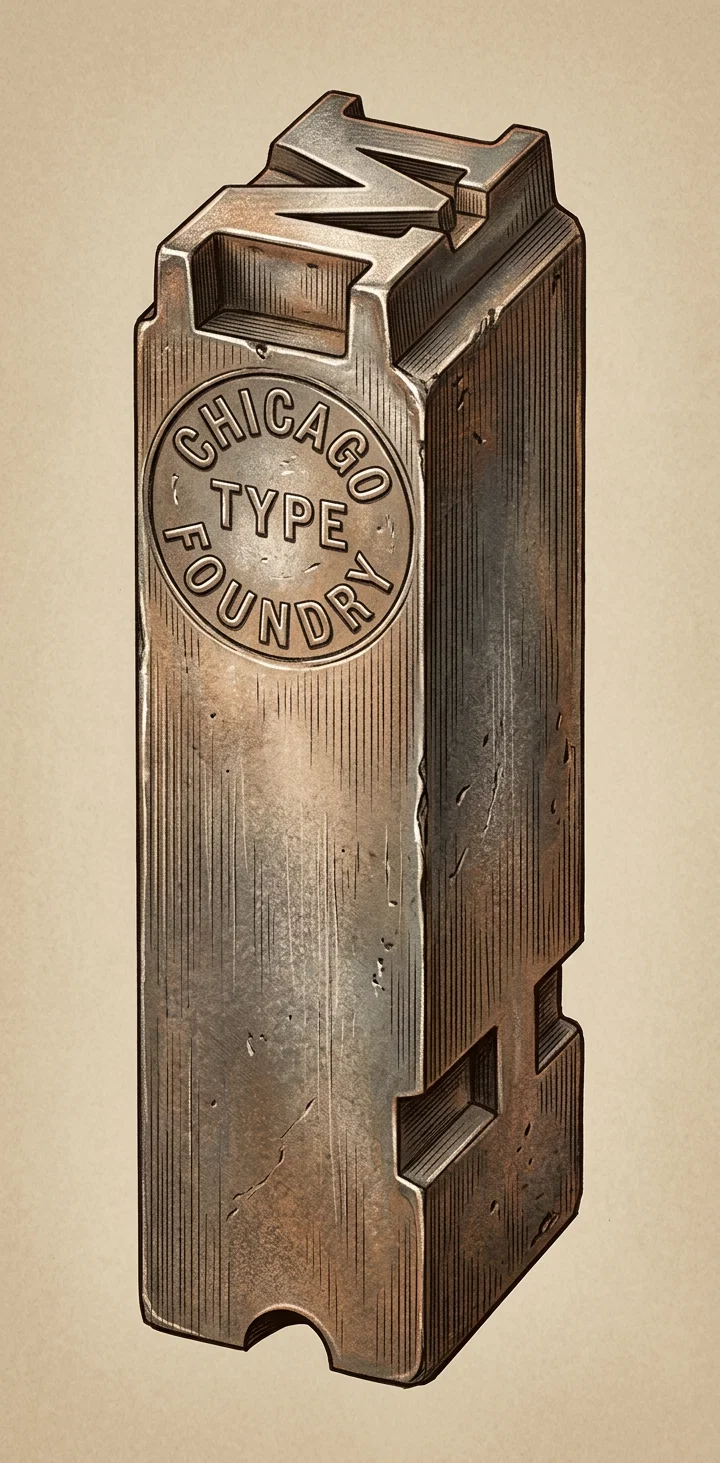
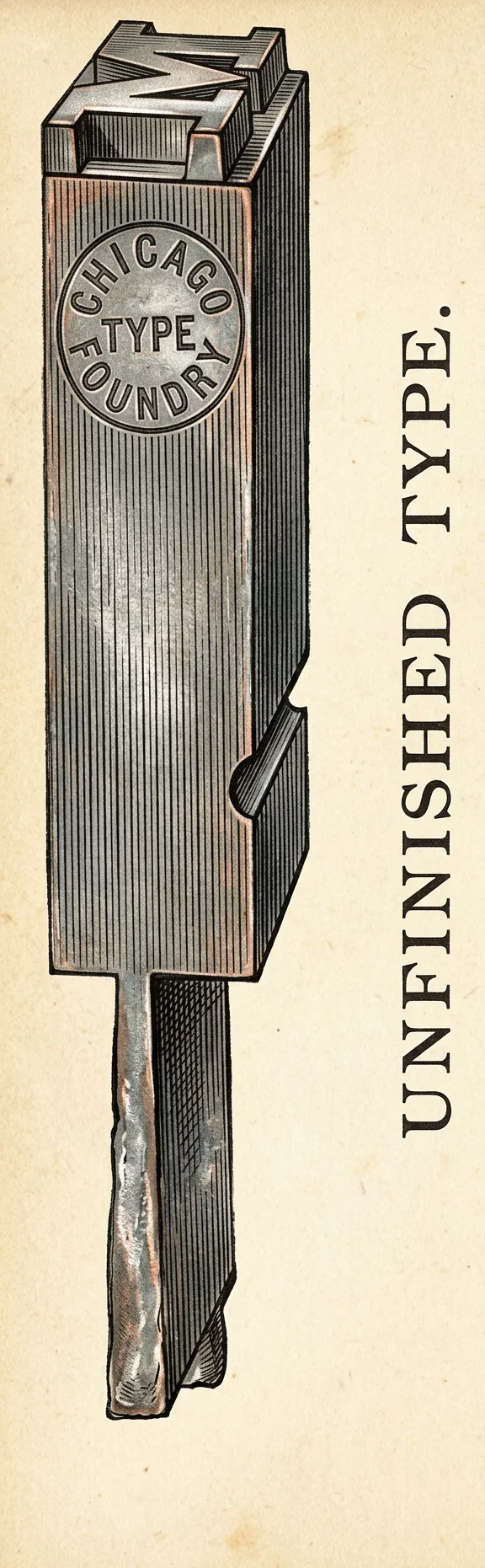
“In casting small fonts, where frequent changes are made in the molds, the machines are driven by hand power; but when the fonts are large, such as those made for the daily newspapers, steam is used as the propelling power, and the industrious little machines, with scarcely less than human intelligence, go thumping along at their work, requiring but little care or attention, except when changes in the matrices and molds become necessary. The only practicable method of making types is by casting them singly. All attempts at making them by swaging, cutting, or casting fifty or more at a time, have proven utter failures.”
“The types are not finished when they leave the machine. There will be found attached to each letter a wedge-shaped jet, somewhat similar to that on a bullet cast in a hand mold. The loose types are placed upon tables, around which are seated nimble-fingered boys or girls, who pick them up at the rate of from two thousand to five thousand an hour, at the same time breaking off the jets. A bur still adheres to the shoulder of the type, and this is taken off by the rubbers, who rub the sides of the letters on fine steel files, manufactured expressly for this purpose. Some type-founders have this work done on sandstones, and by the process called “bunching,” to save expense, but the printer need only to place one type by the side of another to detect at once the difference and the inferiority of the work.
“The kerned letters then go to the kerning machine, where they are dressed without disturbing the kern, or overhanging part of the type. The types next go to the setters, who set them in long lines ready for the dresser. He slips them into a long stick (dressing rod), turns them on their face, fastens them on a bench adapted for that purpose, and with a plane cuts a groove in the bottom which removes the bur left in breaking off the jet, and leaves each type with a pair of feet to stand upon, and then dresses off the under and upper sides.
“The picker (who is generally the dresser) now takes the type in hand, and, with the aid of a magnifying glass, picks out each defective letter, which is returned to the melting kettle. The types are then broken up into shorter lines, and put up in pages of about four and one half by six inches in size, when they are sent to the dividing room, where they are divided into fonts, each having its due proportion of the various characters, and made into pages or parts of pages. Afterward they are wrapped in papers, labeled, and sent to the wareroom, where they are packed, marked, and shipped to the purchaser, or put upon shelves to await orders.”
A recent invention, the Automatic Type-perfecting Machine, performs the manipulations necessary to make and finish type. This process has many advantages over the old method, as the type is made with very great accuracy. The type is cast absolutely true at the start, and in the finishing process it passes through gaging cutters that finish it smooth and perfect.
G. W. AMADON.