In “Glimpses No. 1” we studied the amœba, one of life’s simplest forms. These were homeless and unprotected, gulped down by the thousands and millions by one another and by other animals.
We will now lay aside our powerful microscope, that we were compelled to use in our study of the amœba, and use only a strong magnifying-glass while we examine the Protozoa, a little higher type of life. These little animals take out of the water, particle by particle, the lime dissolved in it, and build around their bodies the solid shell, or skeleton, in which they live.
Restored with AI
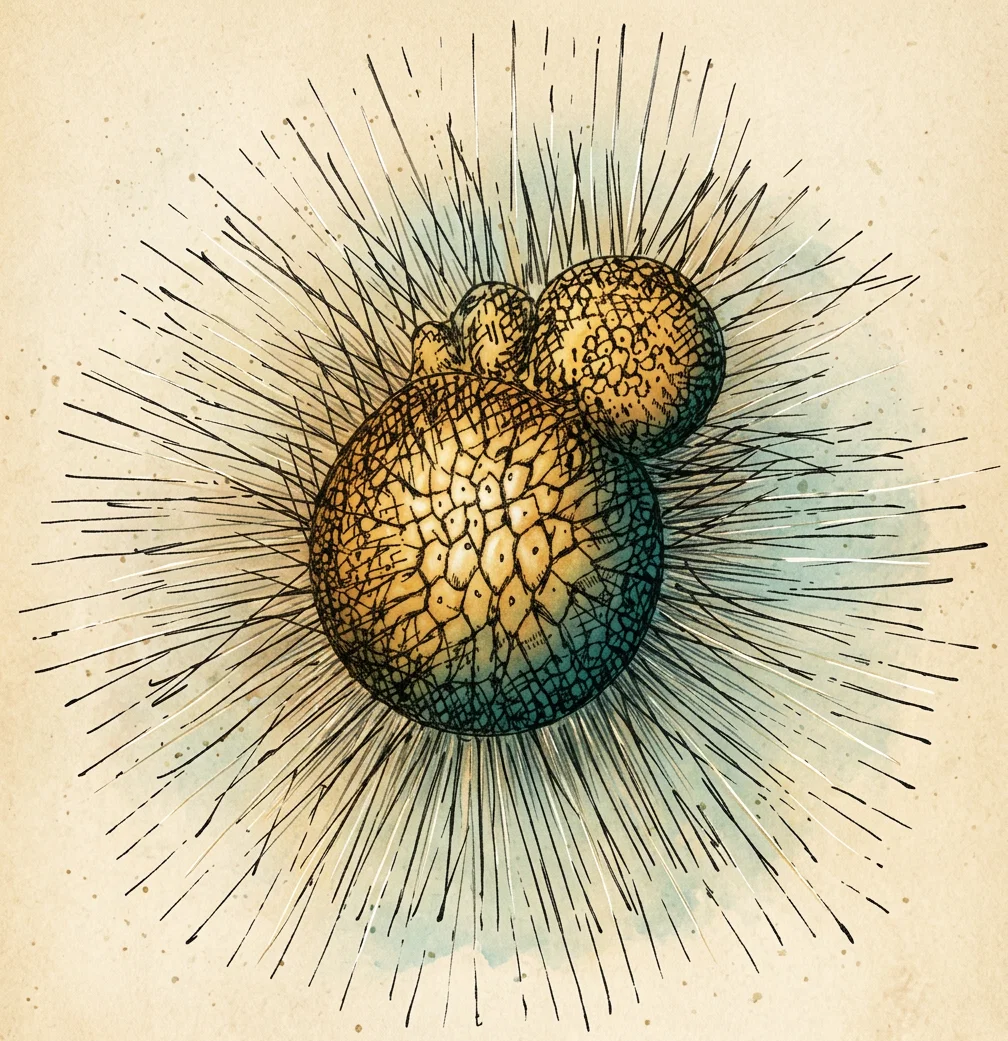
FIG. 1. Globigerina, or chalk-builder. Magnified 100 diameters.
Not only are these little creatures beautiful and interesting, but they are very useful. There are a great many forms of the Protozoa, but I will mention only a few of the most common of them; namely, those with which we all are familiar, and which add to the list can do.
Restored with AI
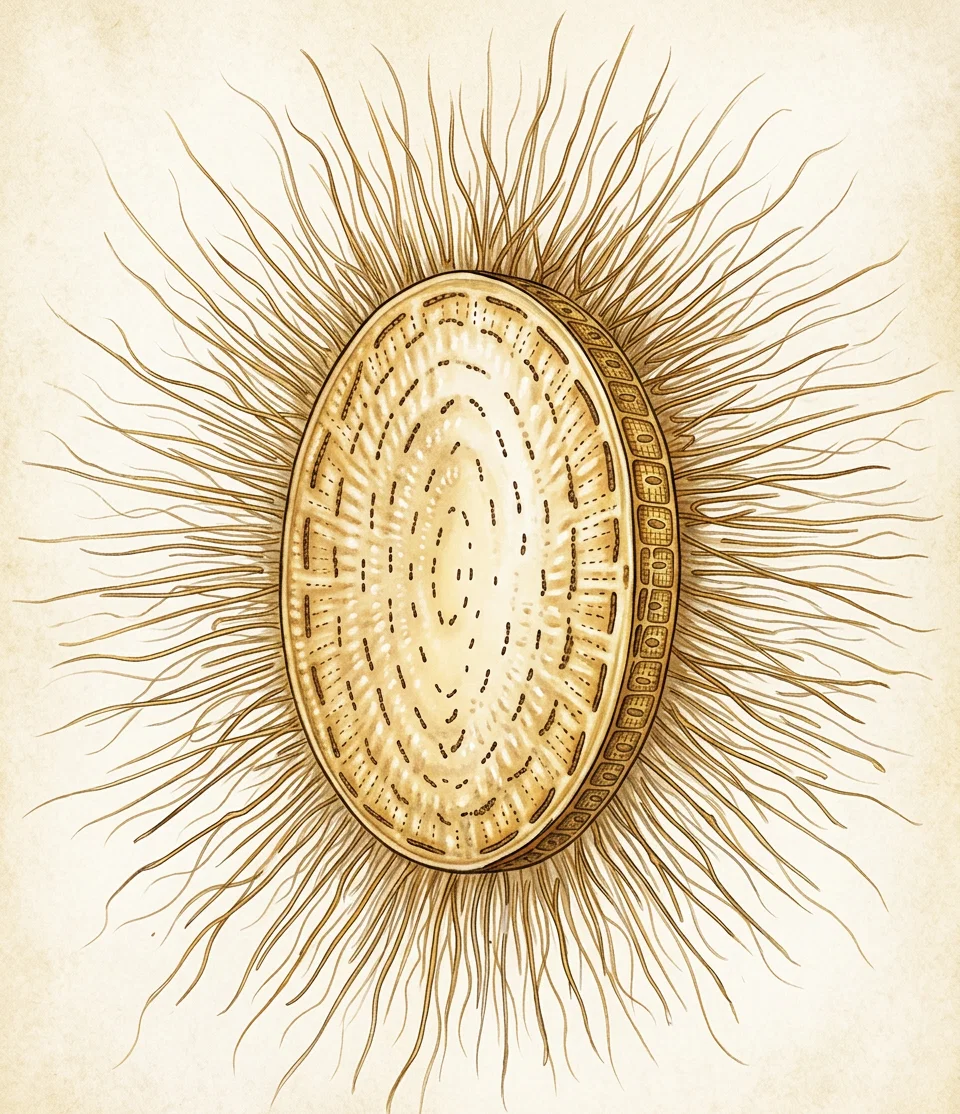
Fig. 2. Orbitolite, or lime-builder. Greatly magnified.
Strange as it may seem, it is nevertheless true that the vast chalk beds stretching from Ireland to the Crimea and from Sweden to Bordeaux, France, are in great part formed of the dead shells of the Globigerina (Fig. 1); and if we rub down some ordinary chalk,—not the manufactured kind, but that taken from beds like the above named,—and examine it under a strong magnifying-glass, we can readily see these little shells for ourselves.107
Then we have the limestone, from which the lime is made that we use in building. Beds of this limestone are found thousands of feet thick, stretching for hundreds of miles, and made entirely of the shells of the Orbitolites (Fig. 2). The great pyramids of Egypt are built of stone of which every inch was made of the shelly palaces of these little creatures, constructed with a skill and ingenuity far surpassing that of the builders of the pyramids.
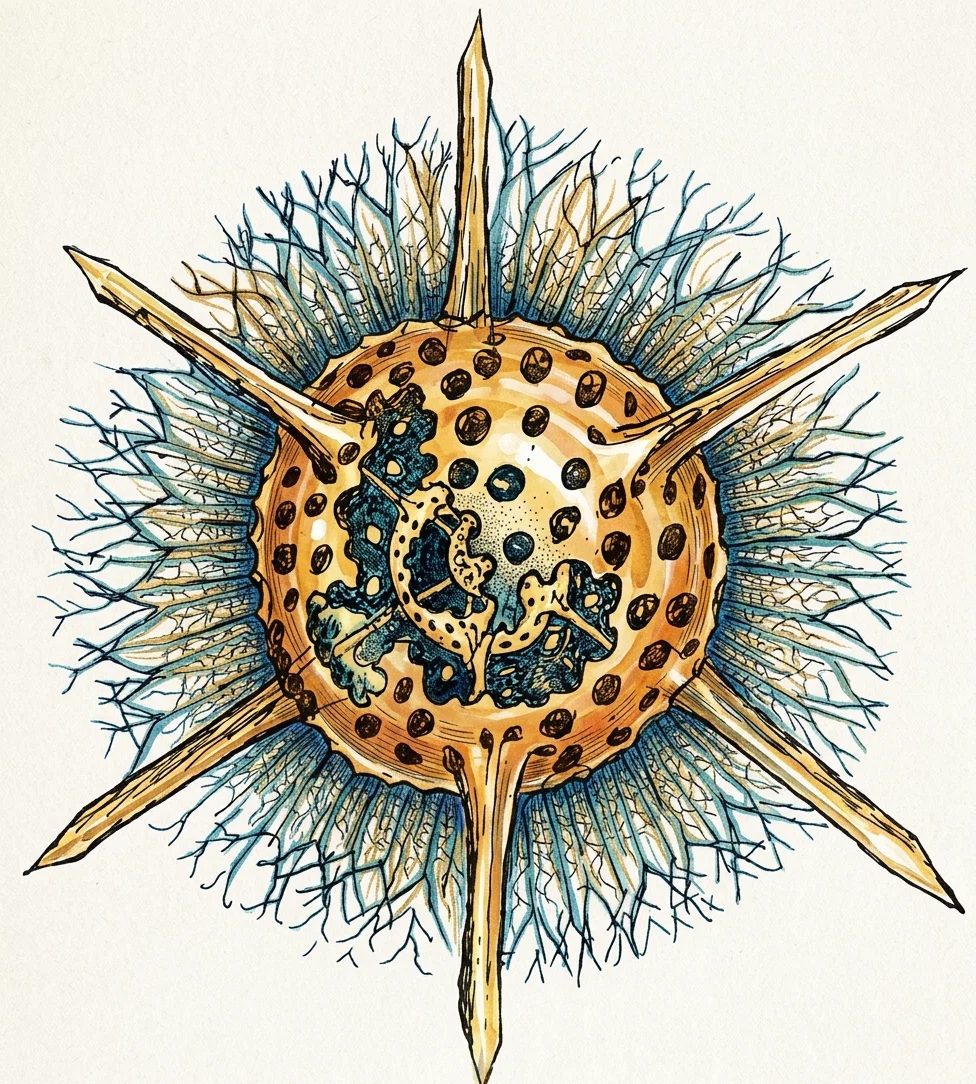
We have paused so long over the lime-builders, that we can only glance at the minute creatures which build flintstone. These animals are a little higher in the scale of life than the lime-builders. In the center of the body is a small bag buried in the soft parts (Fig. 3); in this bag the solid grains lie very thick, and scattered throughout the body are little floating oil globules, which give to the flintstone its glistening appearance. This form of Protozoa is called Radiolaria, from its ray-like appendages. It differs from the lime-builders also in its means of protection. The lime-builders construct solid shells, having openings only where necessary to secure their food; but the flint-builders have large holes all over the flinty skeleton, a poor protection indeed against other animals. We must notice, however, how they send out sharp spikes (Fig. 4), which must make it uncomfortable for the animals trying to devour them; yet the amœbas often suck their bodies out of their shells.
Restored with AI
FIG. 3. Flint-builder (Physimatium). (a) capsule. Natural size about like a mustard seed.
Restored with AI
FIG. 4. Radiolaria (Flint-builder), showing spikes. Immensely magnified. Natural size like a tiny pinhead.
Though we may see and know nothing of these wonderful little creatures, we yet owe them something; for not only do their shells aid in forming our marble, limestone, and flintstone, but those now living purify our waters by feeding upon the living and dead matter in them. They are the invisible scavengers of the ocean and the pool, and in earning their living they thus also work for others.
Now as to their habits and manner of growth: Each secures its food in the same way that the amœba does, only it thrusts its pseudopodia out through openings provided in the shell. In the beginning, when quite young, it is merely a round drop of protoplasm surrounded by a delicate, transparent shell. Then, as the creature outgrows this chamber, it draws its false feet together, making a little ball, called a bud; around this bud it forms another shell chamber, out of which it again puts forth its thread-like feet in search of food. It continues thus until a complete shell is formed, which usually consists of seven chambers, arranged in a spiral form, each chamber overlapping the preceding one. The only communication it has with the outer world, is through the minute false feet which stretch out through the holes in the last chamber, and the middle portion of the body can get food in no other way than by passing from the outside through all these chambers. Some forms make provision for this inconvenience, by leaving the pseudopodia out all the time while they are laying down their lime houses. The consequence of this is that wherever a thread has been, a minute hole, like a pin point, is left in the shell; and while the creature can draw itself quite in out of danger, it can also come out all over the shell, and take its food. (See Fig. 2.)
Beautiful and wonderful as these forms are, they are very low in the scale of life. They live and increase in multitudes, reproducing their kind by dividing as does the amœba, and casting the parts out of the mother shell to become new animals. The mother breaks itself up into its little children; but myriads die and are devoured. They are delicate, frail, and helpless, and seem like but first attempts at the grand results which life can compass; but they faithfully perform the part in this world for which a wise Creator has put them here.