THE cemeteries of New Orleans are among the most interesting features of this interesting old city. A half-dozen of these burial-places are to be found grouped together on Metairie Ridge, about halfway out to West End and Lake Pontchartrain.
Because of the dampness of the soil, it has been thought impracticable and unsanitary to bury the dead beneath the earth. Therefore these cemeteries, the most unique burial-places in this country, abound with tombs of brick or marble. These tombs usually consist of two vaults, carefully cemented together, with a crypt below for the bones. Sometimes they are built in tiers, like a wall of more than ordinary thickness. After a year or two, if the tomb is needed for another body, the slab is removed, the wooden coffin destroyed, and the remains deposited in the crypt. Thus a long series of burials may take place in a single tomb.
The decorating of tombs on All Saints’ day is generally observed in New Orleans. Flowers, wreaths, lighted candles, and draperies are placed on the tombs; and in the Catholic cemeteries, services are held in the afternoon. The celebration of All Saints’ has been traced back to the year 998, when Abbot Odilo, of Cluny, instituted it for the monasteries of his congregations. It is an ancient French and Spanish custom in New Orleans, and has been taken up by nearly all the Protestant denominations.
Restored with AI
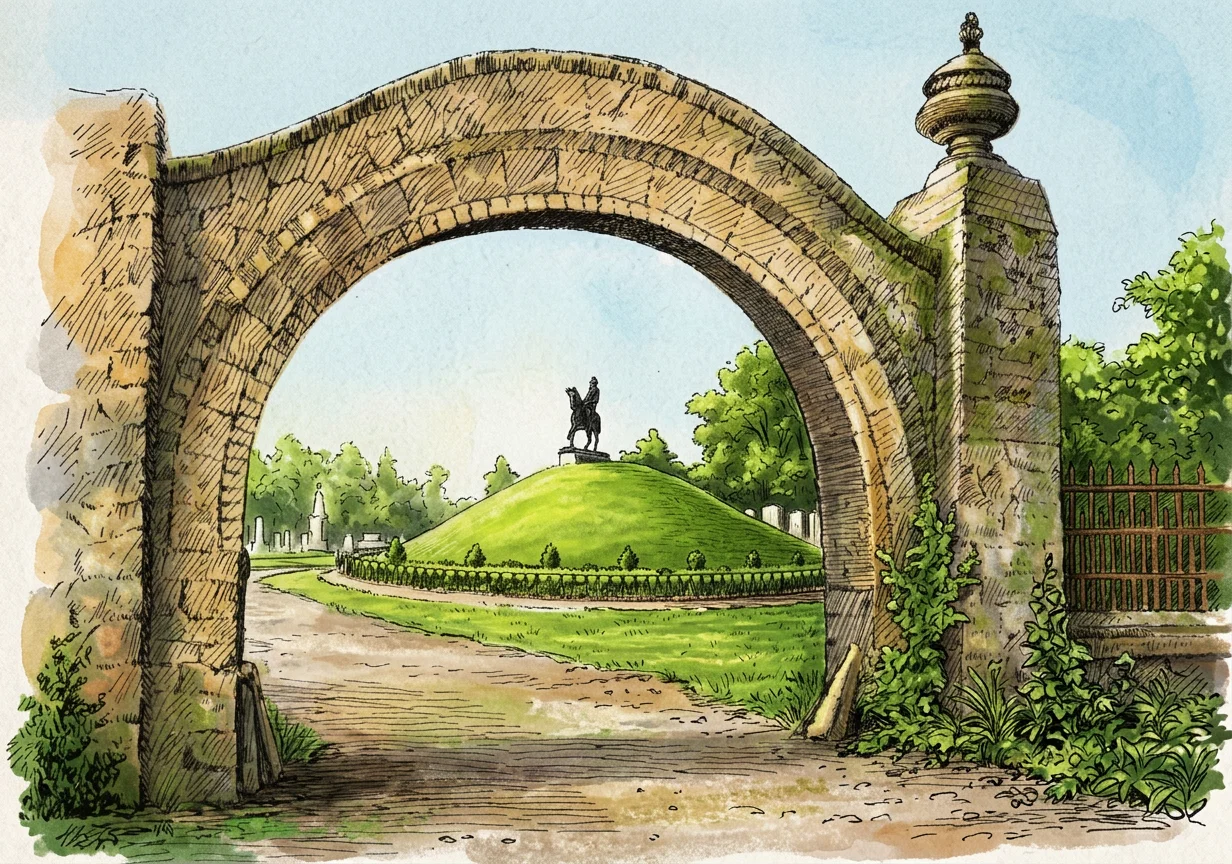
VAULT OF THE CONFEDERATE BENEVOLENT ASSOCIATION.
On visiting the cemeteries, the first, on approaching the Ridge, is the Jewish, called “Tememe Direch.” Across from this is another Jewish cemetery, belonging to the “dispersed of Judah.” St. Patrick’s cemetery is the next. The Charity Hospital burial-grounds are on the left-hand, and on the right is Cypress Grove cemetery. Just beyond the Charity Hospital cemetery is the Firemen’s cemetery, conspicuous for the massive Egyptian columns at its entrance. Greenwood is just opposite. Metairie cemetery, which is large and well-kept, is probably the most interesting of the burial-places of New Orleans. It has been beautified by lawns and a system of lagoons, at a cost of thirty thousand dollars. There are many fine tombs in this cemetery. Near the entrance is the mound-shaped vault of the Confederate Benevolent Association of the Army of Tennessee, surmounted by Doyle’s famous equestrian statue of General Albert Sidney Johnston. The burial-vault in the heart of the mound contains a tablet to the memory of General Johnston, on which is inscribed Dimitry’s famous epitaph, said to be one of the finest mortuary inscriptions in the English language. At the entrance to the vault stands a marble statue of an orderly sergeant, “calling the roll.” The tomb of the Association Army of Northern Virginia is surmounted by a shaft, crowned by a statue of General Stonewall Jackson. Near the entrance is the large receiving vault, built in the form of a chapel.
Restored with AI
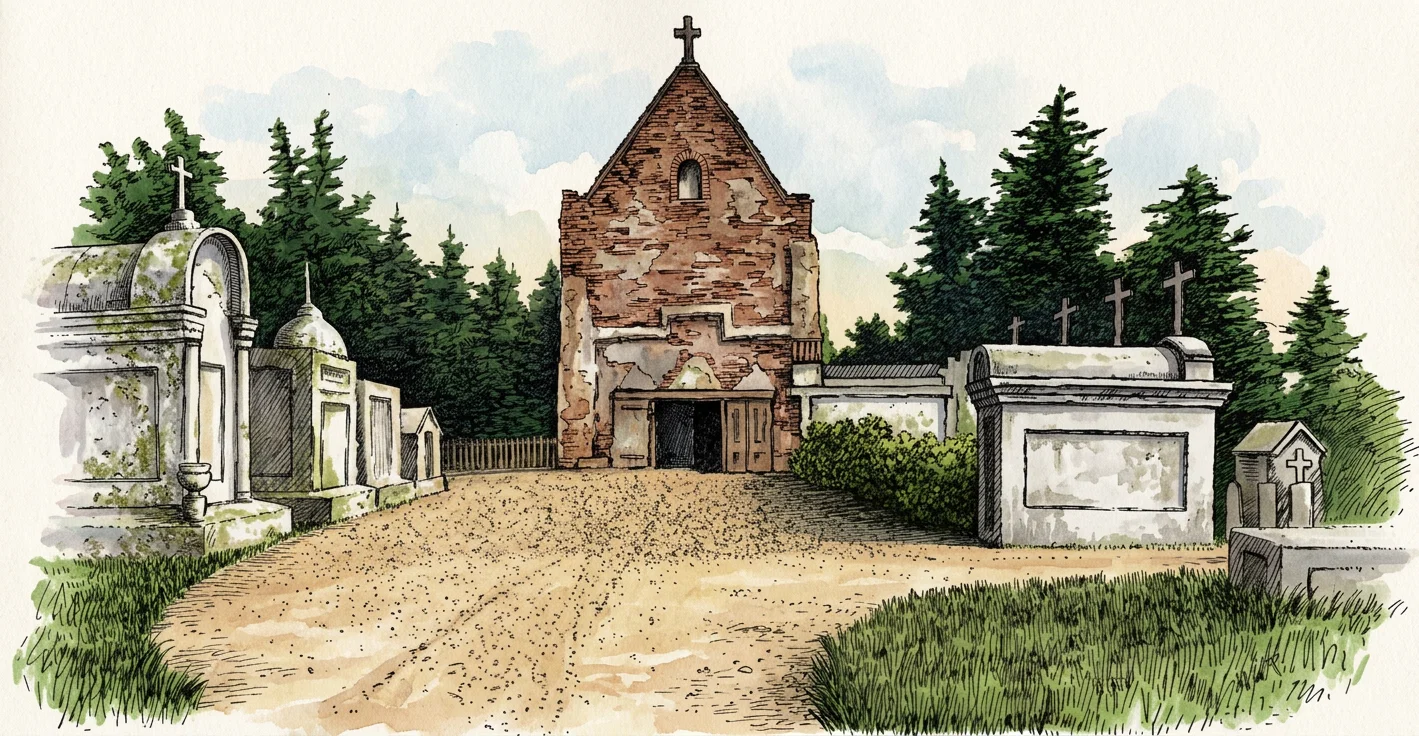
ST. ROCH’S SHRINE.
There are three St. Louis cemeteries. St. Louis, No. 1, is the oldest in the city. Many of the tombs belong to old creole families, and others are owned by various societies. On some of the tombs in this cemetery may be seen the phrase, “Mort sur le champ d’honneur,” or “Victime de l’honneur,” indicating that here lies one who fell in a duel. Some of the old graves date back to the beginning of the century, and are almost wholly in decay. One old stone bears the inscription, “Mammy, aged 84, a faithful servant, who lived and died a Christian.”
The Campo Santo of St. Roch is one of the most notable burial-places of New Orleans. It is the burying ground of several of the religious orders of the Catholic Church, and its mortuary chapel is a shrine to which many a pilgrimage is made to implore divine blessing.
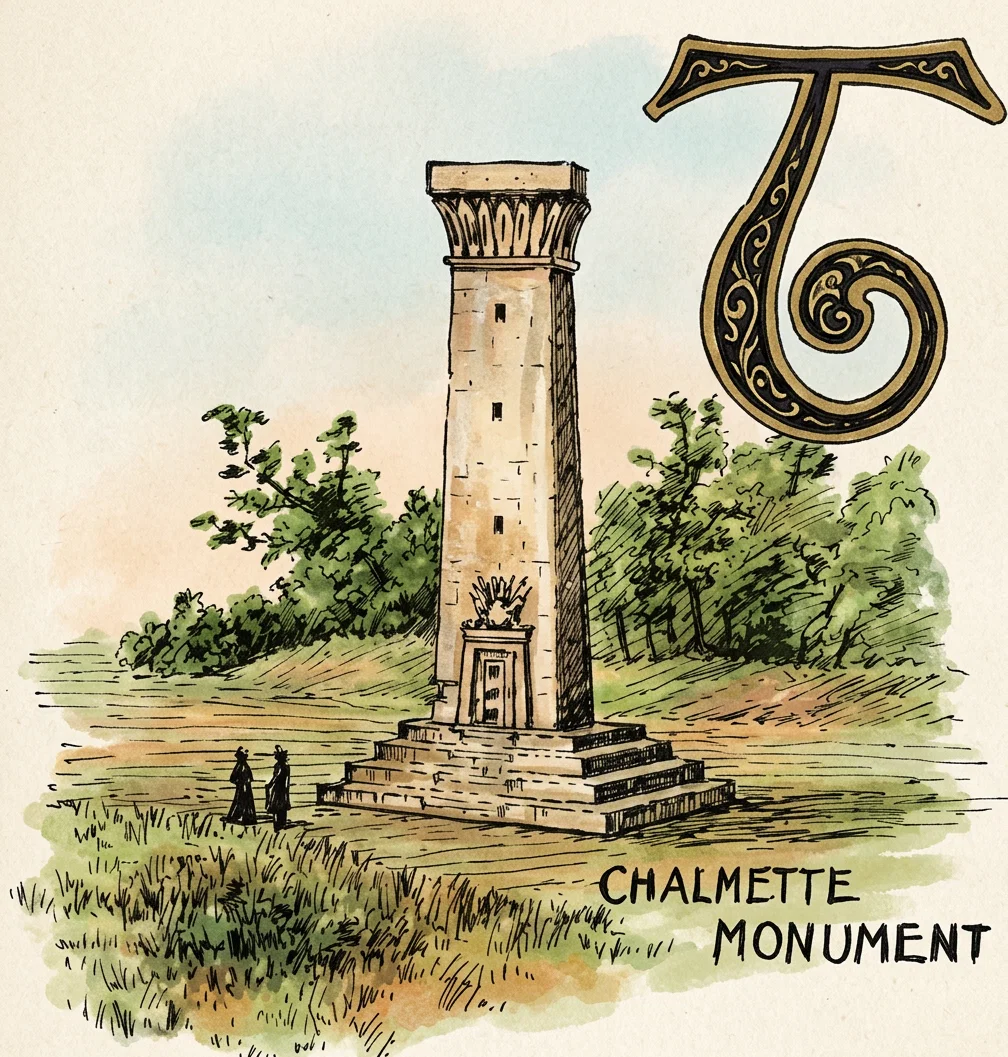
Of the many places of interest in and about New Orleans, none is more interesting, historically, than the battle-field of Chalmette. The battle took place, Jan. 8, 1815. The American troops were drawn up within five miles of the city, and numbered about thirty-two hundred men. It is said that these men made an esplanade of cotton bales to support their guns, which would otherwise have sunk hub-deep into the oozy earth. The British army, under General Packenham, numbered about twelve thousand men. The attack was made at dawn, and lasted till eight o’clock, when the enemy was finally repulsed, having lost nearly three thousand men. The American army was led by General Jackson, and its loss was six men killed and seven wounded. A large monument marks the battle-field.
Just beyond this monument is the Chalmette cemetery, the burial-place of over twelve thousand soldiers who fell during the Civil War.
How precious to the Christian visiting these silent cities is the assurance that very soon all those who have been in this world “faithful servants” indeed, no matter how humble their service, will arise, at the call of God, clothed with the garments of immortality, singing the song of victory over death: “O death, where is thy sting? O grave, where is thy victory?”