21 — Coneflower

7%

Review and Herald Publishing Company · Battle Creek, Mich. · Aug 23, 1900

FromThe Youth’s Instructor, The Youth's Instructor, Vol. XLVIII, No. 34

Read the full edition

21 — Coneflower

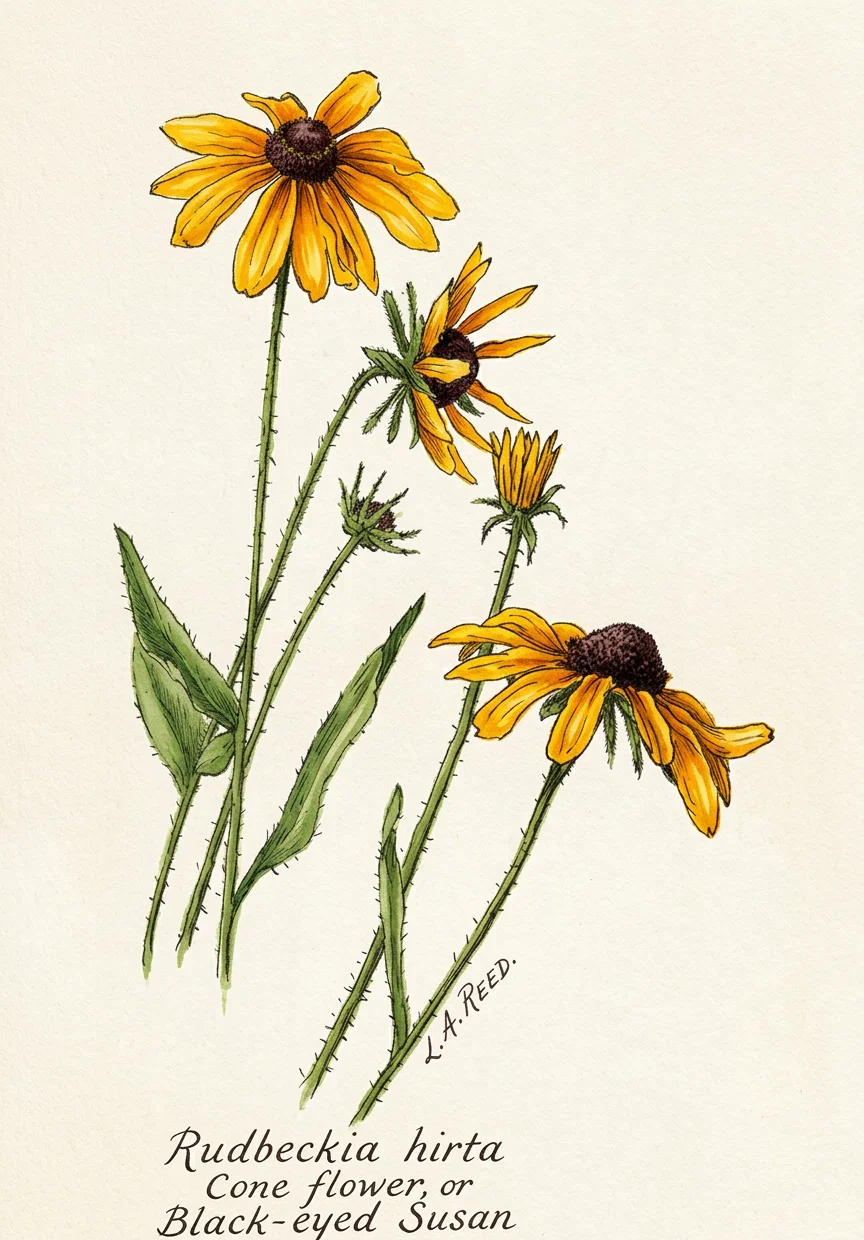
ALONG the railroad tracks in Illinois, especially on the side of embankments, you will notice whole beds of large yellow flowers with a madder-brown center. These are coneflowers, and are a distinctively Western flower. At one time, as we are told, they were never seen in the East. But the seeds of the coneflower, hidden in clover seed, were carried East, and the plant is now as much at home there as on our Western prairies.
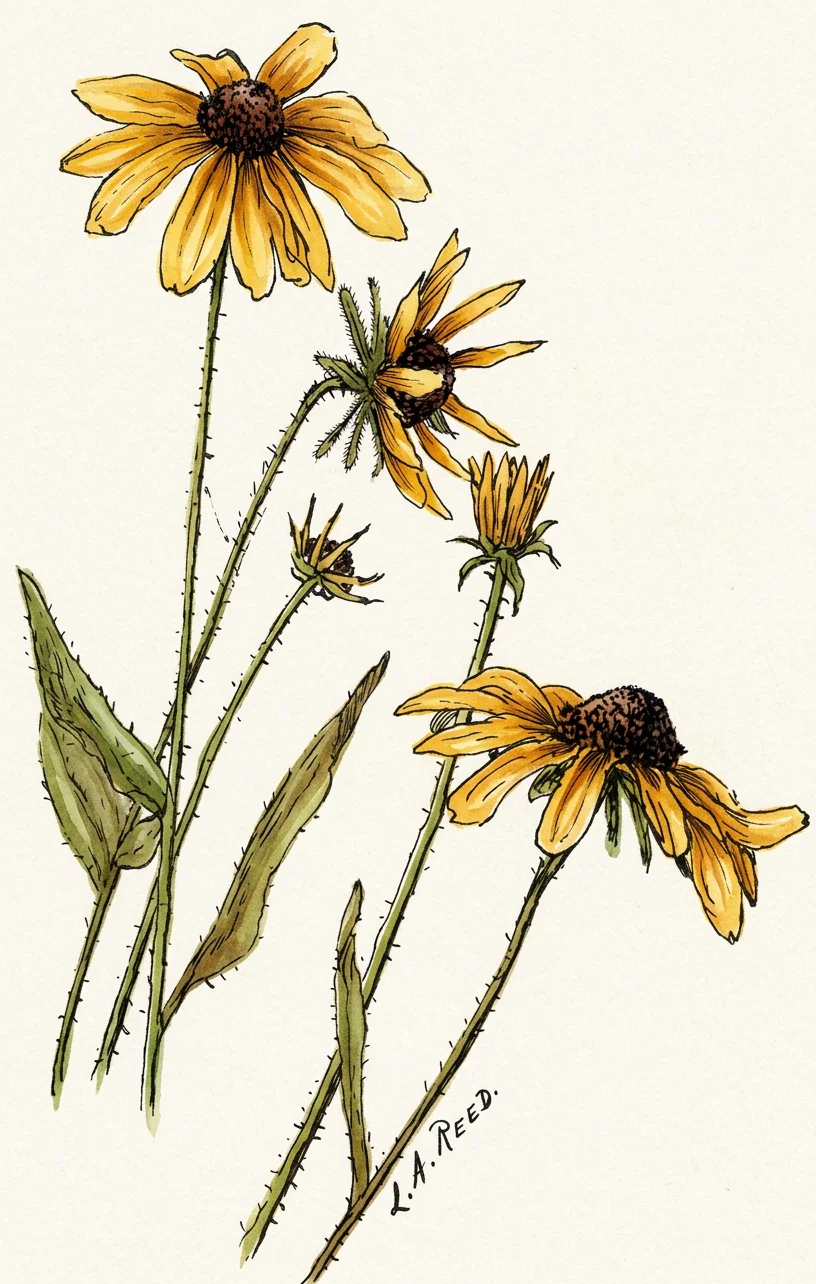
This flower is also called Blackeyed Susan. The ray-flowers are a brilliant, deep yellow, and are often nearly two inches long, though usually they are shorter. The disk-flowers are a dark-brown. You might not suppose that each so-called flower is really many flowers, but such is the case. Each yellow ray, or strap, is a flower, and each one of the brown tubes in the center is also a flower; the yellow ray-flowers are for show; the brown disk-flowers produce the seed.
“Blackeyed Susan, or Susie, as her playmates call her, is a beautiful, wild country girl, with a striking brunette face, and a gown of yellow and black, which fairly makes the meadows dance with life and gaiety. Perhaps she lacks that wealth of charm which cultivation gives, and is rather careless in choosing her companions. . . . Her manner of growth is certainly ungraceful, and her leaves and stem are rough and uncouth.”
Rudbeckia hirta
Cone flower or
Black-eyed SusanRestored with AI
Rudbeckia hirta Cone flower or Black-eyed Susan
Another name for the coneflower is “nigger-head,” doubtless in allusion to the dark-brown, cone-shaped center. The stem is sometimes brownish, stiff, and rough to the touch. The plant is from one to two feet high, grows in dry soil, and in meadows, and blooms from the middle of June until August.

22 — Oxeye Daisy

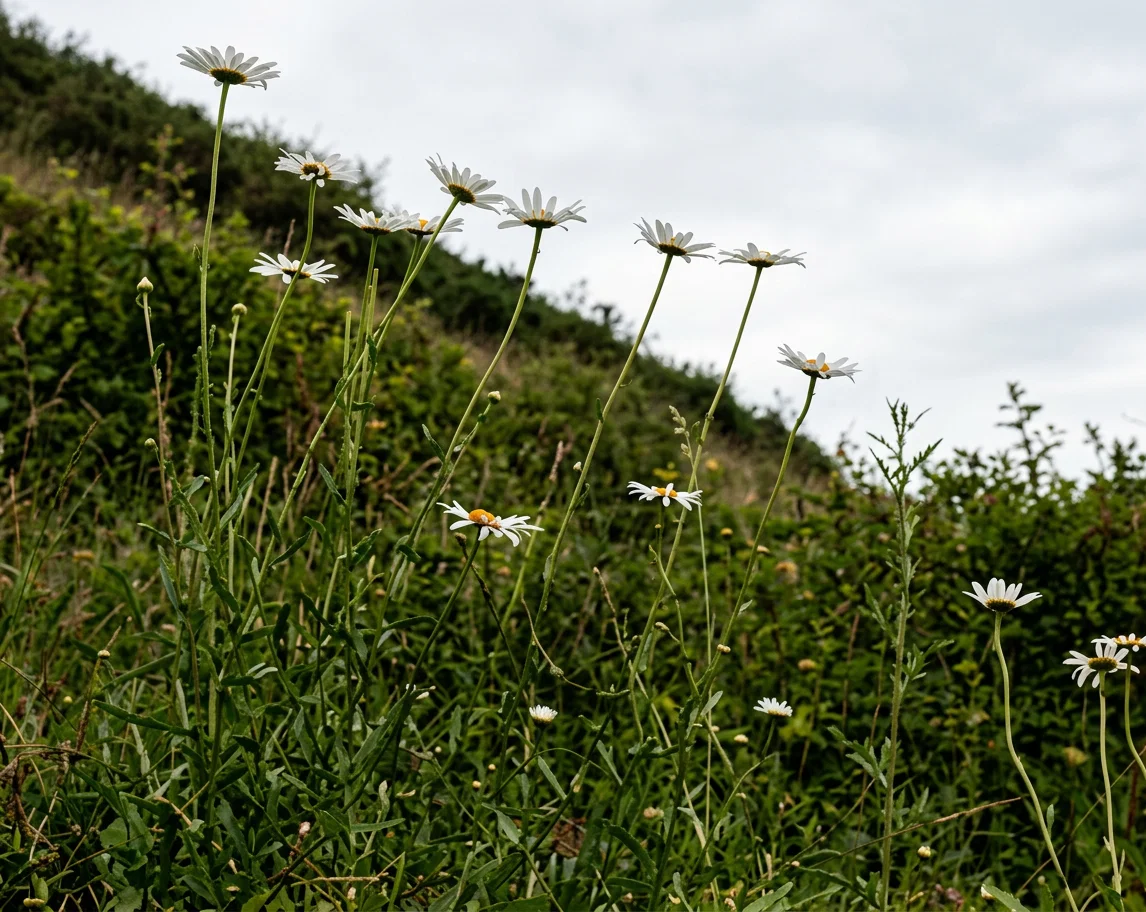
Another composite is the Oxeye Daisy. The illustration shows it fairly well. I found this bunch in a horse-pasture. The flowers are large and showy, though not so large as the coneflower, with white rays and yellow disk. Like all composites, each one of the white rays, and each one of the yellow tubes in the center, is a flower. This is why they are called “composites,”—each so-called flower is composed of many flowers.
Restored with AI
This plant belongs to the Chrysanthemum family. The leaves are quite like many chrysanthemums, but the flower-heads look little like our cultivated ones. A. Gray calls this plant a “pernicious weed,” and says it is too abundant.
Restored with AI

23 — Mayweed

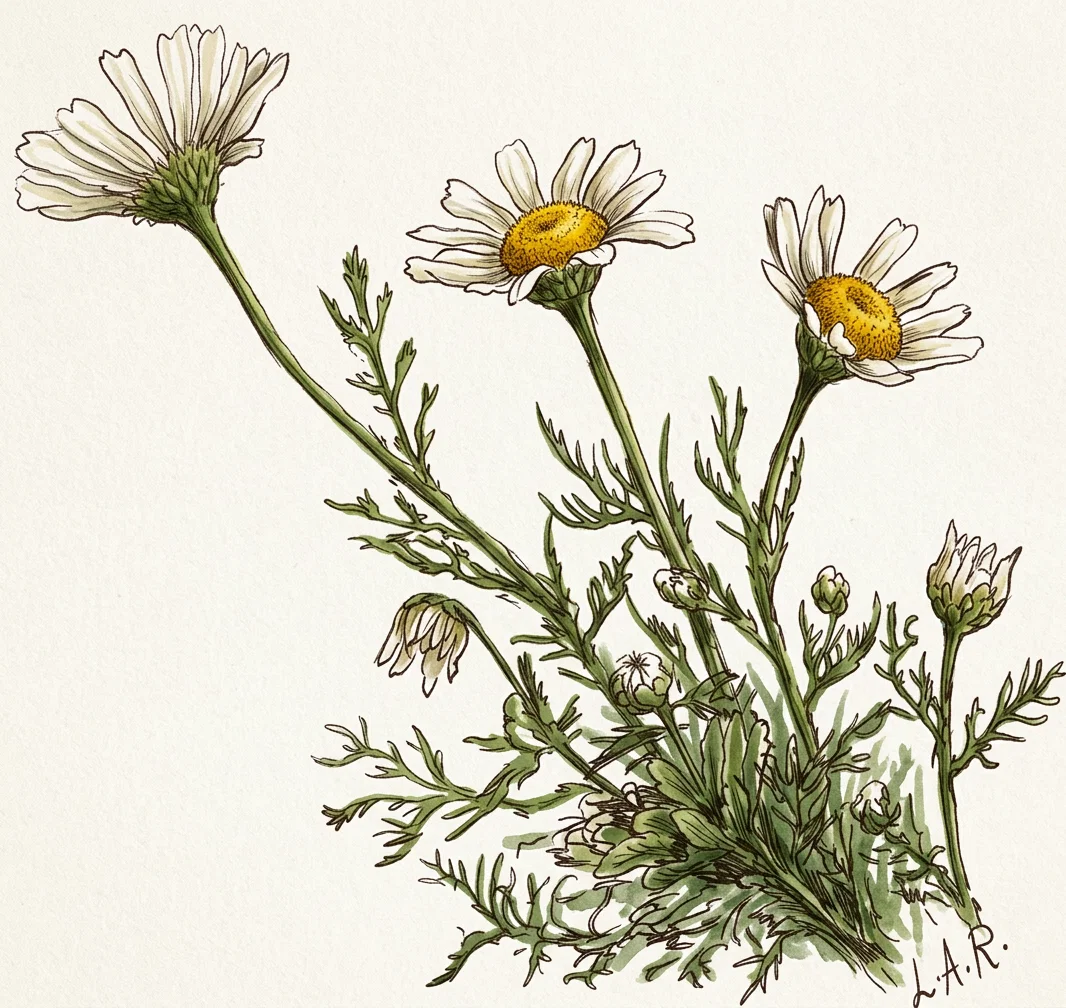
In the East a small flower something like the oxeye daisy in outward appearance is known as Mayweed; in the West it is called Dogfennel. Its leaves are very finely divided. It is found almost everywhere along waysides. It has a very rank odor, and is so well-known that it needs no further description.
There seems to be some difference of opinion as to whether or not it belongs with the Camomiles. The older editions of Gray’s botany place it by itself, under the name Maruta; but I notice that the later books place it with the Camomiles. L. A. REED.
Restored with AI