In pen-and-ink work, or, in fact, when working with any other medium, it is a good plan to begin with the shadows and shadow sides of objects, leaving all the lighter sides to be treated last. In this way it will soon become apparent how little detail is needed after the main shadows are expressed; while if the case is reversed, and the light parts of the picture are treated first, there is apt to be so much elaboration of detail that all contrast of light and shade is lost by the time the darker parts receive attention.
Objects in the shadow do not appear as solid, nor show so much detail, as those in the light.
Distance should be treated very simply. It is a fact in nature that the more distant the object, the less detail is seen. There is much less contrast of color and of light and shade in the distance than in the foreground: air comes between, and tones down the lights, and makes the shadows gray.
Notice how, in nature, strong light falling upon an object often robs it of its local color. While the uneducated eye requires, for a drawing of foliage and grass, that which will show the object as green in color, the close observer knows that a strong light falling on them makes them look so sparkling that they appear almost white to the eye.
While there is no outline in nature, in pen-drawing an outline is often made. These lights should be represented by the white paper merely separating them from everything else by a broken outline,—separating the foliage from the sky, and the grass from the ground. Objects in nature are not bound by firm lines, and consequently the student should endeavor to work by masses of tone and value; but often by a well-drawn outline one can render more of what is interesting in a subject than in any other way.
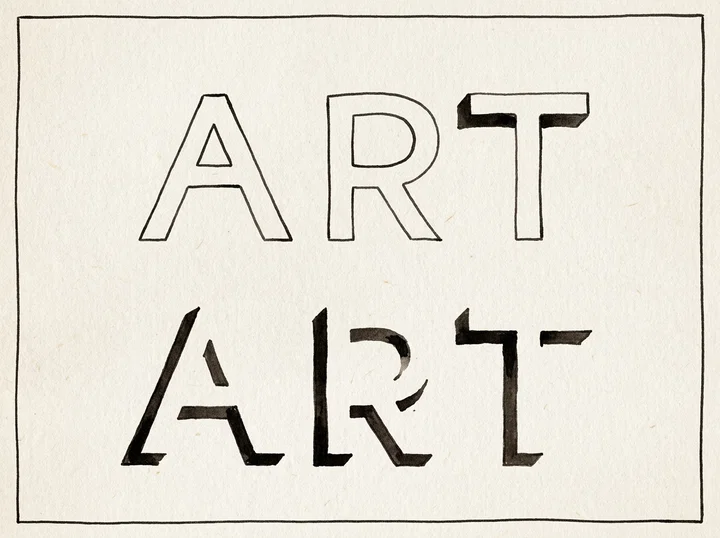
Many objects can be fully represented by drawing only the shades. This is illustrated in the two words above. One has been drawn in outline, in the other only the shaded side has been indicated; yet it will be seen that the lower word has a more pleasing effect to the eye than the upper. This method of expression should be carried throughout one's work: whenever the shade, or shadows, can be used to indicate an outline, no real outline should be drawn.
Relief is one of the effects that may be pictured by light and shade, and your first study should be to become familiar with relief in nature.
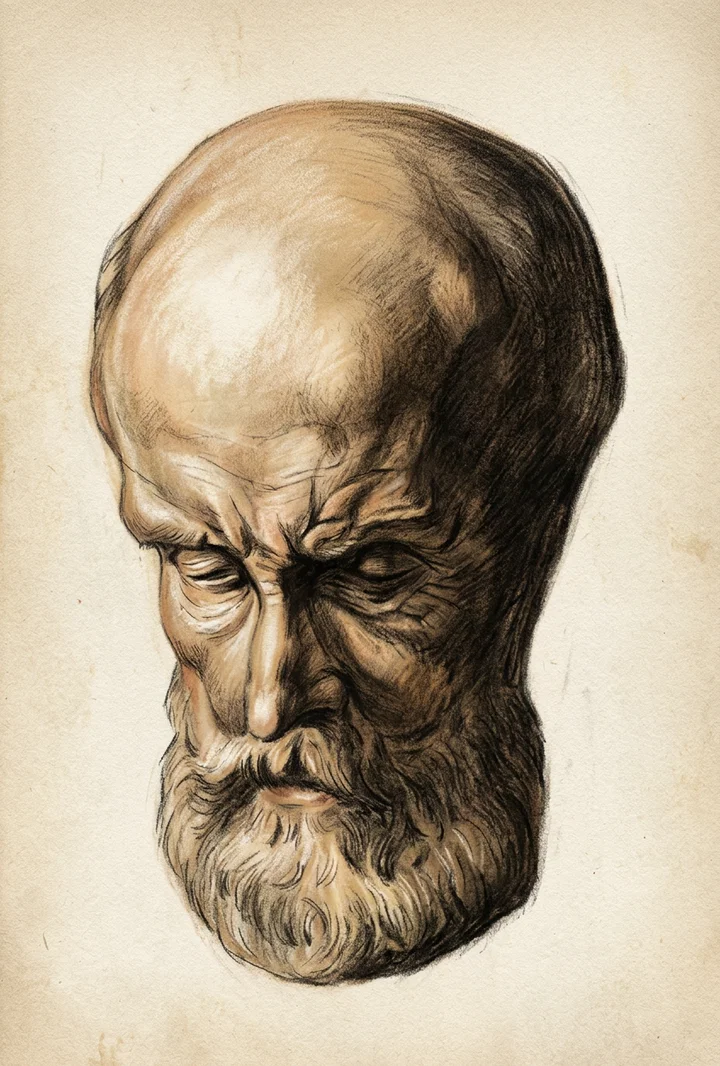
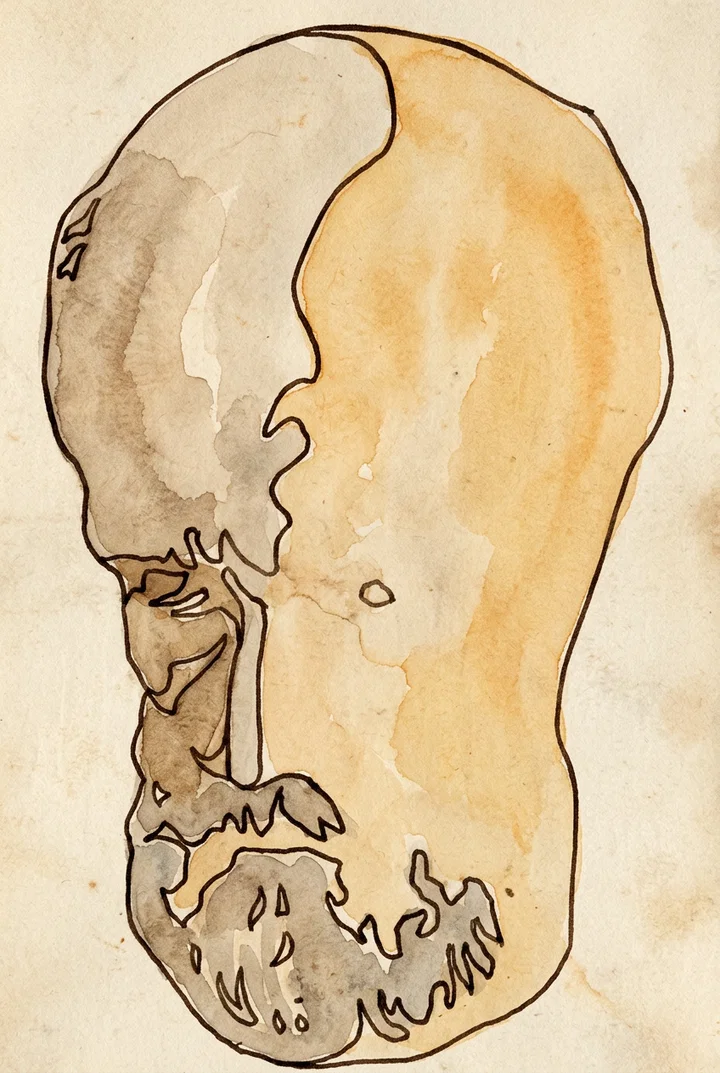
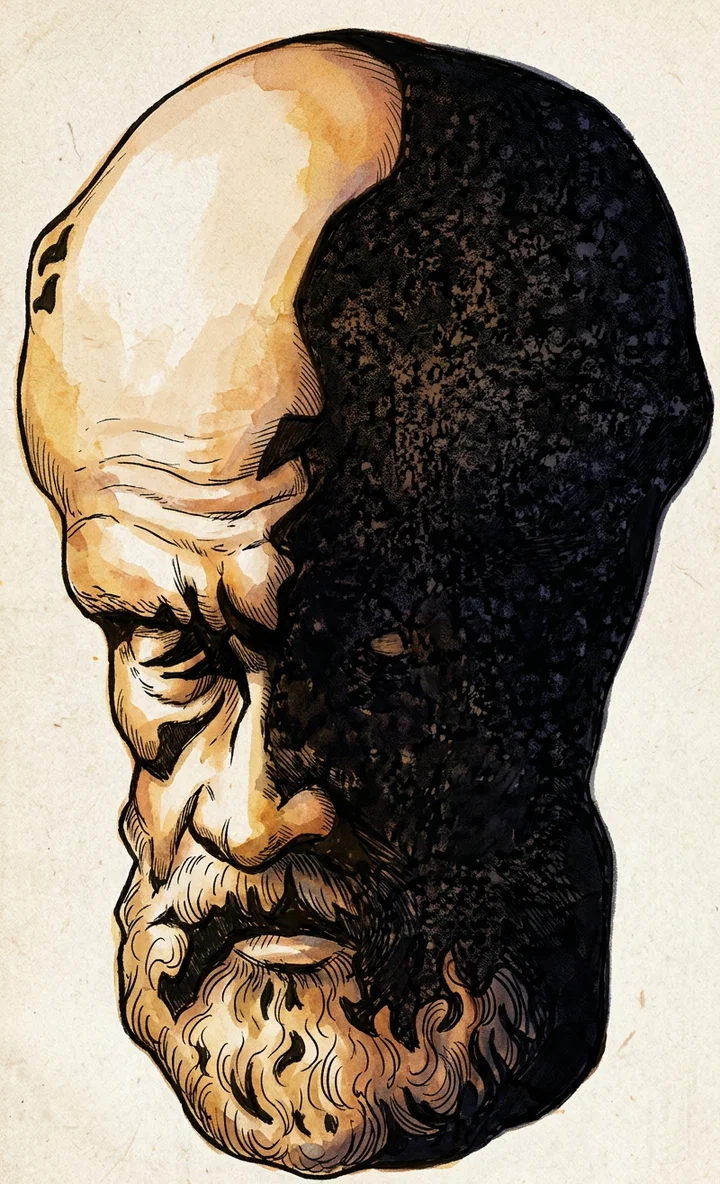
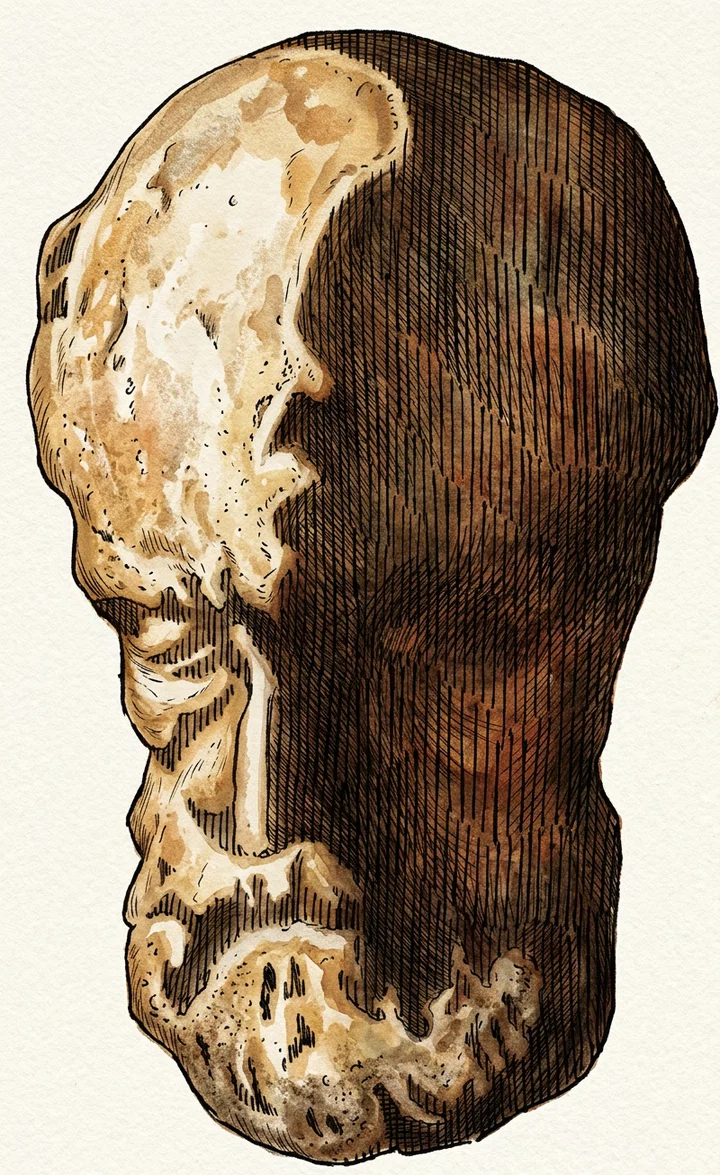
An excellent way to study light and shade and to gain an understanding of massing of shades, is to draw some object, and picture the shades and shadows only. In the accompanying drawings of a cast this study is explained. First we have the cast portrayed with its numerous shades. In the next (Fig. 2), the shadows are all carefully outlined; and in the third the shadows are filled in with black, leaving simply the black and white, or light and shade. Instead of black, a half-shade may be made to indicate the shadows, as in the last drawing (Fig. 4).
All shades that contain more dark than light should be made perfectly dark; those that are lighter should be omitted, thus leaving only the light and shade of an object. After the student has worked this way a short time, from objects, he will be able readily to see the correct relation of light and shade, and simplify his shadows. Many students can draw an excellent outline; but when they attempt shading, they ruin the picture, only because they do not simplify their shades and shadows. Slight lights and shades, as well as lines which are unessential to the character of the object, should be entirely omitted, as they will only confuse the principal shades.
By half closing the eyes, the student will be surprised to see how simply the values take their places in a landscape, and what large sections can be represented by the same degree of color, or light and shade. PEDRO LEMOS,