A Missionary Church: The Moravians
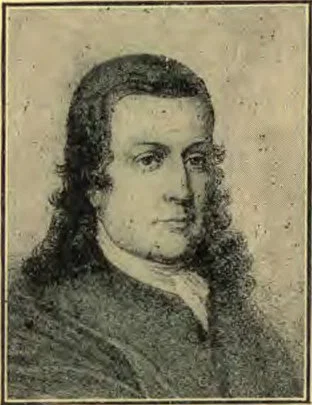
By Durward Williams
DURWARD WILLIAMS
In the eastern part of the kingdom of Saxony is the little town of Herrnhut (the “Lord’s Watch”),—the denominational center of the Moravians, and a village remarkable for its well-ordered life and its scrupulous cleanliness. The Moravians, Herrnhutters, Unitas Fratrum, or United Brethren, as they are variously called, sprang from the Bohemian Brethren, a branch of Hussite Christians. Fleeing from the persecution of their Bohemian and Moravian homes, they came to Saxony, where they were kindly received by Nicholas Lewis, Count of Zinzendorf, who gave them opportunity to found a village on his own estate near Berthelsdorf, and who became their organizer. In 1722, and in the seven following years, a considerable number of these Brethren, led by Christian David, came to this settlement.
Today we find in Herrnhut a population of a little over a thousand. There are the buildings belonging to the society,—the Brethren’s House, a building set apart for unmarried men of the community, where we find several aged and disabled missionaries returned from foreign service; and the Sisters’ House, which serves a like purpose for the unmarried sisters. In the Manor House are kept the archives of the society, a library containing an accumulation of manuscript treasures, and a suite of rooms hung with portraits of distinguished Moravians.
A mile down a charming slope close by the Hurberg, brings us to Berthelsdorf, where are the large stone buildings which are the official residences of several members of the Elders’ Conference, one apartment serving as their chapel for daily services, and another as their council chamber, this latter being hung with portraits of men eminent in the society.
From this settlement of simple Christians has been carried on for almost two centuries what is perhaps the most remarkable work in the history of modern missions.
The First Moravian Missionaries
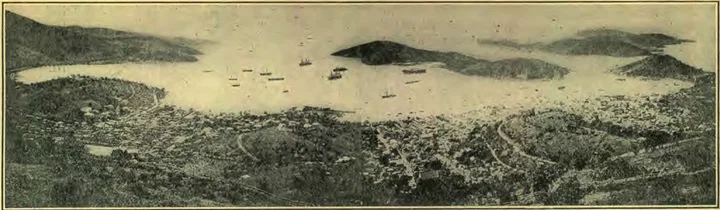
When the congregation at Herrnhut was the only Moravian church, with about six hundred members, and most of these poor immigrants from Moravia, they began work among the slaves of the West Indies. Only ten years after the first tree was felled at Herrnhut, they were ready for a movement beyond the sea. It was in 1731 that the cry from the islands reached the ears of Zinzendorf. Leonard Dober and a friend, Tobias Leupold, offered themselves for service in St. Thomas; the matter was laid before the congregation, and after much deliberation one of the young men, Dober, was permitted to go, accompanied by David Nitschmann, with about three dollars apiece for fare and expenses.
Journeying by way of Copenhagen, they finally reached St. Thomas in December, 1732, and began work among the Negro slaves, who were overjoyed to find that the message of salvation was meant for them too. They had supposed that the good things were for white people only.
After some months, Nitschmann, according to previous arrangement, returned to Europe, leaving his little surplus of earnings for Dober’s support. The latter, acting as watchman on plantations to pay expenses, renewed his efforts, and the Lord greatly blessed him.
It was a year and four months after Nitschmann left him before he heard from Herrnhut. Sitting by a watch fire one evening, suddenly three men stood before him—one of them Tobias Leupold, the friend who had joined him three years before in a consecration to the foreign work. After the arrival of these men, opposition to the work began, and the missionaries were thrown into prison. Here they were found when Zinzendorf, ignorant of what had happened , arrived at St. Thomas in 1739 with reënforcements. They were released, but the work went on amid difficulties, the planters whipping and shooting the Negroes who attended the meetings, saying that the slaves were likely to become better Christians than themselves, which, of course, was not very improbable. At length, however, governors and masters found that the Christian religion was not a bad thing among slaves; for they were more easily managed, and their price was enhanced.
The mission was successful, due to the deep interest felt by the missionaries in those for whom they labored. Without such affection, no great benefits need be looked for in any mission. Other stations were established on St. Croix, St. John, Jamaica, the Barbados, and other islands, and in South America.
The region bearing the name Guiana, extends from the Orinoco to the Amazon, but, in a more restricted use, it has a northern coast line of six or eight hundred miles, divided into three portions, English, Dutch, and French Guiana. The country is low, some of it being lower than the sea, which is kept out in Dutch fashion by dikes, behind which many of the housesp. 4 are built on piles, above possible inundations. Slavery existed from the earliest times among the natives.
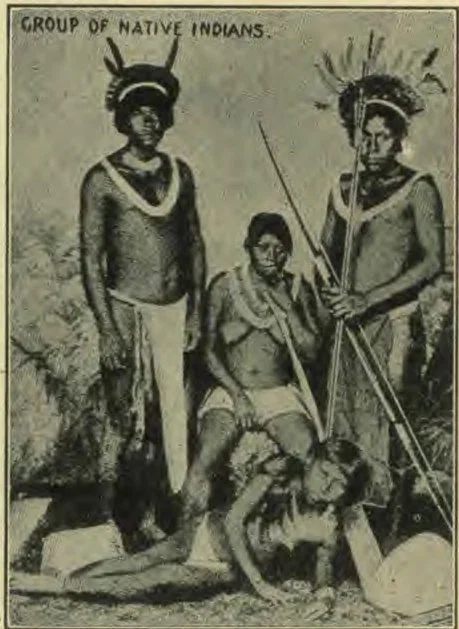
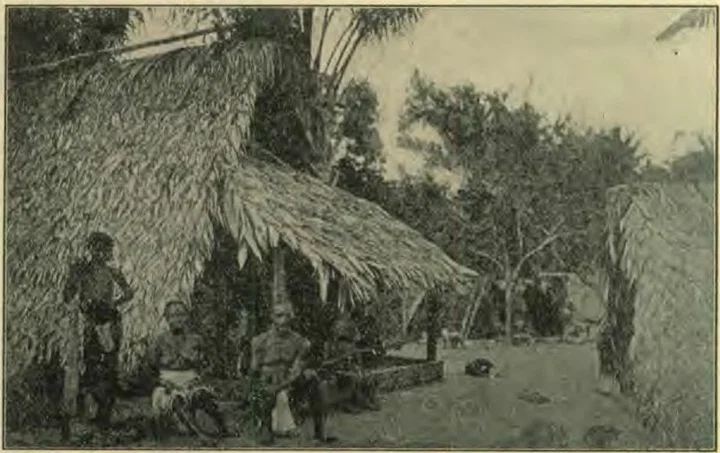
In 1734, Spangenberg, an able bishop of the United Brethren, passed through Holland while on his way to England, and at the suggestion of Zinzendorf had several talks with directors of the Dutch Trading Company which was operating in Guiana. As a result the Moravians finally secured a resting place on the Wironje River, at a distance of one hundred miles from the sea coast, which they called Pilgerhut. Here they won the confidence of the Arawak Indians, learned their language, and at length succeeded in making a serious impression upon them. Within less than ten years, forty-five persons were received into the church, and many of these converts put up their huts at Pilgerhut. The mission work continued for seventy years among the Indians of Guiana, several other stations being established, which were generally successful.
In South America and the islands of the Caribbean Sea the slaves were freed about 1863, and because of the change in the moral aspect caused by the Moravians and other Christian bodies, the personal safety of those who had previously been masters was greatly increased. Joannes De Watteville, son-in-law of Zinzendorf, said, more than a hundred years ago, to the governor of one of these islands: “What security have you against the slaves’ rising and destroying all of you?” The governor pointed to some Moravian mission stations and answered: “This is our security. Negroes who are converted will never rise in rebellion; and their number is so great that the others could never conspire without their knowledge, and they would inform us.”
Work in Greenland
When Count Zinzendorf was at the coronation of King Christian of Denmark in 1731, he saw two Eskimos who had been baptized by Hans Egede, the Danish missionary to Greenland, and heard with sorrow that the mission founded by that remarkable man was to be given up. Returning to Herrnhut, he told of Greenland and of its heathen perishing in darkness. It was on this occasion that Dober and Leupold were impressed to go to St. Thomas; at the same time two others were impressed to go to Greenland. These two were Matthew Stach and Frederick Bonisch. On Jan. 11, 1733, three men, Stach and a cousin, and Christian David, the leader of the emigrants from Moravia, set out for Denmark. At Copenhagen their plan was deemed by many to be romantic and ill-timed , and many sought to discourage them from their undertaking. They persisted, however, and through the assistance of Count von Pless they were enabled to sail in April, 1733, on His Majesty’s ship “Caritas.” After a voyage of six weeks they entered Ball’s River, almost the only river in Greenland. Here in the land of glaciers the missionaries landed, and were received cordially by Hans Egede.
The Eskimos, a shore people, with their tribes isolated from each other, and who seem to have a preference for desolation, were found to have the usual conceited ignorance of tribes and individuals so situated. Their language was extremely unlike European languages, with its particles and inflections more numerous than the Greek, and this the missionaries had to learn, first learning the Danish, so they could have the advantage of the helps Egede had prepared. Famine and pestilence invaded the mission, but these earnest men had learned to trust in God, and they continued their work.
“Tell Me That Once More”
After five years of toil and disappointment had passed, patient waiting received an earnest of its reward. John Beck was one day copying out a translation of the Gospels, when a company of native Southlanders called, and wished to know what was in the Book. The missionary read to them. He told them that the Son of God became man that he might redeem them by his sufferings and death, and that they must believe if they would be saved. One of the listening savages, Kaiarnak, stepped up to the table, and said, with much earnestness: “How was that? Tell me that once more, for I too would fain be saved.” He accepted Christ, and was given the name Samuel. Other families moved near the mission, that they might hear the gospel. Six mission stations were established, and in 1881 the membership was 1,545. Although progress was slow, the Greenlanders as a body have risen from the condition of wild, filthy savages to that of a docile and civilized people. Such is the power of Christianity.
Unfriendly Labrador
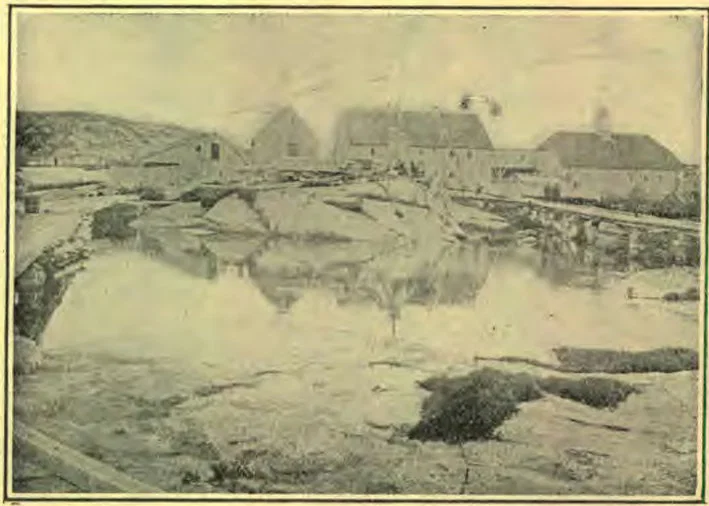
Leaving Greenland, we find the Moravians making several attempts to establish work in Labrador. The first was made by Ehrhardt, a Moravian pilot; later Jens Haven, a Moravian carpenter, established a station which proved permanent.
Jens Haven and his associates were taught by God, and they formed a Christian estimate of their degraded fellow men, gladly living in this unfriendly land inp. 5 the hope of winning some to Christ. At first the Eskimos treated Europeans in an utterly contemptuous manner, calling them dogs and barbarians. When told that some of the Greenlanders had been washed in the Saviour’s blood, their reply was: “They must have been extremely wicked to be in need of such a process.” They could see no practical benefit from this new religion, which did not promise them any help in seal fishing, or in building their kayaks. Later, however, some of them were brought to Christ, and rejoiced in the knowledge of salvation. Speaking of one of the converts, the missionaries said: “From his infancy he had spent his life in the service of Satan. But now, how he is changed by the power of Jesus’ blood, which cleanseth from all sin!” The people have developed a creditable taste for music, learning tunes readily. The week of prayer is now observed at all the stations.
Early Missions in the United States
The year 1734 was a remarkable one for missionary work. In this year a new station was established in Greenland, a Christian colony went out from Denmark to establish itself at Disko Bay, fourteen Moravian brethren and sisters arrived at the West Indies for St. Croix, and the first movement began from Herrnhut in behalf of the American Indian. The first company of United Brethren to come to our own land started from Herrnhut under the conduct of John Toltschig and Anthony Seiffart, and, accompanied by Spangenberg, arrived in Georgia in the spring of 1735. Missions were also started in Connecticut, and at Bethlehem, Pennsylvania. Among the names more especially worthy of notice is that of David Zeisberger, the John Eliot of the West, the Apostle of the Delaware Indians. His explorations, perils, and privations were far greater than those of Eliot and the Mayhews. He performed important service for his adopted country, in acting as government interpreter at the General Congress held with the Indian tribes in 1761, in securing the neutrality of the Delawares in the Revolutionary War, and in preventing an Indian war at Fort Pitt in 1769. His literary labors were also important, as he did much toward the development of the Delaware language and the Onondaga dialect. This venerated patriarch died in 1808, having spent sixty-two years in missionary labor.
These are but a few examples of missions instituted by this organization. Beginning at a time when no Protestant church was carrying forward systematic missionary operations, and going where no one else was willing to go, it has become a great movement. Mission enterprises are conducted in Labrador, Alaska, Canada, German East Africa, North Queensland, West Himalaya, and Jerusalem, not to mention the scattered work among the state churches of the European nations. It is only in recent years that this society, which has performed such great service in introducing Christianity in so many difficult fields, has been compelled to retrench. This crisis has been caused by political and industrial disturbances, and by the inability of the home membership, which numbers only 43,127, to carry on aggressive work of itself, with a membership in foreign missions of 102,381. It has been necessary to turn over the Greenland mission to the Danish State Lutheran Church, and the mission to the Indians of Canada to the Methodist Church. But the history of the Moravians shows what a mighty work can be done by a very small people, who, consecrated to God and feeling the burden of souls, advance by faith into the battle, with Christ as their leader.