I REGARD the college student as belonging to a peculiarly privileged class. The community is relieving him from productive work for a time to give him the great privilege of a higher education, that may enlarge and enrich his own life, and fit him for somewhat exceptional later service to his generation. Large resources have been devoted to this purpose, and every student is a beneficiary. So peculiarly privileged an individual seems to be especially bound not to load himself with needless handicaps. He ought to be in dead earnest to get the utmost out of his college years. It does not seem to me he can honorably do less. Is there any doubt that the tobacco habit hinders that result?
I understand it to be the practically unanimous judgment of medical authorities that the use of tobacco is injurious to growing youth. Whatever may be true for the fully mature man, during the period of growth probably not entirely ended before twenty-five, any use of tobacco is harmful, and the excessive use, to which the young are doubly liable, is detrimental. Even if the individual is later to form the habit of smoking, it is a great physical gain to have abstained from the use of tobacco during his growing college years.
The statistics concerning the relation of smoking to athletics and scholarship in college, all tend to confirm the physically injurious effects of the use of tobacco. Whether one regards the poorer average scholarship of tobacco users as directly due to the effects of tobacco on the mental powers, or chooses to say that it is the intellectually inferior men who are likely to smoke, the admitted connection between tobacco using and poorer scholarship offers the college smoker an uncomfortable dilemma. Study is supposed to be the chief business of the student. Has he the right to damage his chief business? And ought the college to think it a matter of indifference that he should do so?
But a still more important consideration remains,—it is a serious moral matter that a man should consent steadily to fall below his admitted best at any point. Most smoking students probably know that they would be distinctly better off if they stopped smoking. That vision of their own is a thing with which to be most earnestly reckoned. The unity of our moral life is always asserting itself. One cannot slump at one point, and not invite a kind of moral slump all along the line. On the other hand, it is amazing what new moral vigor is brought into all our moral life by utter truth to our best vision at any point. One is not to exaggerate trifles, nor take an ascetic view of life. But to be able to count on the normality and accuracy of the responses of our nervous system—decidedly involved in the use of tobacco—is a matter of some moment. And to see a clearly better way of life and steadily refuse to take it, is at the least to run a serious moral risk, and pretty certainly to sentence oneself to an inferior grade of living. Has the privileged college man, with his large future opportunity of leadership, a right so to jeopardize his best?
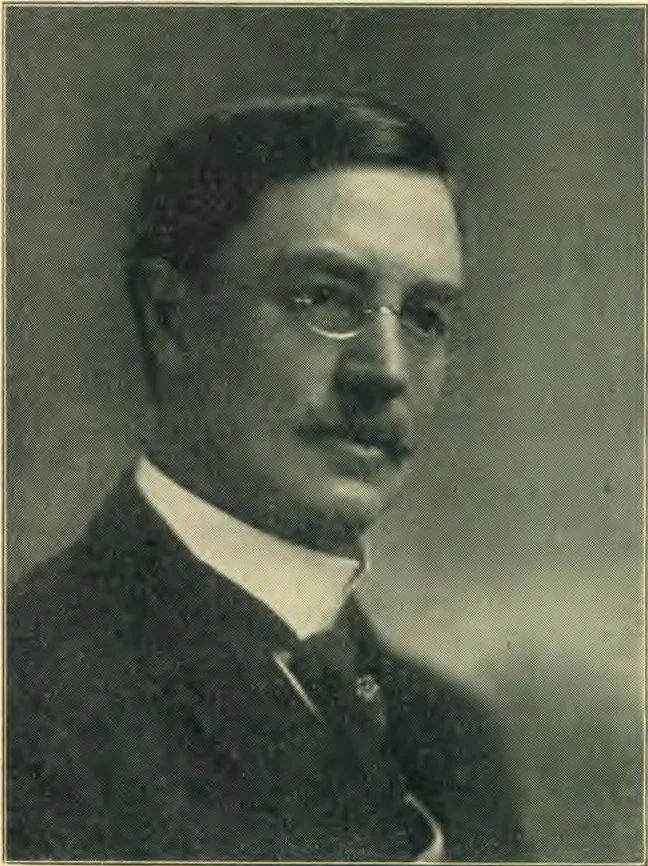
Much more might be said; but these considerations taken together seem to me to make it so desirable that the college student should not be a smoker, that I believe the college may well help him by forbidding the use of tobacco. It is a proper part of that sterner disciplinep. 7 which leaders, in process of training, ought gladly to take on. I expect the world to be increasingly disgusted with the college loafer, and more and more to demand that the college man prove himself worthy of his opportunities, and willing to lay aside for his college race “every weight.” The use of tobacco seems to me to be indubitably such a weight for the student; and since we “mean business” at Oberlin in our college work and life, we ask our students to strip off this weight.—Henry Churchill King, in the North American Student.