CHARLES M. SNOW
Roger Williams was Rhode Island’s Declaration of Independence; and from the constitution of the State which he founded, the great Constitution of the United States drew many of its most vital and valuable principles.
The date of Roger Williams’s birth is not definitely known, but he was born in England about the year 1603. The years of his youth were times of great theological debates and strong theological feelings; for in those days it was a costly and generally very dangerous matter to hold opinions that were contrary to the creed of the established church. It mattered not how clearly those opinions could be proved from the Word of God, if they were contrary to the creed, they were dangerous heresies; and the more easily they were proved, the more dangerous they became—to the established church.
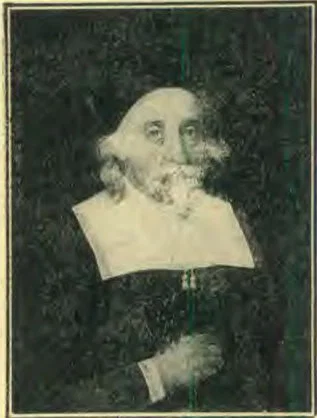
Those were the days of the Anabaptists, the Mennonites, the Separatists, the Pilgrims, and the Puritans. The first two named stood for the complete separation of church and state, and were practically the same, the one having grown out of the other. The Separatists separated from the state church in order that they might find in their conventicles and prayer meetings the religious refreshing which they did not receive in the meetings of the established church. The Pilgrims were Separatists who migrated to Holland in 1608, and twelve years later came to America. The Puritans were members of the established church who desired a simpler and purer form of worship in that church than that which obtained there. All were denominated nonconformists.
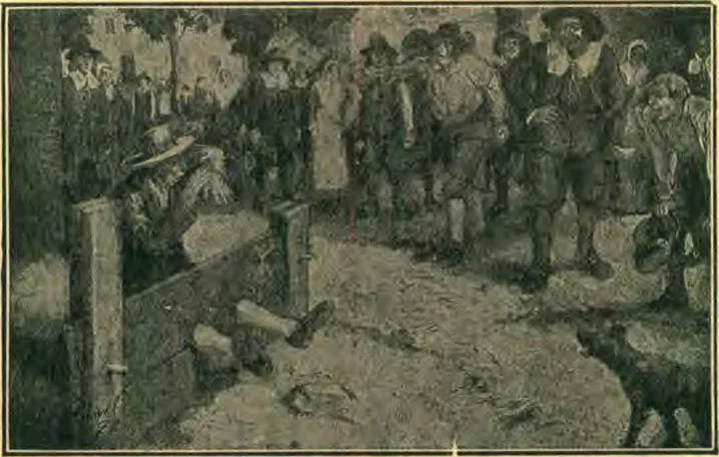
With the established church—the English Catholic—persecuting all these nonconformists, or dissenters, in England, and with the Presbyterian establishment doing the same for all dissenters from its creed in Scotland, with the Roman Church outlawed throughout the realm, Roger Williams had an excellent opportunity to study the workings of the church-and-state system. His early espousal of the principles of soul liberty soon made him an undesirable citizen in the eyes of the establishment, and his biographers indicate that when he left England, there were reasons of a very personal and imperative nature for his doing so; namely, to escape the wrath of the officials of the established church for the opinions which he held. A sample of the conditions existing in England at the time when Roger Williams left for America is seen in the way a man by the name of Leighton was treated for publishing his “Plea Against Prelacy.” For that act he was committed to prison for life, fined ten thousand pounds, degraded from his ministry , whipped, pilloried, his ears cut off, his nose slit, and his face branded with a hot iron.
It was in 1631 that Roger Williams landed in Boston. He had come to America for freedom of belief and worship; but he found a church here as truly established and as truly despotic as the establishment in either England or Scotland. He refused to join the church at Boston because it still held communion with the Church of England, from whose oppressive jurisdiction he had fled. He thought it his duty to renounce all connection with a church that would imbrue its hands in the blood of the Lord’s people. He made application for the rights of a “freeman” in the colony, but this was denied him because he refused to join the church, the rights of citizenship being specifically denied those outside the communion of the established church. It no doubt vexed the righteous soul of Williams to find in the New World the same oppressive conditions that had caused himp. 4 to flee from the Old, and without delay or diplomacy he began to combat the principle.
In spite of the disapprobation of the general court of the colony, the congregation at Salem elected Williams pastor. He soon found it conducive to his temporal peace, however, to take up his abode in the Plymouth Colony, where a greater degree of toleration existed, and there he continued to exercise his gifts as a minister of the gospel. He was again invited to become the pastor of the Salem church, and accepted the invitation, although the magistrates and ministers strongly objected. The majority of the church felt that they had a right to choose their pastor, and held to their choice. At once his opponents began to denounce his teachings, and he was summoned to appear before the court to answer charges brought against his “heretical” opinions.
One of the teachings for which Roger Williams was called to answer was that the civil magistrate had no right to enforce religion and religious practices. Such teaching was, of course, diametrically opposed to the principles upon which the Massachusetts Bay Colony was founded, and was regarded by the officials as a very serious matter. Three days after Mr. Williams’s appearance in court to answer to these charges, the Salem church was refused legal possession of a certain piece of land for which they had applied, because of their having selected Mr. Williams as their teacher after being admonished by the magistrate not to do so.
Mr. Williams and his church then wrote letters of admonition to the churches of which those magistrates were members, setting forth the injustice of their action, and asking the churches to admonish the magistrates of the criminality of their conduct. These letters failed to have the desired effect, and even some of Mr. Williams’s congregation, because of the official pressure, began to waver. The difficulty grew, and finally Mr. Williams withdrew from the church because of its refusal to withdraw with him from the communion of the other churches. Mr. Williams’s friend, Endicott, was imprisoned for the crime of publicly justifying Mr. Williams’s letter of admonition to the churches, and a Mr. Sharpe was summoned to appear in court to answer for the same offense.
In October, 1635, Roger Williams was again summoned to appear in court. All the ministers of the colony were present. They had already decided that any one was worthy of banishment from the jurisdiction of the colony “who should obstinately assert that the civil magistrate might not intermeddle even to stop a church from apostasy and heresy.” Mr. Williams bravely upheld his teachings, but the following sentence was passed upon him, all the ministers present, save one, approving of the deed:
“WHEREAS, Mr. Roger Williams, one of the elders of the church of Salem, hath broached and divulged divers new and dangerous opinions against the authority of magistrates; as also writ letters of defamation, both of the magistrates and churches here, and that before any conviction, and yet maintaineth the same without any retraction; it is therefore ordered that the said Mr. Williams shall depart out of this jurisdiction within six weeks now next ensuing, which, if he neglect to perform, it shall be lawful for the governor and two of the magistrates to send him to some place out of this jurisdiction, not to return any more without license from the court.”
Here, then, truth, asserting itself, met bigotry intrenched behind the breastworks of temporal power. The Christian commissioned of heaven to preach the gospel as taught by the Word of God and the Holy Spirit, met the professed Christian bearing the sword of the civil magistrate and deciding for himself who shall and who shall not teach, and what shall and what shall not be taught. The sword-bearing restricter of other men’s liberties may triumph for the time, but his triumph is really a self-inflicted defeat; for in robbing other men of their liberties, he is robbing himself of his own. In imprisoning other men for their consciences, he is committing his own soul to the chains of soul slavery.
The exiled Williams was defeated for the time; but out of that defeat grew a monument to his name that succeeding generations have learned to revere. The triumph of the party of oppression has crumbled and gone; the defeat of Williams grew into a State that has influenced not the nation alone, but the whole civilized world as well.
The sentence of Roger Williams to banishment from the jurisdiction of the Massachusetts Bay Colony bore date of Oct. 9, 1635, and was to take effect within “six weeks now next ensuing.” Because of the inclemency of the weather at the time of year when his departure must take place, the time was extended. During this time Mr. Williams did not attempt to preach or teach in public; but a considerable number who sympathized with him would gather at his house from Sunday to Sunday, and listen to his discourses in private, thus absenting themselves from their accustomed places of worship on that day. This was very displeasing to the officials of the established church; it was also against the law, and increased the feeling of annoyance and irritation against him whom they had condemned to exile.
Roger Williams had for some time contemplated the founding of a state whose inhabitants should enjoy the fullest liberty in matters of conscience; and in founding such a state, he would recognize also the principle of equity toward the original inhabitants of the land. In fact, one of the expressed reasons for the banishment of Williams was the fact that he had protested against the injustice of taking possessionp. 5 of the Indians’ land without their permission.
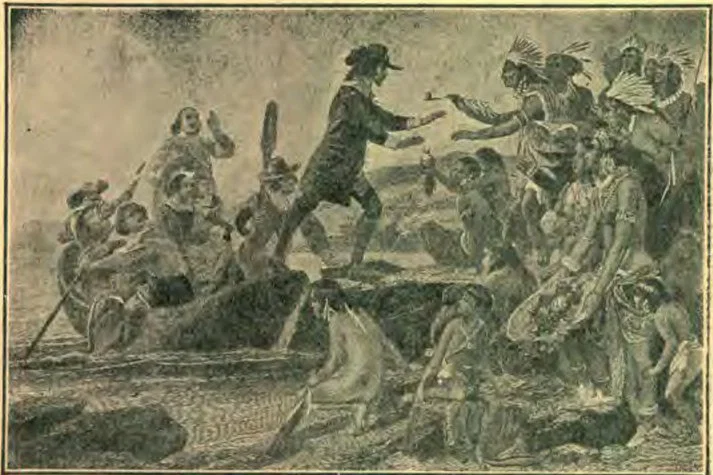
The purpose of Williams to establish a new state based upon the principles of freedom of conscience and the rights of the Indians, determined the Puritan officials to get him out of their colony without further delay. A vessel was then riding at anchor in Boston harbor, and it was determined to send Williams to England on board that ship. A warrant was dispatched by the court at Boston, summoning Williams thither. He replied that he believed his life to be in danger, and did not obey the summons. An officer was dispatched to bring him; but when the officer arrived at Williams’s house, it was found that he had been gone three days, but to what place he had gone could not be ascertained.
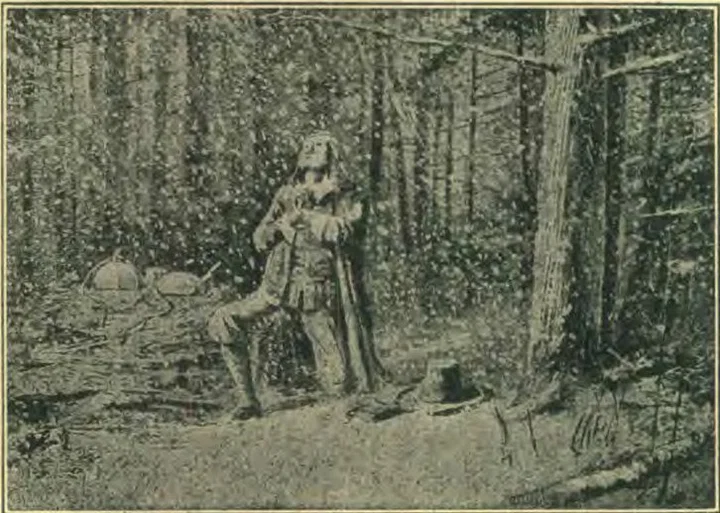
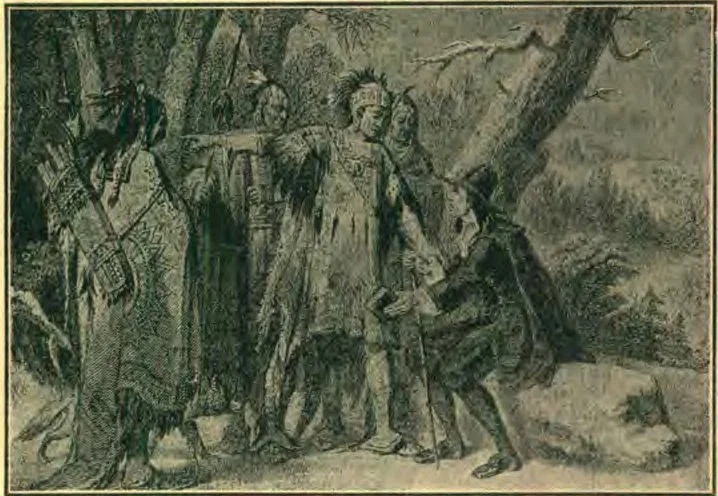
Leaving his wife and three children, the youngest less than three months old, and having mortgaged his property at Salem for means to supply his wants, Roger Williams plunged into the wilderness to find among the savages that freedom which a union of religion and the state denied him among civilized men. He speaks of himself as being “denied the common air to breathe in, and a civil cohabitation upon the same common earth; yea, and almost without mercy and human compassion, exposed to winter miseries in a howling wilderness.” These miseries of the wilderness he endured for fourteen weeks, “not knowing what bread or bed did mean.” During this time whatever shelter he had was in the smoky, dingy lodges of the Indians. But their hospitality to him in his extremity, he sought, during all the remainder of his life, to requite by deeds of kindness.
During these days and nights of distress, Williams was teaching the Indians the principles of the gospel, which he ever sought to illustrate in his treatment of them and the rest of his fellow men. He had learned the language of the Narragansetts, and through this exile he became the first of the Pilgrims to carry the message of salvation to the Indians.
Circumstances so brought it about that the exile of Williams became for the New England settlements what the selling of Joseph by his brethren became to the children of Israel during the seven lean years. In the following stanza Williams refers to the kindly hospitality of the Indians while he was plodding through the snow from one Indian settlement to another in search of a place of abode:
“God’s providence is rich to his, Let none distrustful be; In wilderness, in great distress, These ravens have fed me.”
At Seekonk, on the east bank of the Pawtucket River, Williams broke ground for a habitation, and began to build and plant; but before his crop had had time to mature, the Plymouth officials learned of his whereabouts, and, despite his former ministrations among them, warned him that he was a trespasser upon their domain, and must move on. With five companions he obeyed the ouster of his Plymouth brethren, embarked in a frail canoe, and began to descend the river. At the mouth of the Moshassuck River they landed, near a spring, and there founded a settlement, which they called Providence. This has since grown to be the city of Providence. “It was and has ever been,” as E. B. Underhill says, in his introduction to the reprint of Williams’s “Bloudy Tenent of Persecution,” “the refuge of distressed consciences. Persecution has never sullied its annals. Freedom to worship God was the desire of its founder,—for himself and for all,—and he nobly endured until it was accomplished.”
At several different times Roger Williams had it within his power to “avenge himself of his adversaries,” but no such thought seems ever to have entered his mind; and more than once he went far out of his way to do invaluable favors for those who had banished him, or for their supporters. Samuel G. Arnold, in his “History of Rhode Island,” dwelling upon the fact that some of the laymen opposed the decree for the banishment of Williams, while every minister save one approved of it, makes the following truthful and striking statement:
“A practical commentary is thus afforded on the danger of uniting the civil and ecclesiastical administrations. It suggests the reflection that, of all characters, the most dangerous and the most despicable is the political priest.”
There is no sadder demonstration in history than the demonstration of the truthfulness of that quotation.