He was a dramatic author, a magazine writer, a newspaper editor, in a famous summer resort. He was all this, and more; and you will know how much more when I say that the saloons got $70,000 of his money, and all but put him in a drunkard’s grave. How he escaped this tragic end was told by himself recently in McClure’s Magazine. He says:—
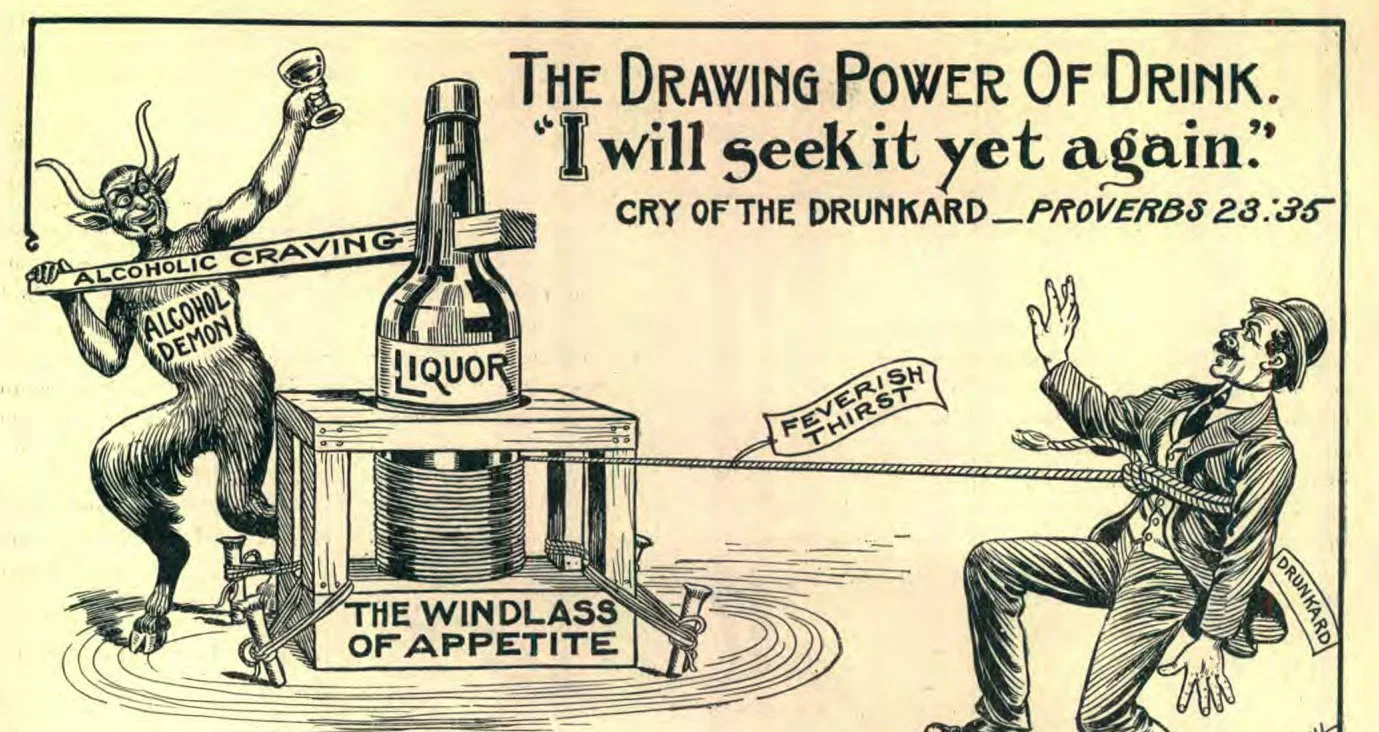
“I arose on the morning of June 17 the year 1903, at eight o’clock, with every nerve in my body leaping with agonized tension. My hands shook so that I could not button my collar, and I shoved it in my coat pocket with the cravat that went with it. I could hardly fasten my garments, and to attempt shaving would have been to place a premium on self-mutilation. I was within one short jump of delirium tremens, and, fortunately, I knew it. Yet one thought alone possessed me: I must have a drink—two, perhaps three drinks.
“Three floors below me was a saloon, and I hurried there as quickly as I could find my way down the stairs. In the saloon I ordered whisky and absinth. I could not pour them from the bottles, so the bartender poured them for me. I tried to raise the drink to my lips, and it dropped from my shaking hands—both of them. Through experience I had found that this combination of liquids served to lull the nervous palsy that beset me in the morning, provided I repeated it three or four times within a quarter of an hour.
“When I tried to raise the glass after the bartender had refilled it, I knew I could not do it; and then I recalled a method I had seen pursued by a nervous wreck in a case similar to mine. Taking out my handkerchief, I slipped it around my neck, grasping an end in each hand. Still holding the right end in my right hand, I clutched the glass that rested upon the bar, and by pulling on the other end I raised the glass to my shaking lips. As I did this, I caught my reflection in the mirror opposite, and after draining the liquor I let the glass fall again. I saw that picture of myself a hundred times more that day.
“‘That’s you! That’s you!’ I muttered to myself, and hurried outside.
“When I left the saloon that June day, I was in the clutch of a great fear. I was accompanied by a specter that had haunted me during two weeks. I feared I should never be able to get sober again. I feared I should die in the grip of liquor, and I did not want to die. The night before, I sat rocking on the edge of my bed, crying chokingly, horribly, because I could see no hope of ever getting straight again.
“‘God! what shall I do? What shall I do?’ I cried.”
“I walked about for an hour after leaving the saloon, and in that hour I had three more drinks. I tried to eat, but the very thought of food nauseated me, and I finally went to my work to sweat it out as best I might. I felt as if a cold hand held my heart in its clutch, and I was on the verge of tears. Twelve or thirteen times that day I went to the saloon; and when I closed my desk at two in the morning, I went back again, alone. I did not want whisky then. I ordered beer, and took it to a small table in a corner where there was a red squirrel in a cage. At that hour he was in his wheel, whirling it madly, and the sight of him annoyed me. Poor devil! he was like myself.
“I turned my back on the squirrel, and looked at my glass of beer. I closed my eyes, and that picture of my sodden self dragging a glass of rum to my trembling lips with the aid of a soiled handkerchief leaped up before me. It shocked me as I had never been shocked before. It burned me like a streak of fire. I cried again, but inwardly this time, and the sobs shook me, and somehow, up through the reek of liquor, up through the diseased, disordered mentality that was the conscious I, something of manhood fought and shivered. Perspiration broke out on my body. I shook and shivered. In a moment I knew I was face to face with a decision. Something deep within me pointed an accusing finger. It told me what I was, showed me to what I was coming; it ran over the list of men I had known and worked with who had drunk themselves to a cruel death, and I shuddered. I pushed back the glass of beer, and staggered to my feet. I thrust out an arm before my eyes to shut out the horror that was before me, and I gasped. I knew the precipice lay just ahead. Then I found myself outside, with the stars overhead and the boom of the surf in the distance. I looked up and whispered, ‘I’m through! I’m through!’ And as an afterthought—for I knew what I was in for—I added, ‘If it kills me, I’m through!’
“For forty-eight hours I suffered the torture of the nethermost hell. Not easily does the rum demon let his children go. He tore at me, he battered my already weakened will, he seared my newborn determination with fire. I cried, and sobbed, and struggled through white nights and red days—and then came peace. I had won clear, and with the consciousness28of that came something I can only describe as a clean, sweet breath. The new birth of decency was mine.
“From that day to this no touch of liquor has been upon me. I will not permit it in my house; I will not offer it to a friend, nor will I pay for a friend’s drinking of it. I am narrow, bigoted, if you will; but I will not willingly, consciously, give the rum traffic one cent.”
My Earlier Experience With Alcohol
“Among the earliest of my recollections is that of seeing my father drunk, and of wondering what was the matter with him. I could not have been more than four, but the memory is clear to this day. I do not exaggerate when I say that to my father’s indulgence in liquor I can trace every sorrow and misfortune that came to my mother and me during the first sixteen years of my life. He was a failure by the time I was nine, and then I despised him, for I heard him talked about. He left us when I was ten, and I did my small best to forget him. When he returned, I knew he was an encumbrance.
“I can look back now, without prejudice, and say frankly that I can recall no moral instruction from my father. I think at first he held high standards. I am sure if he had had none, my mother would not have married him; but whisky sapped these, and he fell. The moral qualities are the first to give way to alcohol’s ravages.
“I was afraid of liquor. I have watched for my father through the gate or the fence, and if I saw that he had been drinking, I hid myself. Yet, with all that fear, by heredity I was predisposed to the use of liquor—nay, to its abuse. My father had a business partner, a retired physician, and he, too, drank to excess, swinishly. He would come to our house, and he was boisterous and rough. Of him also I was afraid. Usually I kept away from him, and he noticed this. Once he asked my mother why it was.
THE DEVIL'S BAPTISM
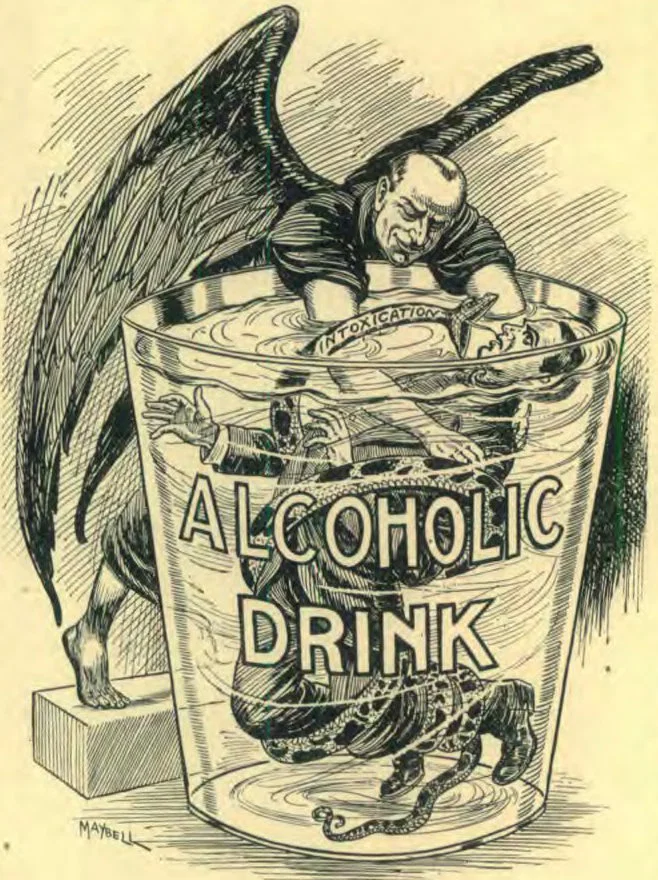
More men are drowned in the bowl than in
the sea.—German proverb.
“‘He is afraid of men who drink,’ she told him, and he laughed.
“‘He’ll get over that,’ he replied. ‘His father will see to it.’
“‘I hope he’s seen enough of the evil of it,’ my mother answered. ‘I pray God he has.’
“But I had not. I had seen other men drink. I had peered fearfully into the barrooms and watched men there; and the thing frightened, yet strangely fascinated me. I saw horrible examples by the dozen, nay, by the hundred, but they did not horrify me. I have known the evil effects of alcohol since I have known anything. I have never suffered illusions as to its nature. I have seen a farmer come to town and stagger down the main street with a bottle in his hand, and I have seen him dragged raving to the jail. I have seen women reeling drunk; I have seen them lying in gutters. I have seen the saloon vomit foul tramps; and still, when it came my turn, I drank, and did it eagerly, confident in my ability to control myself.
“When I was very small, my father beat me when he was drunk. When my mother interfered, he pushed her roughly away. I remember that, and young as I was, it burned into my consciousness. Eighteen years after that episode, again while he was drunk, he struck her, and I thrashed him so thoroughly that he kept his bed for a week. I think the horror of that affair shortened my mother’s life by years.
“My mother was my educator. Such basic knowledge as I now possess I owe to her. She spoke three languages, traveled over Europe, and possessed a wide culture, a sympathetic and broad outlook upon life, and an indomitable courage. Indeed, she was a mine of energy. When my father had ruined himself irretrievably, she raised the money for his passage West, packed his trunk, and, with her high spirit and firm courage, strove to put him on his feet. That he failed was not her fault; that he returned with less character and more alcohol four years later did not, that I could see, alter her determination to struggle on. She tried again and again, and this while working and keeping me, bringing me up in the atmosphere of her own culture, and striving to imbue me with the characteristics she knew a man should possess. Today the better things of me are hers.
My First Taste of Liquor
“And now I come to my first taste of liquor. I write this with reluctance, with positive hesitation, and yet I do not feel that in common honesty I can withhold what I have to say. The first taste of liquor, the first sensation from alcohol that I received, was at my first communion. The memory of that has never died. I think it never will. Regretfully I now state that I firmly believe that had I never tasted that heavy wine, I should never have been led to experiment with the next step.
“From the Sunday morning I took that first sip of wine into my mouth and turned it speculatively about on my palate, I thought about drink. My second taste of alcohol followed hard upon my first. I am indebted to the medical profession for it.
“By virtue of necessity I began to earn money shortly after I was sixteen. I chose electrical engineering as my profession, and I began at the bottom. I was thrown with older men, rough men, men with few ideals; and with them I cultivated a taste for malt liquors. I should never have tasted beer or ale, I am sure, had it not been for the open, inviting, mysterious saloon,—the saloon that stood at the corners wherever one might go.
“The man who bought me my first glass of beer was a man of thirty-five. I can recall vividly that saloon; I recall the acrid smell of stale beer, the haze of tobacco smoke, the chatter of men at the bar. I found the saloon always waiting for me. There was no question as to age. I was welcomed. I know now that as the old customers wear out, new ones must be found, and the younger the better. I began to go into saloons alone; I did it after the day’s work. Then I took in a companion or two of my own age. We leaned against the rail and talked large talk. The saloon let us stay. It always does. When the day comes in which civilization wipes out the saloon, and with it the public drinking, one full half of the liquor question will have been solved.”
Five years in Chicago after finding alcohol, then on to29New York, and the sequel need not be written. It is too dark. But fortunately there came an awakening. It comes to but few who have once tasted the dregs of wine cup and whisky bottle. After this dark and varied experience, this man says of the great temperance question now before the American people:—
Standard Publishing Company, Copyright
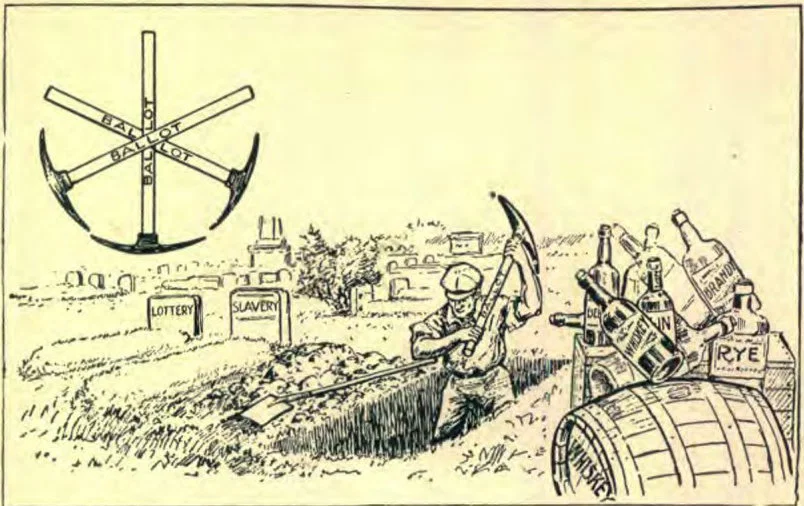
“Alcohol ruined my home, shortened my mother’s life, made my father a doddering inefficient, and all but shipwrecked me. On the side of benefits conferred by alcohol I can allow none. There is only one remedy for the liquor evil; it rests solely upon the nonexistence of alcohol itself. It is not the saloon alone; it is not the wholesale or retail dealer; it is not the dispensary, blind tiger, or private still. The evil of alcohol lies in alcohol.”