The Sure Cure

4%

Review and Herald Publishing Assn. · Washington, D.C. · 1916

FromThe Youth’s Instructor, 1916 Temperance Annual

Read the full edition

The Sure Cure

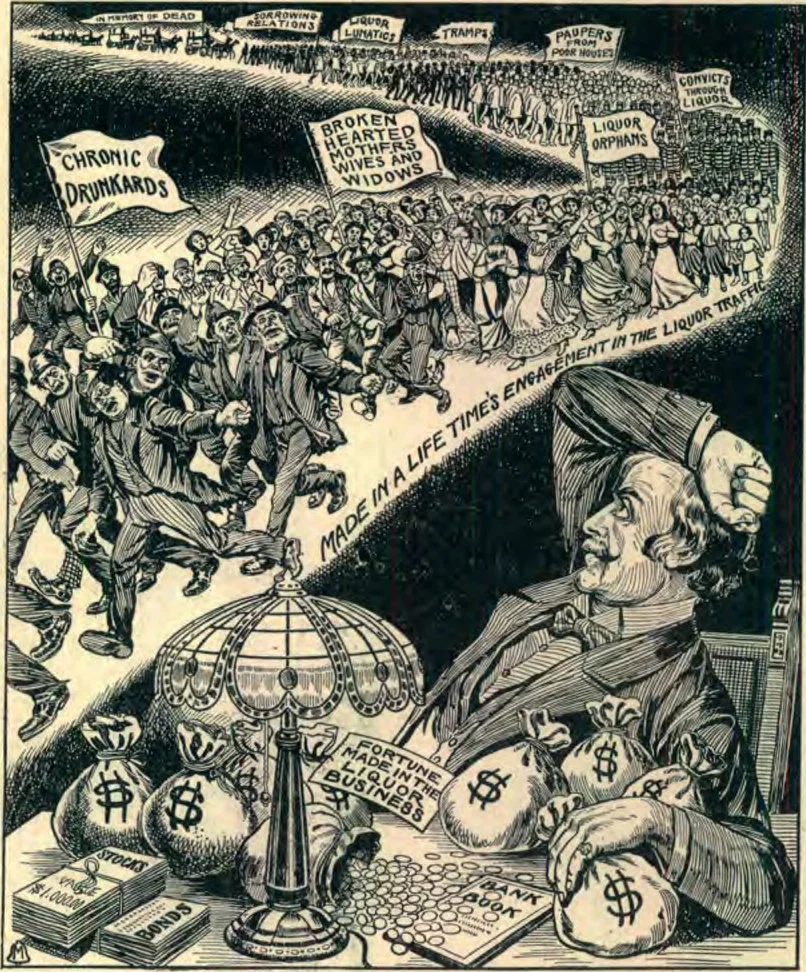
WHAT HE MADE
A day of reckoning is coming: “For we must all appear before the judgment seat of Christ; that every one may receive the things done in his body, according to that he hath done, whether it be good or bad.” 2 Cor. 5:10.
WHAT HE MADE A day of reckoning is coming: “For we must all appear before the judgment seat of Christ; that every one may receive the things done in his body, according to that he hath done, whether it be good or bad.” 2 Cor. 5:10.
A MATTER of personal business took me to Mr. Tate's private office in a tall building near the city front. We sat by a great window overlooking countless darting watercraft. Mr. Tate's hand touched lines reaching halfway round the world. Suddenly, in a discussion of my plans, Mr. Tate said to me: “Miss Fielde, during our years of pleasant association you have not become truly acquainted with me. I have never told you my history. It might give you a clue to my real aims in life.”
“I am a listening sphinx,” said I; and Mr. Tate told me what I here record:—

The True Story

“Of sturdy American stock, reared in a pious family of total abstainers, with all the advantages provided by opulence and social esteem, a happy life might well have been predicted for me; but an inherent taint was in me, an appetite for strong drink. It was first demonstrated to my family when I was six years old. On a Sunday when my parents, brothers, and sister had gone to church, leaving me alone with the servants, I took from a closet a demi-john of wine, drank it, and was found in sodden clothes, lying upon the floor, dead drunk.
“During the next ten years I occasionally visited saloons with other lads of my age, in the country town to which my parents had removed. The saloons furnished the opportunity to satisfy my desire for drink, which was constant and uncontrolled, but was unlike the craving that afflicts the old inebriate when deprived of his liquor. It was akin to the ordinary childish desire for sweets.
“There were private back rooms in the several saloons, where boys played cards and drank together, the younger ones proud to keep pace with their elders. The strict surveillance kept over me by my family failed to reach these resorts. My inclination to strong drink was there confirmed.
“When about fifteen years old, having passed the common school course, I was sent to a college town to enter the preparatory department of its college. In that town there were about three thousand male students, the majority between sixteen and seventeen years old. There were three or four times as many saloons as the town would have supported without the students. The saloons had young agents out on the street to meet the stranger boy and gain his confidence and get his history for use in making prey of him. They soon learned the amount of his remittances from home, and the time when the money might arrive. They extended a welcome that was captivating to a green, homesick, sensitive lad, anxious to appear to be beyond his years and his condition in his knowledge of the world. Although the State forbade the sale of liquor to minors, I have seen the saloons filled until midnight hours with boys under age, many of them in advanced stages of intoxication. Had there been no saloons in that college town, I might have escaped the worst disasters of my life; for it was there that I acquired the peculiar craving for liquor which is consequent upon over-indulgence.
“During a year at that school I lost all desire for education, and cared only to see the world and to be amused. My father had died, leaving me abundant means, and I went into business where I made a large income. But before I was thirty years old, I had wasted my inheritance and my income in drink and dissipation, and had ruined my health.
“My family then placed me on a ranch in a prohibition State, where I abstained from liquor for two years, but longed for it every waking minute. I recovered my health, went to an Eastern city, and there secured a position in which good fortune would have come to me had I abstained from strong drink. Great success in my business brought me high honor in the business world. But I could not withstand the lure of drink when it was close at hand. Again I went to wreck and sank low. My family knew nothing of my whereabouts for two years. I was for the most of that time a fisherman along the Atlantic coast, and was always drunk while in port.
“Then, discovered by my brother, an eminent physician, I was persuaded to take the ‘gold cure.’ Under his care and enheartening, I took the cure, and thereafter did not touch liquor for eighteen months, though I longed for it all the time. Meanwhile, members of my family made great effort to find the cause of my disposition to drink. My forbears had shown no tendency to intemperance, and no inebriate was traced among our ancestors. The only clue to my inherent appetite was given by my sister, who remembered that during my prenatal life my mother's physician had prescribed lager beer as a tonic, and that this drink had then been used for some time by mother, who was usually a teetotaler.
“After the gold cure, I went to Chicago to resume my business, but my craving for liquor was such that I could neither eat nor sleep. I became emaciated and very weak. I had had no liquor for ten months, when, sitting one day in the Palmer House, I was accosted by a business acquaintance of former years, who said to me: ‘Tate, you look as if you were going to die. You have got the grip. What you need is a few stiff doses of whisky and quinine.’ I told him he had mentioned the right remedy, and I went straight to the Palmer House bar and took the whisky, but did not bother about the quinine. It took me a year and a half to complete that particular spree, and at its end I had exhausted all my resources. I occasionally sobered up, but if I tasted or smelled liquor I took more and more of it until delirium came on.
“The only work that I could then get was that of portering in saloons. My remuneration was merely my lodging and board. To get money for drink I shoveled snow, ran errands, or did any sort of job. I was then thirty-eight years old. I was bankrupt in reputation, honor, means, and health. To get drink I had done every evil thing except murder. Then I lost my work in the saloons.
“There came a Sunday evening in February when the thermometer was twenty-six degrees below zero. I was poverty-stricken, thinly clad, and sick, and I had had but five meals in fourteen days. I was lodging in a filthy house but two blocks from a fine old church. I had ten cents hidden away in my clothes to buy the drink that I knew I must have or die; and to get that ten cents I had sold my only shirt. Starving, half-frozen, delirious, I wandered along the street and saw a sign on the old church inviting everybody into the meeting then being held. I stopped, and thought how every remedy known to medical science or to friendship had been tried upon me and had failed to save me. Here, now, was a thing that I had never tried. I made up my mind to test God. I went into the church and hid myself in a back seat. The preacher, in his sermon, said: ‘No matter how far a man has gone, if he turns about, the Lord will help him.’ He invited any one in the audience who desired to turn back to raise his hand. I tried to raise my hand, but was not able; I seemed to lack physical power to do so, and I said: ‘O God, if there be a God, help me to turn about and live a good life. I will serve thee as long as I live, and will tell my story when it is called for.’ Then up went my hand, and I got up and made my way along the center aisle of the church, in view of the many hundreds in the aristocratic audience. I took my pride and my sensitiveness to the railing in front of the pulpit, kneeled down, and turned my bloated face up toward heaven, and said: ‘God, save me!’ In an instant I knew that I was saved from the foe that had always overthrown me. That was nineteen years ago, and from that day to this I have never felt anything but abhorrence toward alcoholic drink, and the desire for it has never returned.
“I rose and went from the church to my dirty lodging place, and had the first sound sleep that I had had for many months. In the morning I went to one of the large transportation companies and made application for work. It was necessary for me to fill out a blank covering my history since childhood. For a year previously I had been unable to write even my name without having a pint of whisky to stop nervous shaking. When I made out this application, my hand was steady and my brain clear, and my physical condition was such that I could do a kind of hard work that I had never before attempted. I was set to trucking freight in a large warehouse.
“This warehouse was a block long and sixty feet wide. It was so well lighted that any small object on the floor was visible from any part of the warehouse. In passing the length of the warehouse with a load of freight on a truck along a route that a score or more of the men had just traversed, I found a dollar bill. In all the seven years afterwards that I was connected with that warehouse I never heard of any money having been found there. I took the dollar bill into the office, and stated that any one who called for it could get it from my hands. On that dollar I subsisted for eleven days, until I could begin to draw pay. I lived on one five-cent meal at twelve o'clock each night. All this time, emaciated and underfed, I did my work without sense of weakness or pain.
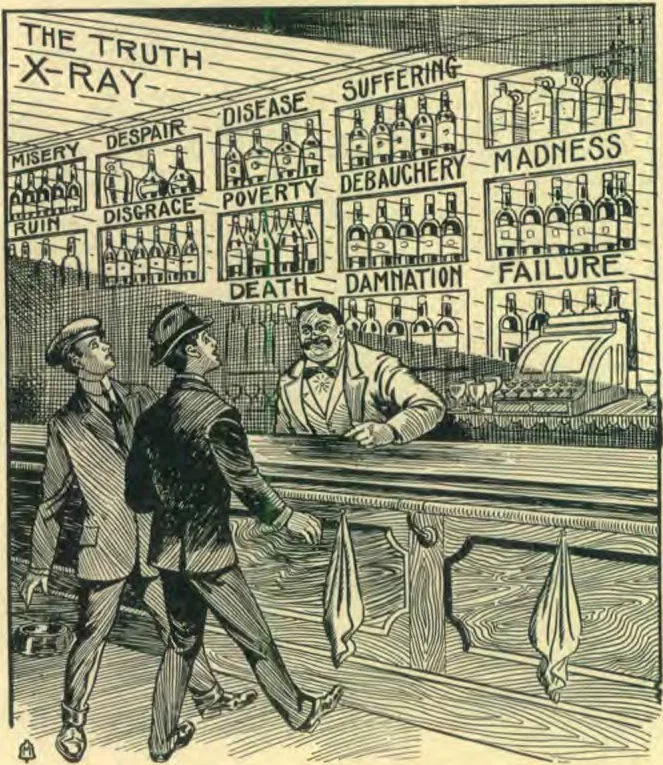
Wine is a mocker. To youth it seems the elixir of life; but the X ray of science and experience reveals it to be the "promoter of all that is evil, all that is vile, all that is abominable." "No war, no plague of humanity,—cholera, tuberculosis, or famine,—has made as many victims, has caused as much poverty, suffering, and death, as the use of alcohol."
“I remained at that same warehouse seven years, and was promoted to the charge of a department in which three hundred and fifty men and wagons were employed. I have prospered ever since.
“There are few persons in whom an appetite for strong drink cannot be created. Whether immune or naturally susceptible to its power, alcohol presents the greatest danger a man ever meets. The idea that now impels me to forgo a large salary and to set aside business opportunities of great promise is that of getting saloons out of the way. To that I shall devote the rest of my life.”
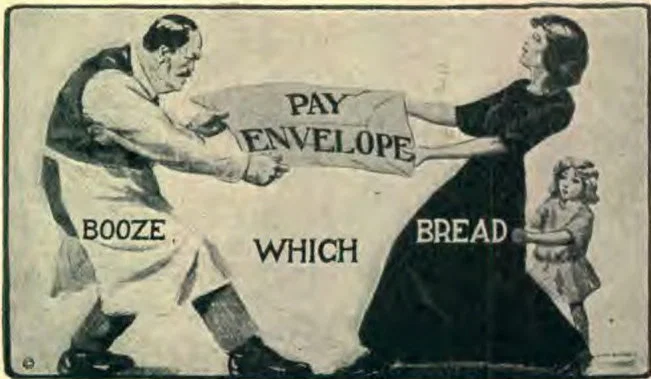
Shame on our voters who, by perpetuating the liquor traffic, force wives and mothers to this unequal warfare.
So spake James Tate. I know his true history.
Shall I put claret in the fruit punch that will be served to my guests when a Mr. Tate may be among them?
Shall I ask any man of unknown susceptibilities to go where the odor of alcohol may rouse a latent craving for it?
Shall I employ any medical man who sometimes prescribes a poison that can set a taint in the tissues of the unborn?
Shall I, by word or act, encourage a traffic that ruins men?
No; not so long as I may live.—A. M. Fielde, in the Pioneer.