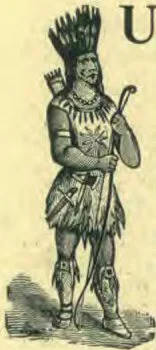
UNCLE SAM has dealt more kindly with his Indian wards than with his own white children. We are not sorry for what he has done for the red man; but we wish he had been as solicitous for the welfare of the white, the black, and the yellow man. Again and again Indian chiefs and friends of the Indians among the white men besought him to stop the white man from giving and selling fire water to the Indians.
Perhaps no more earnest appeal was made than that which was made by Little Turtle, chief of the Miamis. On the front of an Indiana courthouse stands the statue of Little Turtle among those of noted white men. He lived at the time President Washington had his residence in Philadelphia, and by invitation the chief visited the President there. During this visit President Washington presented Little Turtle with a fine sword and a silver medal, which had on one side the picture of the President and on the other side the picture of a turtle. The President also employed an artist to paint the portrait of his guest and friend.
Little Turtle was a gentleman, a brave soldier, a wise statesman, an orator, and a loyal friend.
Of course he resented the encroachments of the white man upon the Indians' land, and many hard battles were fought; but General Wayne, whom the Indians called “The Wind,” was too much for them in the Battle of the Fallen Timbers. After this conflict the Indians felt it was useless to further resist the white man; so they signed a treaty of peace, the “Treaty of Greenville.” Little Turtle in time became the white man's unchanging friend. He did not, however, like to have the white man teach the Indians to drink whisky. This they persisted in doing; and as the chief found the fire water was killing off his men, he was greatly distressed, and said:—
This liquor that they introduce into our country is more to be feared than the gun or the tomahawk. There are more of us dead since the Treaty of Greenville than we lost by the years of war before it, and it is all owing to the introduction of this liquor among us.
He begged the government by letter and in person to prevent the rum trader from coming to sell liquor to his people, saying that unless this is done, “your red brothers are lost forever.” He pleaded with Congress to prohibit the liquor traffic; he spoke before the legislatures of Ohio and Kentucky to the same end; and he prayed that the Great Spirit would “change the minds of his people and tell them it will be better for them to cultivate the earth than to drink whisky.”
Little Turtle's efforts were in time rewarded. The first law passed by the assembly of the Indiana Territory is said to have been one to protect the Indians from the curse of rum; and later Uncle Sam himself was compelled to grant the earnest petitions for prohibition for the red man, and this was the first law enacted by Congress looking to the curtailment of the liquor traffic.
Notwithstanding this national statute, many of the Indians have always been at the mercy of the white men who love money more than life, and who therefore persist in supplying them with liquor. For two centuries the Indian has appealed for more adequate protection from the liquor traffic. In a recent campaign to make dry certain Minnesota towns that were a serious menace to the Indians round about, the Chippewa Indians petitioned the Commissioner of Indian Affairs to make the white man keep his word as given in the treaty of 1855. They said: “The Great Father promised us he would keep fire water out of the Indian country. Now let the Great Father keep his word.” And he did. The towns in question went dry.