Artesian Wells

17%

Review and Herald Publishing Assn. · Takoma Park Station, Washington, D. C. · Jun 5, 1917

FromThe Youth’s Instructor, Vol. 65, No. 23.

Read the full edition

Artesian Wells

IN northern France is the province of Artois, anciently called Artesium, to which we are indebted for the name given to our flowing wells, for it was here that the boring peculiar to that used in artesian wells was first practiced. One of the wells of this region has been flowing since the twelfth century.
AN ARTESIAN WELL
AN ARTESIAN WELL
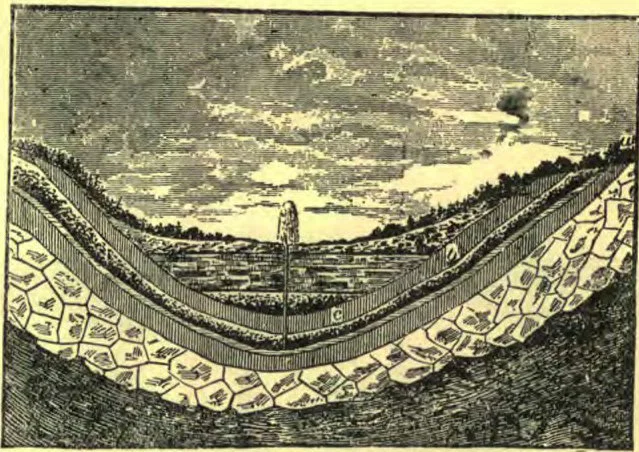
Artesian wells are deep holes in the earth three to eight inches in diameter. Some are more than two thousand feet deep. The tendency of water to rise to the level of its source is the principle upon which the artesian well works. The accompanying cut clearly illustrates the idea. When the stream in the valley is tapped, the water will rise theoretically to the top of the hill, the source of the underground stream. If in search of an artesian well, look for a spot where the source of the water is higher than the place of boring; also look for alternate layers of porous earth and rock. The water percolates through the sand or gravel but cannot penetrate the rock layers, so it is held a prisoner, as it were, between the two layers of rock; but as soon as a hole is made through the upper layer of rock, the water gushes up to the height of the high ground.
While we are forced to give China the credit for being the first nation to use the artesian method for obtaining water and oil, such wells having been in use there for more than two thousand years, yet she is now far behind the rest of the world in this business, though in one of her provinces there are tens of thousands of such wells. Steam power and delicate and complicated machinery of western nations make the old drills and windlass of the pioneer nation altogether antiquated.
The capacity of artesian wells is almost incomprehensible. From three to five hundred thousand gallons a day is not unusual, and one well near Paris, France, delivers nearly six million gallons of water a day. Hotels, cities, ranches, and deserts are supplied with water through the service of artesian wells. The desert of the Sahara has at one place 170,000 palm trees that bear testimony to the blessings that flow from these wells.