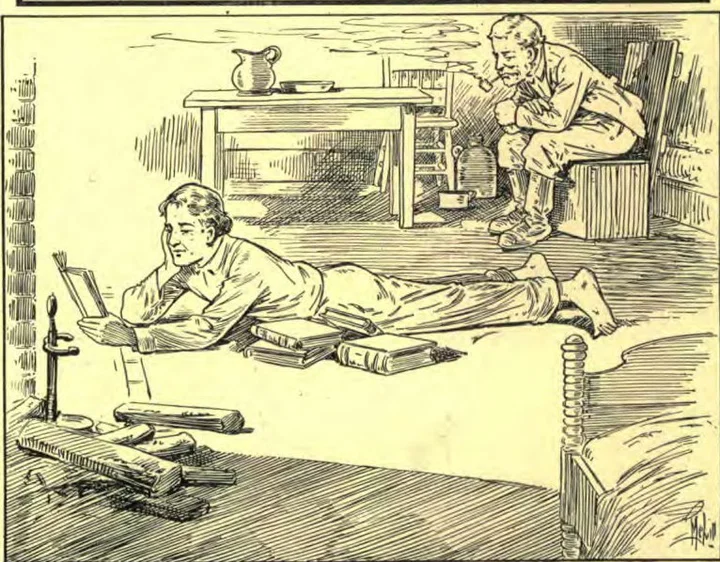
SOMETIMES a boy does know more than his father. Ours would have been a very different history if Abe Lincoln, age sixteen or so, had been guided by the wisdom of Thomas Lincoln, age thirty-six or so.
“Now, Abe,” we can imagine him saying, “don’t waste time readin’ them books. Readin’ never done me any good, and what was good enough for me’s good enough for you.”
Lincoln knew more than his father. It was a divine disobedience that led him to close his ears to the man who had brought him into the world, and open his heart to the vision that was to help him conquer the world.
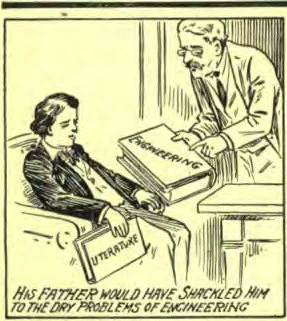
Robert Louis Stevenson knew more than his father. That father would have shackled him to the dry problems of engineering. He could not understand the obstinacy of the boy who refused to apply himself. That obstinacy saved a great author from misery as a mediocre engineer. That obstinacy enriched the ages.
“Let no man despise thy youth,” wrote Paul to Timothy.
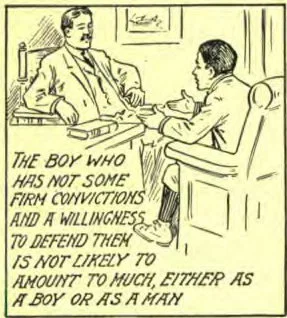
The boy who has not some firm convictions and a willingness to defend them, even against the arguments of those older than himself, is not likely to amount to much either as a boy or as a man.
But they must be convictions, not mere prejudices, not selfish impulses or passions.
I know two men who “knew more” than their fathers. One boy is the office manager of a large manufacturing concern, and his salary is $40 a week.
“Better go on in school,” said his father to him when he was seventeen years old. “Better go to college; better get all the education you can while you have the chance. You’ll need it afterward.”
But the boy quit school and went to work. He was promoted from office boy to bookkeeper, from bookkeeper to head bookkeeper, from head bookkeeper to office manager.
His path looked golden and long. And then suddenly he stopped.
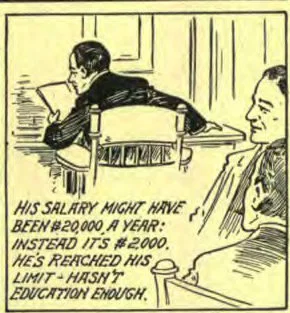
“You see that man?” said the president of his concern to me the other day. “There is a man who might have become general manager of this concern if he had had a college education. His salary might have been $20,000 a year: instead it’s $2,000. He’s reached his limit. What a shame that he hasn’t education enough to go on.”
He “knew more” than his father. And his boyish obstinacy is costing him $18,000 a year.
I know another man who “knew more” than his father. “Keep yourself clean, my son,” said the father to him. “You’ll never regret it. And some day you’ll be glad you did.” But the boy knew more than his father. He knew that every young man must sow his wild oats. So he sowed right merrily.
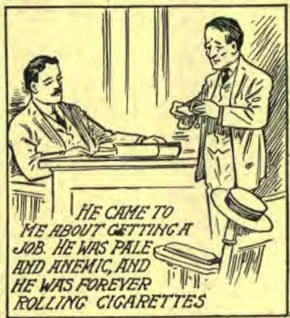
I saw him the other day. He came to me about getting a job.
He was pale, and anemic, and his hands twitched, and he was forever rolling cigarettes. He could not concentrate his mind on one subject for even two minutes.
I couldn’t give him a job; no man could. God knows what will become of him. He would starve if it were not for the few dollars he gets from his father—
The father who, he thought, didn’t know so much as he. — Bruce Barton, Editor, in Every Week.