“To cure is the voice of the Past; to prevent is the divine whisper of Today.”
SENTIMENT among many of the educational leaders of today is that cigarette smoking should have no place among the teaching force of our country. But why discriminate against the cigarette? If boys see their teachers smoking cigars, that in itself gives them the permission and sanction of the teachers to smoke their own little cigars.
Teachers should be total abstainers. There is no other safe rule. All agree with Mr. Hiram Hadley, president of the New Mexico Anti-Tobacco League, that “in forming sentiment for life no force is greater than that of the teacher.” If he uses tobacco in any form whatever, his instruction against tobacco, however scientific or enthusiastic, will have little weight with his pupils.
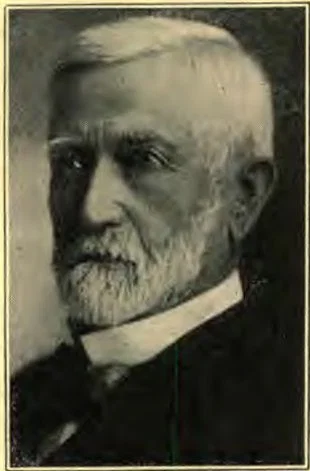
When Mr. Hadley thought to organize the Anti-Tobacco League, he wrote to the educators of the State to ascertain their views on the subject. Many of these sanctioned the movement and promised their coöperation. The following testimonials were in response to Mr. Hadley’s letter:
R. W. Twining, superintendent of the Las Cruces schools, says: “I believe that all who are truly interested in educating the youth will, without exception, welcome the day when tobacco will receive as violent and general condemnation as whisky is receiving today.”
Dr. Frank H. H. Roberts, president of Normal University, Las Vegas, says: “The Normal University does not employ men who use tobacco. I am convinced that the tobacco habit is responsible for a great many deaths.”
W. O. Hall, superintendent of schools, Roswell: “I have fought tobacco all my life and am still at it. I am convinced that a few years hence there will be the same fight against tobacco that there now is against liquor. It is time schoolmen took a stand in this matter.”
Prof. T. C. Rodgers, of Normal University, in speaking of the anti-tobacco campaign, says: “It has come to be considered a part of the teacher’s business to be on that side of the question.”
R. S. Tipton, superintendent of schools, Otero County: “I have refused to recommend for the schools of this county any teacher who I know is given to the use of tobacco in any form.”
C. F. Miller, of Las Cruces: “I know of nothing else which is doing so much harm to the youth of our fair land as is the cigarette habit, and I am only too anxious to battle against it.”
Walter B. McFarland, superintendent of schools, Silver City: “I think it would not be going too far to say that a teacher who uses tobacco should get out of the profession.”
New Mexico is doing a good work against the tobacco habit; so is Kansas, and other States. But the educators are hampered in their effort to coöperate with the leaders of the various anti-tobacco leagues, inasmuch as there are no public funds that can be used in the purchase of anti-tobacco literature for distribution among the pupils of the schools.
David Starr Jordan, of Leland Stanford Junior University, says: “Put me down as one of those who detests tobacco, and sees no redeeming good in any of its manifestations. It stunts the growth of the young; it takes off the keen edge of courtesy from the adult; and it musses up the atmosphere which most of us are compelled to breathe.”
Prof. Arville O. DeWeese, superintendent of public schools of Harrison County, Indiana, issued the following notice to the teachers under his direction:
“No teacher will be licensed, and the licenses of all licensed teachers will be revoked, who, after the publication and general distribution of this notice, are known to smoke a cigarette either privately or publicly in such a manner that any school child in Harrison County might directly or indirectly know of the same.”
An examination of more than two thousand New York school children disclosed a remarkable prevalence among them of the use of tobacco. Not only boys but girls use the weed, and many begin its use at a very early age. This is true in every large city.
When all educators become abstainers from tobacco in all forms, their example, with the definite and weighty instruction they can then give, will do much toward eliminating the evil habit from the young.