ONE day I stood on the site of the old slave market in Washington, and listened to the conversation of a Civil War veteran who had seen hundreds of slaves herded and marketed in this same place. Afterward I had an intense desire to see and talk to one who had been a real old-time slave. Later, in a city of Ohio, such an opportunity was afforded me. He was a white-haired old Negro who had been freed by the war of the sixties. When I asked him how he had felt on discovery of his emancipation, he showed me scars,—deep, cruel scars,—attesting to the merciless hand of iron that once ruled his black body. “Those wa’ ha’d days fo’ me,” he said as he covered up again those pathetic evidences of former mistreatment. “But,” he continued, his face lighting up with reminiscent smiles, “when we became free it wa’ jes’ like yo’ wa’ walkin’ in he’ben.”
This no doubt was a fitting simile to one who had suddenly found himself delivered from a cruel bondage into a glorious liberty, with the world smiling a welcome to his new estate. His had been an involuntary servitude, but how much greater is the ignominy of deliberate, cultivated service to sin! It is probably safe to say that ninety-nine per cent of hurtful habits and wicked practices are cultivated ones. The desire for tobacco and other narcotics is almost invariably the result of deliberate forethought and action in first tasting those things and then acquiring the habit.
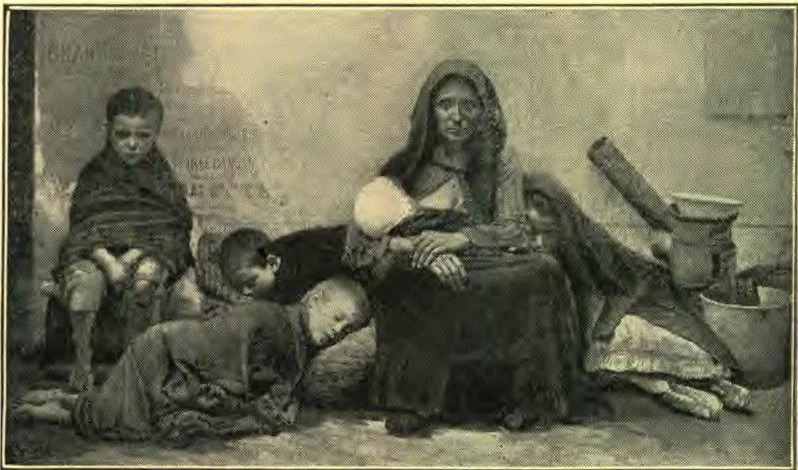
The world's tobacco bill would go far toward supplying the needs of Europe's homeless and starving millions.
I have a friend who for years has been addicted to the use of tobacco. Ten years ago I asked him to leave off the habit. Then he laughed and told me that he could do it with little effort. But he did not, and recently he told me with shamefacedness that it was now impossible for him to give it up. He has serious heart trouble, his whole physical condition is bad, and he expects to die a slave to that abominable thing which he once courted.
This experience—there are innumerable others just like it—is a crying argument against the first use of narcotics and intoxicants. No one who finds himself fettered by any questionable habit or evil acquirement is free to think or believe himself a hopeful candidate for eternal life. The way to heaven is barred except to freemen. Self-imposed slavery never cheers itself in the hour of awakening. Ultimate dejection and ruin stalk at its side until the grave offers it a covering, but never a hope. Far better for the youth never to put himself in the way of entanglement in the meshes of these debasing habits, which always grow, for in the end the sin of years becomes a veritable “body of death” to which he is chained. On the other hand, to know that one is free and in subjection to nothing but the Spirit of Christ, is, in the words of the old ex-slave, “jes’ like yo’ wa’ walkin’ in he’ben.”