What's the Use?

5%

Review and Herald Publishing Assn. · Takoma Park Station, Washington, D. C. · Feb 5, 1918

FromThe Youth’s Instructor, Vol. 66, No. 6.

Read the full edition

What's the Use?

The activity of mind and body of the boy of junior age is a source of pleasure and astonishment to older persons. He can do things. To him life is full of worthy possibilities. Youth is the habit-forming period, and a boy by wholesome exercise of his will can make of himself what he wishes. He should therefore be alert to every opportunity for self-improvement, and should be determined in his effort to form right habits of life, mentally, physically, socially, and spiritually. He can do it if he will.

Hollow-chested and Round-shouldered

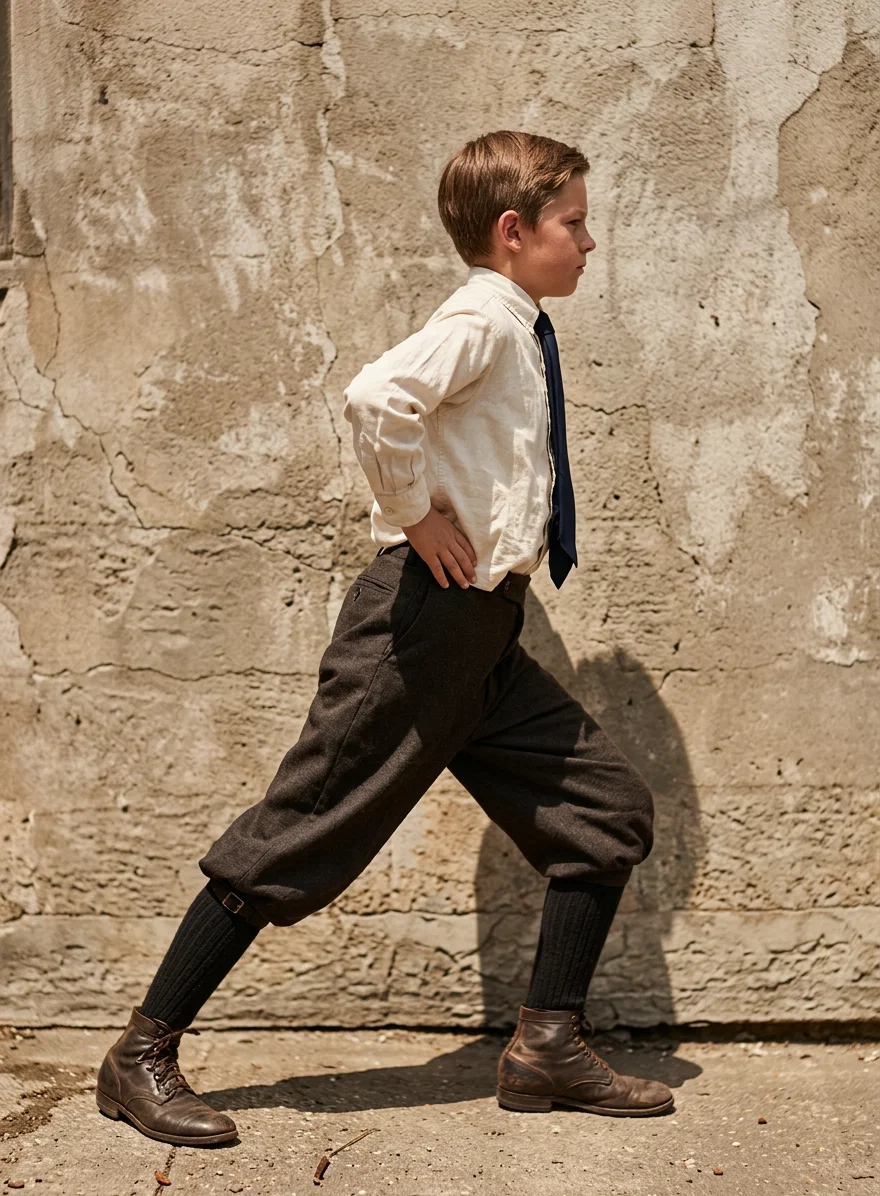
What's the use of his being hollow-chested, round-shouldered, or poorly gaited when by a proper mixture of determination and effort he can readily secure a physique of which he will be proud, and which will insure health under ordinary conditions? A good system of physical culture exercises daily persisted in will give him a normal physique with an admirable carriage of the body.
Older people can do much to correct ungainly and unwholesome habits, but it is not easy for the adult to make such changes. The body in youth, however, is as clay in the hands of the potter. A vessel of honor can be easily molded if the potter so determines.

New Year Counsel

Mr. Macfadden, the famous physical culturist, wisely counsels boys upon this point as follows:
“See that this new year brings you all that should be yours. Whatever may have been your shortcomings in the past, turn into a new path now. Imbibe the spirit of determination.
“My life shall be a power. I will dominate myself. I will master my weaknesses. I will shun bad habits.”
“Make these statements to yourself over and over again. Repeat them a hundred, a thousand times. And act up to your affirmations.
“I WILL MASTER MY WEAKNESSES, I WILL SHUN BAD HABITS.”Restored with AI
“I WILL MASTER MY WEAKNESSES, I WILL SHUN BAD HABITS.”
“By merely saying, ‘I am strong,’ you cannot become strong. But by saying, ‘I am going to work for strength,’ you impress the idea upon your mind so forcibly that the thought results in action; and action always counts for something.”
The first requisite for overcoming wrong habits is really to want to get rid of them. This is half the battle. A boy can do what he wants to do, and in this age of opportunity and high ideals, the bright boy, the boy with high ambition, will want to keep himself free from every habit that will prevent his being at his best in any phase of being.

Courtesy Essential

What's the use of a boy allowing himself to grow to manhood without the knowledge and habits of the well-bred? Politeness is now regarded as the chief requisite of successful business, of successful salesmanship. So true is this that one's business success or failure can be predicted quite accurately by the fact that one is habitually courteous or discourteous.
A boy should study books on proper conduct; he should imitate the habits of the cultured, and should be constantly on the watch to show courtesy to others. A boy who has good manners, who never allows himself to be uncouth, insolent, or indifferent to the rights and comfort of others, has climbed up far on the ladder of success.

Masters Not Slaves

What's the use of a boy so giving up the mastery over himself to the extent of forming at the suggestion of other boys a health-and-soul-destroying habit, like drinking, gambling, or smoking? Such a boy's moral backbone is warped; he will take up other undesirable habits, finally becoming a derelict. When a boy knows a thing will injure his health, how is it that he can get his own consent to take it up? Perhaps this is an unsolvable mystery.
No boy will become a slave to evil habits if he determines in his heart, “My life shall be a power. I will dominate myself. I will master my weaknesses.” It is the boy with this determination who later becomes an example of high manhood and real success.