The Isle of Pines

6%

Review and Herald Publishing Assn. · Takoma Park Station, Washington, D. C. · Jan 25, 1916

FromThe Youth’s Instructor, Vol. 64, No. 4.

Read the full edition

The Isle of Pines

The Isle of Pines was so named before it became known as it is today for its luscious pineapples. It was so named from the pine forests which resemble very much those of Florida. To some the name will recall land agents’ glowing descriptions of eternal summer, soft sea breezes, and wonderful opportunities to get rich quick. But to many who have made the venture, the bright coloring has faded away, and regret has taken its place. Memory still recalls too vividly the fruitless labor spent on gravel soil, the many sleepless nights spent fighting sand flies and mosquitoes, and how the funds brought to the island failed long before returns could be secured from the soil.
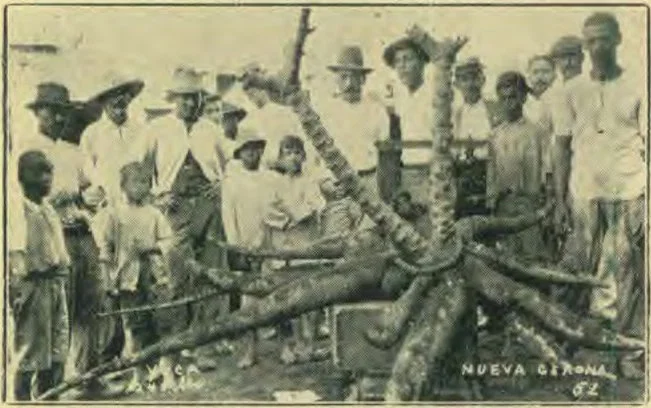
A CASSAVA ROOT, PROBABLY THE LARGEST ON RECORD.
A STAPLE ARTICLE OF DIET
A CASSAVA ROOT, PROBABLY THE LARGEST ON RECORD. A STAPLE ARTICLE OF DIET
But the Isle of Pines still continues to be the home of about two and one-half thousand Americans, and as many more Cubans. Many would be only too glad to be back in the places they left to come to the island. Others have been more fortunate, and have succeeded in conquering nature, and are now enjoying the fruit of their labor. Grapefruit, oranges, pineapples, and winter vegetables are being shipped to the New York market, where they bring a good price.
Our message was first made known here by Brother W. E. Wolfgram, who only a short time before had accepted the truth in Brooklyn. A small company was raised up, and last year Elder and Mrs. H. C. Goodrich moved to Nueva Gerona to look after the interest there. Miss Grace White also has recently connected with the work in that place.
A few weeks ago, while visiting the island, Elder Goodrich and I made a trip to the south coast to hold meetings among those interested in the truth. We left Nueva Gerona, the capital of the island, going to Los Indios by auto twenty-seven miles distant, where we secured two young men with a dory, or canoe, to take us the remaining twenty-three miles.
Leaving the hotel at Los Indios, we walked with our grips about a mile to the river, and soon after sunset we were moving down the coast. Shortly after leaving the mouth of the river a good breeze came up, so the sail was set and we were under way. Our boat was open to the weather; but in the tropics this is no inconvenience as long as it does not rain. Elder Goodrich and I lay down side by side in the bottom, and succeeded in getting a little sleep.
At about nine o’clock a heavy squall formed to the east, and the wind freshened considerably, but this only put us along the faster. At ten we had covered the first thirteen miles, and had reached the point on the opposite side of the bay. As the storm was now so close, we went ashore and took refuge in a lone thatch hut used by men who burn charcoal. We had just entered the hut when the rain began, and it continued till three in the morning. As soon as it stopped, we got into the dory again, and were soon sailing up the coast with a good breeze.
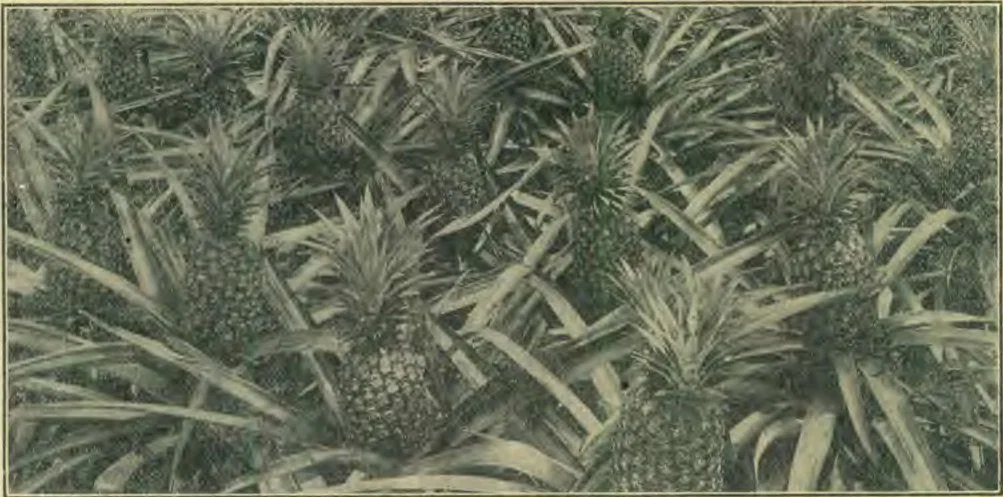
AS THE PINEAPPLE GROWS IN THE ISLE OF PINES
But we were still to get wet; for soon after daybreak a heavy squall formed again. This time it was right ahead. The sail was lowered, and we prepared as well as we could to keep dry, but in such a downpour it was impossible. We were soon thoroughly drenched. The sailors had a heavy pull with the oars while the wind lasted, but in about an hour we were out of its track, and soon ran into a little cove where we were given a hearty welcome by Brother John McLaughlin and his family and neighbors.
We remained on the south coast over two Sabbaths. The last Sabbath a Sabbath school of seven members was organized, and others were much interested in the work. Every one did all in his power to make our stay among them pleasant, and in spite of the sand flies and mosquitoes, we greatly enjoyed the time spent here. One thing that especially interested us was the young coconuts. Only those who have drunk the water from the young coconuts, when in the right stage, can appreciate them. The meat at this stage is about the consistency of jelly, and is very pleasant to the taste.
While here we saw some of the effects of the hurricane which recently swept the Gulf. The great waves had washed long distances in from the shore, carrying everything before them. In some of the islands great damage and much suffering resulted. The people told us how in a previous storm a large boiler from a wrecked steamer had been raised from the bottom of the sea, and carried over a mile inland to a place where the ground was very level and low. A large anchor, probably weighing two tons, which had been lying deep in the sea for years, was cast ashore, with many fathoms of chain. Vessels caught in storms that stir the sea to such a depth and lash it into such fury, seldom escape.
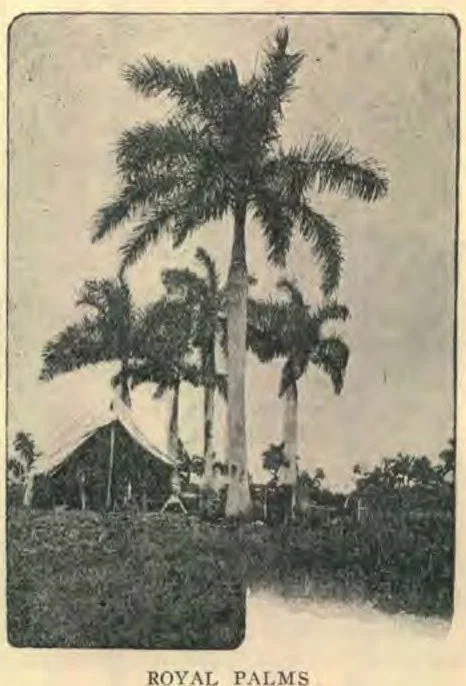
ROYAL PALMS
ROYAL PALMS
November 1 we started on our return journey. Five men with our baggage embarked in a sixteen-foot canoe. We set the sail, and were off. For the first ten miles our journey was quite pleasant, as we had a fair wind till we reached the point again. Here we went ashore and ate the lunch which we had brought with us. At one o’clock we were off again, but with a heavy head wind and rough sea. We had a straight beat of thirteen miles to make. Had we not had implicit confidence in the ability of the sailors, we should have had reason to fear. For five hours we were soaked with the salt ocean water as the waves broke over us. First the water would come in over the bow, then over one side, then over the other. My part was to bail out the water. Once I counted the pails, and found that over twenty gallons had come in from a single wave. Being wet so long in such a wind, as the sun went out of sight over the hills we began to feel very chilly; but fortunately we reached harbor soon after nightfall. A good night’s rest in the hotel, and we were ready for the auto in the morning to take us back to Nueva Gerona. While the trip had not been an easy one, we were satisfied, as we had seen souls freed from the power of sin and born into the kingdom of God.
The missionary society in Nueva Gerona has voted to place the Review Extra in every English-speaking home in the island during the next few months. Meetings are now being held in two places in the city to accommodate the different people who are interested. When you pray for missions, remember the Isle of Pines.
A. N. ALLEN.