H. A. JOHNSTONE

8%

Review and Herald Publishing Assn. · Takoma Park Station, Washington, D. C. · Dec 11, 1917

FromThe Youth’s Instructor, Vol. 65, No. 50.

Read the full edition

H. A. JOHNSTONE

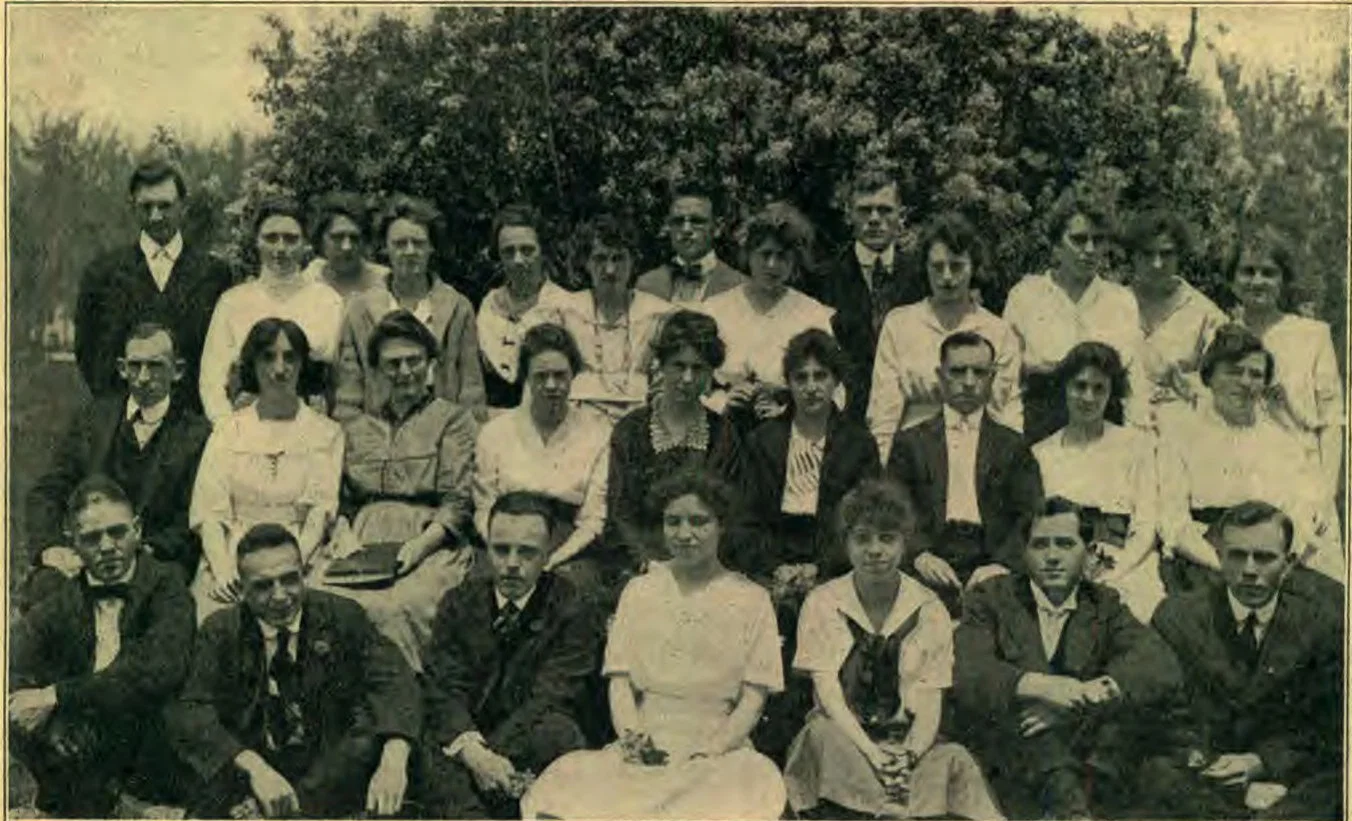
CLASS IN JOURNALISM, UNION COLLEGE

Journalism

H. A. JOHNSTONE

JOURNALISM is the writing and conducting of a journal, newspaper, magazine, or other publication. Journalism is the gathering and presenting of news, and of comment upon the news, of discussion of all that interests, entertains, or instructs. It affords the pictured record and interpretation of human life in every aspect. The journalist is recorder, advocate, buyer, and seller of news; judge, tribunal, teacher, and interpreter. Journalism is in some respects a trade, also a business; but in its highest aspect it is a profession.
The profession of journalism has for its members men and women who do widely different work. It includes reporters, editors, illustrators, special writers, directors, and managers. It includes workers on country newspapers and on city newspapers, on dailies, weeklies, monthlies, and quarterlies. While their duties are widely different in many ways, they have the same common purpose,—to record for the public that which is of public value and interest.
Men write for money, for fame, for dear life; journalists, for all three. He who writes merely for one of these alone, does not achieve the highest professional success. Journalism is a joyful, fascinating service, called by many a grind, involving continuous labor; yet a real journalist never leaves journalism for another vocation.
There is only one kind of real journalism, and that is personal journalism. As one man says, “Journalism that is worth while is personal journalism;” and another, “That which is dominant in real journalism is personality, trained, equipped, experienced.” Journalism in its various branches may properly be divided into four departments: The gathering and preservation of news; the editorial page and policy; the business department; the printing department.
The news is the first essential in the production of a newspaper. The editorial page may be well written and may deal with timely topics in an attractive, convincing way, but the publication will not fill the field of a real newspaper unless it presents the news. Yet a newspaper that is only a newspaper is not in the first sense a newspaper. The department which has to do with the editorial direction and control is the very heart and brain.
There are two legs upon which a publication stands, advertising and circulation. Here, then, journalism is a business.
The printing department is necessary for the production of a paper. The printers carry to completion all the mechanical processes necessary to the issuing of a printed journal. Here journalism becomes a trade.
Much could be said about the style of journalism, but in the last analysis, heart and conscience and manners as well as brain power determine style. Never write anything as a journalist that you would not as a gentleman. The best journalism has conscience in it, and heart, and fine courtesy. It does not wound unnecessarily; it does not cause women to blush. It is never sold to unworthy ends.
For the Seventh-day Adventist youth who feels impelled to use either his pen or his voice in the cause of truth, the study of journalism has many advantages. Through it he can learn to say what he has to say concisely and effectively. He learns how to make every well-edited journal his guide to the hearts and minds of common men and women. Even though he should never be called to the staff of a Seventh-day Adventist periodical, the training in definiteness, conciseness, accuracy, tact, and clever phrasing, provided by his course in journalism, will prepare him for effective presentation of truth in any capacity in which he may labor.