Excuses

13%

Review and Herald Publishing Assn. · Takoma Park Station, Washington, D. C. · May 6, 1919

FromThe Youth’s Instructor, Vol. 67, No. 18.

Read the full edition

Excuses

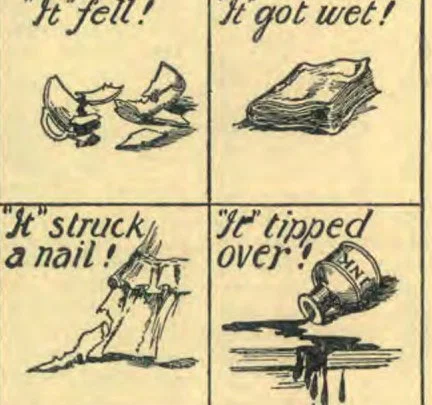
HOW easy it is to make excuses — for ourselves! Were we half so ready to excuse others, the world would be far brighter. This proneness of the human heart to excuse itself is depicted by Amos R. Wells in the following simple illustration:
“We say, ‘It fell,’ when we ourselves let it fall and broke a cup. We say, ‘It got wet,’ when our carelessness leaves a book out in the rain and it is spoiled. We say, ‘It struck a nail,’ when our dress is torn because of our heedlessness; and we say, ‘It tipped over,’ when we ourselves tipped over the ink bottle. We blame inanimate objects and the impersonal ‘it’ for what is our own fault.”
We do all this, and much more. Perhaps you do not, but can you produce bona fide witnesses to that effect?
Excuses are not a product of the twentieth century, but came with the first breath of sin. The two have since been inseparable.
If once we could get our own consent to the truth that “excuses are the patches with which we seek to repair the garment of failure,” we would see that the patch does not help in the least, but makes the unsightly garment all the more unpleasing.
Failure cannot be repaired with excuses. Let us then determinedly divorce ourselves from the excuse habit. If we do not, some day we shall attempt to give the great God of heaven an excuse for not heeding his invitations and commands. Herein the futility of excuses reaches its climax. Excuses from another are unsavory to us; they must be an abomination to Him who comprehends all things. F. D. C.