MEDICAL MISSIONARY TO LABRADOR AND ITS NEIGHBORING ISLANDS
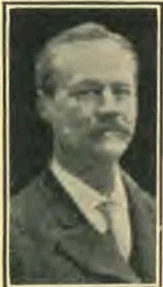
Dr. Grenfell
Some persons do things because they do not think. I am not writing to that class of people; this letter is to those who have some reason for doing a thing or not doing it. In my younger days time was valuable, and to win out in the physical and intellectual competitions everything counted. When it came to the question of, Shall I drink alcoholic beverages as do my acquaintances? the reply was, What’s the good of it? It was on the basis that it was not only not necessary, but also not advisable, that I came to my resolution never to swallow alcoholic liquors as a beverage. When I passed a prohibition measure against my own throat, I may as well confess that it was not a high sense of duty to God or to my neighbors that actuated me, but a conviction that it would be an advantage to myself. It has been an immense advantage.
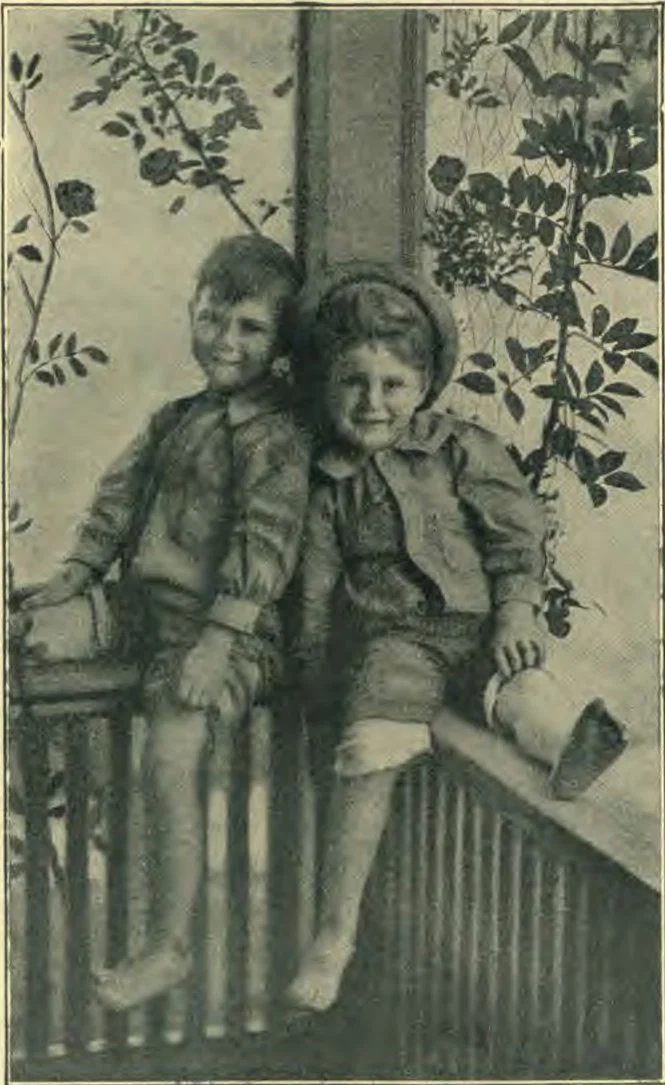
Our papa says he thinks too much of his boys, and all other boys, to vote for any man to sell liquor
Some will tell you that it is all sentimentality and “goody-goody” to become a teetotaler. I confess again I decided it long before I cared whether it was a sin or not; nor have I ever in all my life known any one who regretted having decided against it; whereas I have known hundreds who have regretted that they ever tasted it, and many who started in life with me whom it has robbed of everything worth living for.
What is the use of working for all you are worth, and at the same time crippling your physical capacities by swallowing stuff to please other people? Very few persons take alcoholic liquors at first because they like them; it is because other people like them; but they soon cultivate a liking for them that they would give any money not to have. What is the good of burning midnight oil to get intellectual honors, or even to keep up with your class, if you are befuddling and crippling your brain with an alcohol-poisoned blood supply?
Is it worth while, just to bid for cheap popularity, or to avoid a silly sneer or two, to pay the price of a self-governed life, and the approbation and respect of one’s own conscience? Let me say, without any fear whatever that any person can contradict it, “Le jeu ne vaut pas la chandelle;” that is, “The game is not worth the candle.”
A farmer, after listening to a temperance orator, said, “Well, guv’nor, you’ve proved her ain’t no good to Oi, and you’ve proved her makes a peck o’ troubles for Oi, but you ain’t proved Oi don’t like her.” Well, I didn’t like the first and only taste of whisky I ever had; so I claim no merit for not touching it; nor did I care for wine; and I couldn’t afford liquors, if only from the lowest point of view, namely, dollars and cents.
A clergyman sent me a gift of a large case of liquor when I was appointed to my first position of responsibility , as house surgeon in the largest London hospital. It lasted me to light the fire in the morning till nearly the day I left. I am very glad to-day it never circulated through my blood-vessels and kidneys. Possibly some of the fellows did not frequent my rooms because they never got a drink there. They could get drinks in most of the other rooms if they needed them. So I never thought they suffered much lack, and it is certain that I did not. Yes, I liked the taste of a wine sauce on an English plum pudding,—I am English,—and this is the only reason I might have to feel virtuous in not further cultivating the taste.
No Good in It
I say again, There is no good in drinking it. Deny that who can. “I do not see as there is any harm in it,” a man said to me once. But only a mummy, I should think, could fail to recognize the danger and the damage that come from it.
When the licensed victualers proved to the government that enormous sums were spent in spoiling good grain to make beer, the officials replied, wisely enough, that all that was entirely beside the issue. They would be satisfied if, after it was made, it was all poured into the ocean instead of down the people’s throats; because the coldest, hardest facts showed the beer river formed an ocean of crime, poverty, and suffering. What the officials wanted to avoid was damned bodies, ruined homes, broken hearts, and starved children. I will admit it would not be quite so bad an economic problem if the cost of all the jails, insane asylums, prisons, criminal courts, hospitals, charities, police, and poor asylums was borne by the trade.
With the government it wasn’t a chemical problem as to whether starch and sugar, C₆H₁₀O₅, was wasted by becoming C₂H₅OH; or a physiological problem as to whether in the new form good food supplies, known to be of value, were made more responsive to digestive functions; it was a question of what is the good of letting some people get rich to make a thousand times as many get poor. It was the same question again, “Does it pay to allow some to tempt, and make it easy for the individual, the home, the village, the city, the nation, to swallow alcoholic liquor?” No one except the seals and fishes but would admit it were far better for humanity, after the liquor is made, to pour it all into the polar sea, where, if it caught fire, and burned the ice instead of men’s bodies and souls, it might possibly render access so easy that polar quarrels would be averted; whereas it is, as a rule, only an endless quarrel causer.
So much has been said about alcohol as a beverage that nothing now remains to be said. The up-to-date cry is15to DO, not to TALK, and, thank God, the twentieth-century world is doing things in this matter. The best feeling of the world is against the liquor traffic, and America is nobly beginning to do her share to eliminate it.
“But alcohol is a food,” some say. What does that matter, when we are not intending to use it as that? It is of about as much interest as to solemnly state that our sealskin boots are a food, because poor Wallace and Hubbard, when forced to eat theirs, found that it helped a little to sustain life.
Ninety-six per cent of moderate-drinking youth are lured to perdition.—Frances E. Willard
Some argue that it is a good drug. Very well, then, put it in the drug cupboard, on the diffusible stimulant shelf. Laudanum, prussic acid, strychnia, and arsenic are all invaluable drugs. It does not follow that we ought to swallow them every day till we get such a craving for them that they will kill us by a slow and cruel death. I have seen many good fellows die from alcohol. I sat at the foot of a doctor’s bed a little while ago, who had brought on arterial disease by drinking alcoholic beverages, and was then reaping a further reward in the horrors of angina pectoris. Poor fellow, he realized too late the awful damage it was doing him! He was only my age.
It was a glorious morning, and I was leaving for a holiday trip, as full of spirits and health as a boy. He had been sitting up all night, the awful horror of death over him every minute, intensified by the knowledge that it was his own fault, and that he might have averted it; intensified, also, by the fact that from down-stairs the sound of the footsteps of a loving, true, unselfish wife, and the ripple of baby voices came floating up to his bedroom door.
It Is a Foe
Alcohol is a foe of our human physical bodies more cruel and hateful because it is so subtle and so absolutely relentless. It passes into the blood, and circulates in every tiniest corner of the body. And it does this so subtly that its victims not only do not get frightened and turn it down until it is next to impossible to undo its work, but foster the appetite until every organ has learned to cry out for more—and more—alcohol. The tissues hardened, or sclerosed, by the use of alcohol never recover.
It is a foe to our minds, also, crippling them and warping them until they can not think straight. A drinker becomes a liar, as sure as the world becomes dark when the sun sinks. If you don’t want to get left, don’t trust him. I wouldn’t dream of turning in below with a fellow at the helm who might see two lights instead of one. I don’t take a drinker on any long trips where endurance is called for; because I have seen them play out a good deal too often. In fact, we haven’t any use for them down here at all, or anywhere else really. We can’t afford them any more than they can afford to poison themselves.
Again, it is a foe to our real selves—our spirits—because it makes them sink to extremities that no one would believe till they actually knew the facts to be true. Where shall I begin to illustrate this? Facts come so fast into my brain that my pen fairly runs away.
A few years ago one of our fishermen, a fine fellow with a delightful family, was doing well. He made good money and had a beautiful little home. He was such a general favorite, and so easy-going, that he often found himself taking “a drop of Old Tom, you know, just to make a good time.” Gradually I lost sight of him until suddenly one day I was called in by his haggard, threadbare, broken-hearted wife. He, the splendid fellow I had known, had, in despair, just hanged himself from a rafter in his own ruined home. There was not a cent in the house, and not a thing left to pawn. She had remembered our friendship, and thought I might help to bury him. He had spent everything he owned for some years at the saloon across the way. I went over at once, told the barkeeper the case, and asked him to subscribe to the coffin. It was up to him to do so, as he had made it necessary. He refused in a violent, profane manner. And he was some mother’s darling only a few years before.
Yes, I know. I have heard it a hundred times,—There’s no danger. You won’t be such a fool as to let it become your master. Every man I ever knew submerged in the alcohol flood said the same thing before you. But be larger-hearted than that; forget what you like, and what won’t harm you. Remember you are your brother’s keeper, and to save him you must be on firm ground yourself.
Enlist at once with those who are fighting this foe. As a first blow, every boy and girl can pass a personal prohibition resolution, without any amendment against drinking the harmful drug. And then right through the land would grow up a battalion of helpers of infinite value in hastening the coming of righteousness, joy, and peace, which is the kingdom of God.