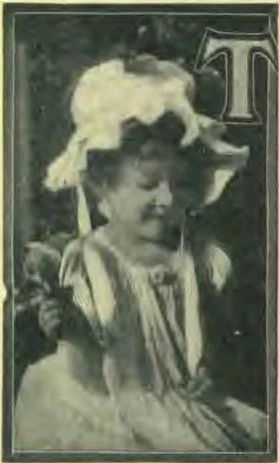
Rosa M. Barrett
WRITER AND LECTURER ON PRISON AND TEMPERANCE REFORM
THERE are no more enchanting children than the Irish children, and no happier homes or better fathers and mothers than those to be found in Ireland. But the children have one enemy. No doubt you can guess my meaning, so I may as well begin by quoting what I once heard a little boy say: “Drink is the children’s worst enemy.” Another boy, however, when he was asked what he knew about pins, said that they had saved hundreds of lives, and when the puzzled teacher asked how, he said, “By people not swallowing them.” In this sense we may also say that strong drink has saved hundreds of lives. The public house, as we call it, or the saloon, as you call it, has just one good side to it, and that is the outside. So I want to show why it is such a terrible enemy, and also how we are trying to conquer it. We might indeed run a race, and see whether the old or the new country will be the quicker in this task.
It seems as if nothing could be stronger than a mother’s love. Gladly she suffers pain; she would bear anything herself rather than let her little ones suffer. A mother’s love does not change, except to increase, whether her children are well or ill, good or naughty, beautiful or ugly, big or little, healthy or deformed—to her love they are always beautiful, and her unceasing care is a joy, and her labors a delight. Yet there is something stronger, something which can, alas! drown even a mother’s love.
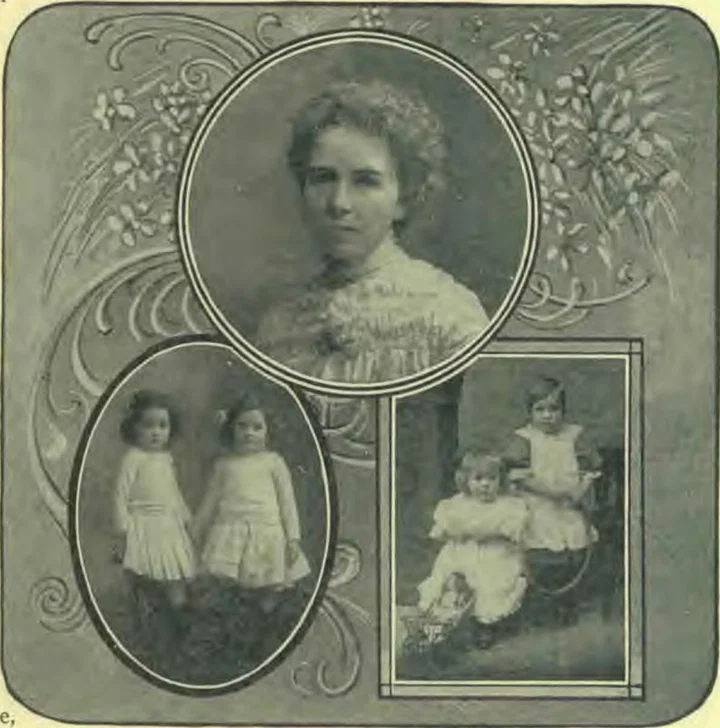
A few days ago two darling little children came into my care, so winning that it seemed as if no one could help loving them. Yet their own mother had deserted them—forsaken even the helpless baby, who could only coo and hold out clinging arms. Time after time this mother had taken the blankets off her children’s beds, the clothes off their backs, and left them to shiver and starve on cold, wintry days, just because her selfish craving for strong drink was stronger than even her mother-love. Sadder still, I was shocked one day to hear passionate screams from a mere baby, unable to speak, whom nothing would pacify. An older brother, crying and refusing all food, solved the mystery by pointing to and asking for the “black bottle.” These two mites had been literally poisoned by a wicked relative, who herself drank, and had shared her porter, the black bottle, with these little ones. It was weeks before they could or would take milk and ordinary food as they should; but by degrees this unnatural craving wore away, they could sleep quietly at last, and they grew stronger, though the elder boy will never be large or as healthy as other children.
In a Dublin children’s hospital, a boy of eight has been treated for delirium tremens, while three children under ten years of age, of one family, were all drunkards. They were poisoned; for doctors now all agree that alcohol in any form is literally poison to a growing child; it is bad enough for an adult, but ten times worse for a child; it injures him physically and morally. A child who is given strong drink even in small quantities does not develop normally; indeed, he may be so injured as not to grow up at all. A leading physician, the late Sir Michael Foster, said that even in the smallest quantities, it is always harmful to the young. Children of
five and six years have actually been treated in hospitals for diseased livers, caused by strong drink. Their brain, their nerves, their muscles get no fair play under such conditions. Another doctor writes:—
Ever so small a quantity hinders one from working so quickly, so well, and with so little fatigue as one might otherwise. One can not resist infection so stoutly, can not battle with disease so ably, can not convalesce so completely.
One can not exaggerate, then, the great importance of not allowing the young to acquire a habit that is so dangerous, so stupid, so costly, so senseless and wicked, and that may some day make itself so tyrannical a master. But the only way to avoid this danger is by becoming and remaining a total abstainer. No total abstainer ever yet became a drunkard; but hundreds of moderate drinkers have insensibly crossed the line, and found out their danger, often, alas! too late. If the taste for drink is acquired while young, the habit almost always grows. It must be remembered, too, that a whole gallon of ale does not contain as much nourishment as a lump of sugar.
We must give up the thought that “a little does not harm.” We do not want to go as near to danger as possible, but to keep as far away from it as we can. That should be our guiding principle. If danger is unavoidable, face it like men; but just to run into difficulties and into temptation to show off our skill is to court disaster. While one or two may escape safely, many will discover their danger too late, and will be hurled over the brink. If you think yourself safe, are you going to guide others into peril? Will you not rather avoid danger for their sake, if not for your own? Fifty thousand people drink themselves to death in a single year in England.
Indulgence in drink leads into strange paths; for it destroys conscience; it enslaves the will, and changes human beings into demons. This is not mere rhetoric. No facts are more clear than those showing the relation between crime and drink. In one Scotch town it was found that three fourths of the total committals to prison were for offenses committed when the person charged was under the influence of drink; in another, *eighty-eightp. 5 per cent were actually drunk when arrested. Three quarters of the more violent crimes in England are due to drink, and ninety per cent* of those committed against children and discovered by the Society for the Prevention of Cruelty to Children. This is especially true in large towns, such as Manchester and Dublin. In Europe generally drink is the direct cause of sixty-five per cent of all the crime committed; of how much more it is the indirect cause, it is impossible to say. Even among prisoners under twenty years of age, it was found in France that more than half were already addicted to drink. At a famous French hospital, the Salpêtrière, sixty per cent of those under treatment for nervous diseases are alcoholic patients. Crime is increasing among juvenile adults, that is, among those from sixteen to twenty years old, in almost every country in the world, in spite of improving education. This is markedly the case in France, where there is actually a public house to every eighty-seven inhabitants. The exceptions are found only in those countries (such as New Zealand, Canada, and, may we not now say, some of the States?) where the most rigid control is exercised over the consumption of drink. In New Zealand the convictions for drunkenness have fallen off half in a decade, and the arrests for drunkenness numbered only eight per thousand in the last year of which I have a record.
It is no mere fanatic’s statement, therefore, but has the support of the most carefully compiled statistical facts, to say that a sober nation, and a sober nation only, can be healthy or moral. To say that only such a nation can be prosperous is to state a now well-recognized fact. Brewing and distilling may make a few men wealthy, but they employ so little labor in proportion to the capital that, regarded merely as industries, they are of little use to the community.
The Best Means of Combating the Evil
Undoubtedly one of the best ways of combating this dread enemy is by giving scientific and accurate instruction to the young. The temperance teaching now so generally given in public schools especially when accompanied by simple experiments showing the injurious results on seeds or growing plants of giving even the smallest quantity of alcohol, must prove of the greatest value. There are many persons now living, who never remember hearing a single word spoken against alcohol when they were young. Happily, few could now say such a thing.
Surely we can well go without this enemy, and so follow the noble example set by the Swedish royal house, and also, I believe, by our own. It has been said on good authority that Queen Mary is a total abstainer, and has brought up her children in the same way. If this were true of all homes, what a glorious transformation we should soon see! Children would be happy. Money now wasted on poison, would be set free to buy food, clothes, and better houses; and that would mean more work for shoemakers, tailors, and builders, and more prosperity for all; and how many more happy homes! Is there anything you and I can do—or, rather, is there anything we would not do—in order to hasten that happy day?
“Every time would have its song If the heart were right; Seeing love, all tender, strong, Fills the day and night; For the great love everywhere Over all doth glow.”