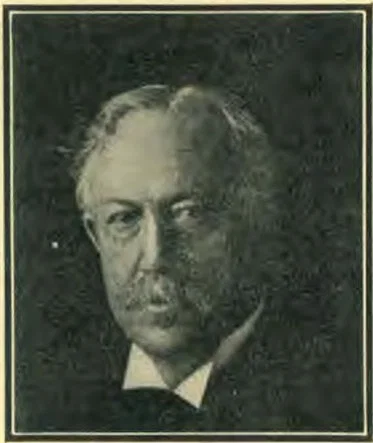
David Starr Jordan
PRESIDENT OF LELAND STANFORD JUNIOR UNIVERSITY
[An article for this number of the INSTRUCTOR was solicited from Dr. Jordan; but as he was traveling in Europe at the time, his secretary sent us one of his books, from which we gathered the following strong words for the temperance cause.]
THE basis of intemperance is the effort to secure through drugs the feeling of happiness when happiness does not exist. Men destroy their nervous system for the tingling pleasures they feel as its structures are torn apart. There are many drugs which cause this pleasure, and in proportion to the delight they seem to give is the real mischief they work.
Pain is the warning to the brain that something is wrong in the organ in which the pain is felt. Sometimes that which should be felt as pain is interpreted as pleasure. If a man lay his fingers upon an anvil and strike them one by one with a hammer, the brain will feel the shock as pain. It will give orders to have the blows checked. But if, through some abnormal condition, some twist of the nerves, or clot on the brain, the injury were felt as exquisite delight, there would arise the impulse to repeat it. This would be a temptation. The knowledge of the injury which the eye would tell to the brain would lead the will to stop the blows. The impulse of delight would plead for their repetition; and in this fashion the hand might be sacrificed for a feeling of pleasure, which is no pleasure at all, but a form of mania. Of this character is the effect of all nerve-exciting drugs. As a drop of water is of the nature of the sea, so in its degree is the effect of alcohol, opium, tobacco, cocaine, kola, tea, or coffee, of the nature of mania. They give a feeling ofp. 3 pleasure or rest, when rest or pleasure does not exist. This feeling arises from injury to the nerves which the brain does not truthfully interpret.
Some phase of mental unsoundness is the natural effect of any of those drugs called stimulants or narcotics. Alcohol gives a feeling of warmth or vigor or exhilaration, when the real warmth or vigor or exhilaration does not exist. Tobacco gives a feeling of rest which is not restfulness. The use of opium seems to intensify the imagination, giving its clumsy wings a wondrous power of flight. It destroys the sense of time and space; but it is in time and space alone that man has his being. Cocaine gives a strength which is not strength. Strychnine quickens the motor response which follows sensation. Coffee and tea, like alcohol, enable one to borrow from his future store of force for present purposes. And none of these make any provision for paying back the loan. One and all, these various drugs tend to give the impression of a power, or a pleasure, or an activity, which we do not possess. One and all, their function is to force the nervous system to lie. One and all, the result of their habitual use is to render the nervous system incapable of ever telling the truth. One and all, their supposed pleasures are followed by a reaction of subjective pains as spurious and as unreal as the pleasures which they follow. Each of them, if used to excess, brings in time insanity, incapacity, and death. With each of them, the first use makes the second easier. To yield to temptation, makes it easier to yield again. The weakening effect on the will is greater than the injury to the body.