In our country there are nearly four hundred societies for the prevention of cruelty to children. The pioneer of these is the New York Society. During the thirty years of its existence this society has rescued and cared for 160,977 children. The present superintendent, Mr. Thomas D. Walsh, says, in response to our letter of inquiry, that at least “ninety per cent of our neglect cases result either directly or indirectly from parental intemperance; indeed, much of the misery among the children the society seeks to save is directly traceable to the drink evil.”
Mr. M. J. White, secretary of the second oldest society of its kind in the world, the California Society for the Prevention of Cruelty to Children, says: “I believe that of every hundred cases reported ninety-seven can be traced directly or indirectly to the use of liquor, and I am indeed convinced that I could find even a higher percentage.”
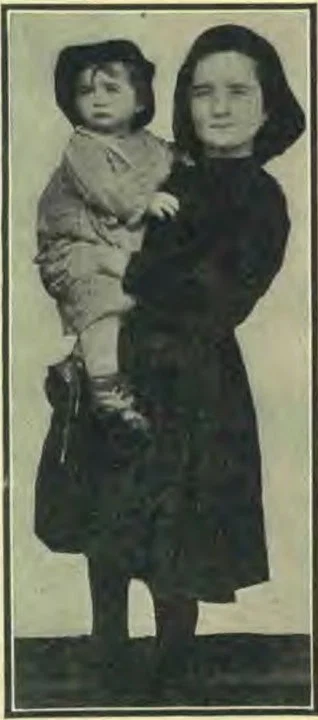
The president of this society, Edwin W. Newhall, says that “the intemperate use of liquor by parents is probably the greatest menace to the welfare of our little folks.” He further states that drink has been a prominent feature in every case that he has investigated. From 150 to 190 complaints are received and investigated monthly by this society of which Mr. Newhall is president.
The records of the society show that during 1909 one hundred eighty cases were taken to the juvenile courts in which the cause of complaint was intemperance on the part of the mother.
“The dependent minors taken into court,” says Mr. White, “as a rule live in an environment of drunkenness, immorality, degradation, and neglect, which stunts the body and deadens the soul.”
Hon. Thomas D. Flynn, of New Orleans, says: “I think I may say with safety that not less than eighty per cent of the cases of juvenile delinquency with which we have to deal are traceable to conditions for which the use of intoxicants is responsible.”
Miss Rosa M. Barrett, president of the Irish Women’s Christian Temperance Union, and a well-known writer on prison reform, says that “in Manchester, Liverpool, and Dublin, for example, ninety per cent of the offenses recorded by the Society for Prevention of Cruelty to Children, and in Derbyshire nearly all, are due to drink. Elsewhere the authorities say that two thirds would be a moderate estimate. Apart, therefore, from drink, children might hope to lead a fairly happy life, and our country would be freed from one of the saddest, most humiliating sides of our national condition.”
Hon. W. W. Morrow, judge of the United States Circuit Court, in a decision in 1908, said that “the moment a child is born, it owes allegiance to the government of the country of its birth, and is entitled to the protection of that government.” When a parent, therefore, neglects to perform his duty or disregards his obligations, the government has a right, according to this decision, to step in and take possession of the child. If the parents forfeit to the government their right to a child because of conditions which directly result from their drinking habits, what right has the government to license the traffic that makes the parents incapable of caring for their offspring? If every child at the moment of its birth becomes a ward of the government, why, then should not the government be held equally responsible with the parents in supplying conditions that make for the well-being of the child? What right, I ask again, has the government to legalize conditions that will in time cause the parent to forfeit his claim upon the child?
Something is manifestly wrong in the government’s attitude to this question.
We believe that if the federal government would once turn its eyes from the American dollar, and fasten them upon the American boy and the American girl, the liquor traffic would be quickly outlawed; for it is evident to all honest thinking men and women that this traffic is the greatest known menace to our present and our future citizenship.