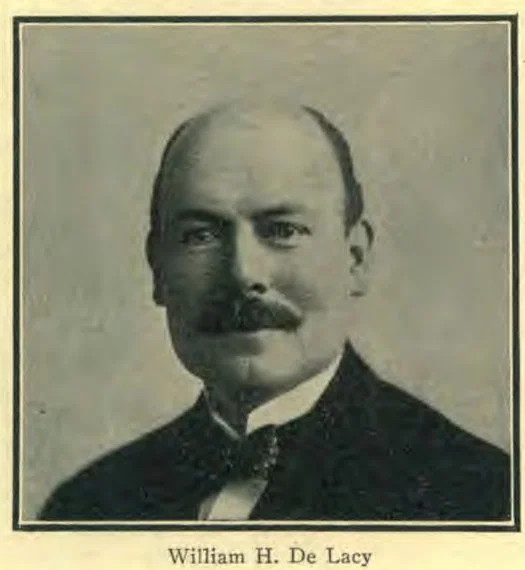
William H. De Lacy
JUDGE OF THE JUVENILE COURT, WASHINGTON, D. C.
I HAVE seen neither boy nor man stand before me with those cigarette stains upon his fingers who amounted to scarcely anything at all.”
Thus have I spoken to many individuals of some sixteen thousand men and boys who have had occasion to come into my presence in the juvenile court at Washington, D. C.
“And,” I add, “there is something about this cigarette habit that weakens and unnerves the boy. It destroys his memory, impairs his other cognitive faculties, robs him of his power of attention, saps his will-power, and deprives him of his initiative; he becomes tremulous and timid, and fears to do the thing he would.”
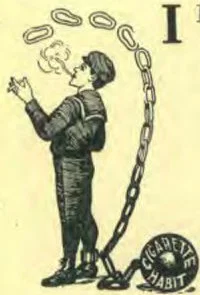
Often this filthy and disgusting habit has so fastened itself upon the impressionable boy nature that it can not be shaken off. What base slavery! What bonds of vice that meanwhile slowly and surely eat like canker into the physical being of its victim.
Many boys by repeated effort of the will do persevere and break the habit. Many other boys, alas! fail; but none need have commenced to use the cigarette. The beginning or the first indulgence in the vice, was undoubtedly a volitional act that could have been refrained from.
There is nothing necessary in the use of the cigarette. Alexander led his warriors, without cigarettes or other tobacco, from Macedonia to Persia. Hannibal caused his troops to scale the rocky fastnesses of the Alps without the aid of tobacco. Rome, the city state, extended her authority over the then known world until her eagles claimed respect from the Pillars of Hercules to the Euphrates, from the British Isles to the Sahara Desert, and neither the cigarette nor tobacco in any other form ever appeared at the banquets of her victorious cohorts. Christopher Columbus braved the dangers of the unknown seas without this narcotic.
Judge Lindsey, of the Denver Juvenile Court, writes: “I do not know of any habit that is more responsible for the troubles of these boys than the vile cigarette habit.” And to the same effect spoke Judge Greiger, of the Springfield, Ohio, Juvenile Court, during a recent visit to Washington.
Many physicians with whom I have consulted in the matter have assured me of the deleterious effect of tobacco upon the growing boy, and all have regarded the cigarette as the most pernicious form of tobacco using. Do college professors, and college men, and those other users of cigarettes who are in a position to influence boys, ever think of their responsibility for the bad example they give? How can advice to refrain from the cigarette be heeded when it comes from one who is himself a user of the cigarette?
It is not at all unusual for probation officers to report to me that boys find it difficult to stop smoking cigarettes. “Landlord says boy smokes cigarettes. Out until midnight. Just growing up for jail and penitentiary,” reads one such report.
I recall a case of a boy fifteen years of age charged with larceny from a jeweler. He was of a good family, tall for his age, with large features, that would have been handsome but for the listless, weak look that overspread his countenance. Excessive use of cigarettes had so dulled his memory that he had to refer to his broken-hearted father in order to make reply to the most ordinary questions by the judge about his personal history.
Another white boy, thirteen years of age, was in attendance at one of the ungraded schools of the district. One day he came to school with a package of cigarettes. At the beginning of the session, a little Italian boy informed the teacher about the cigarettes, whereupon the teacher relieved the boy of the package. At the close of the session, the teacher was surprised to receive from this boy a demand for the return of his cigarettes; and, when he was refused, he fell into a violent rage, seized a chair, and raised it to strike the teacher.
The teacher, a plucky young woman, caught him about the shoulders, forced him into a chair, and held him there until he regained, somewhat, his composure. She then sent for an officer. The officer testified that, upon his arrival at the school, he found the boy outside the school with a brick in his hand, threatening to throw it through the school window.
While under arrest, he said that he would get even with the Italian boy who told the teacher about the cigarettes. When asked about this remark by the judge, he claimed, in justification, that the boy had no business to tell on him. But when the action of the boy was shown to have been in his own interest, he took a different view of his schoolmate’s act, and said he was ready to forgive him.
When interrogated as to where he procured the cigarettes, he replied that he had begged them from a colored man. He was unable to say how long he had been smoking cigarettes, for the reason that he did not know just when he began to use them. The boy had so terrified not only his fellow pupils but the teachers, that the school authorities requested that he be not returned to the school.
As far back as Feb. 7, 1891, Congress passed an act prohibiting the sale of tobacco to minors under the age of sixteen years in the District of Columbia, punishing with a fine of not less than two dollars nor more than ten dollars, or imprisonment for not less than five days nor more than twenty days, any person who should sell, give, or furnish any cigar, cigarette, or tobacco in any of its forms to any minor under sixteen years of age. It is regretted that Congress did not pass a law forbidding minors themselves to smoke or use tobacco in any form.
The trustees of the public school prohibit the smoking of cigarettes or other tobacco by the pupils. Superintendent Stuart tells me this rule against smoking is strictly enforced. All probationers in care of the juvenile court are required to refrain from the use of tobacco in any form, and especially from using the cigarette, which, it is made plain to them, is most harmful in its effects. Boys, eschew the cigarette.