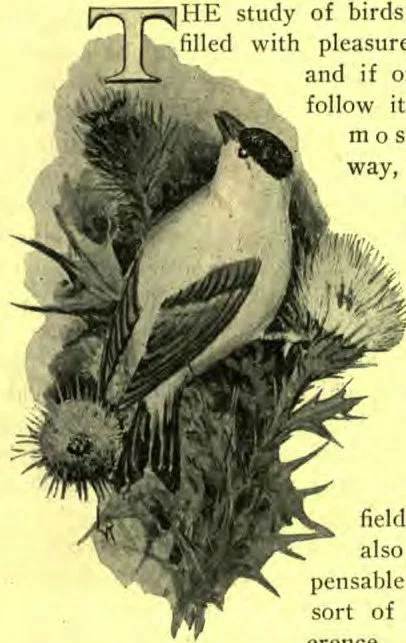
The study of birds is a pursuit filled with pleasure and profit; and if one desires to follow it in even the most superficial way, he needs an equipment for the purpose. The outfit need not be large. It should consist of a note-book and a good opera or field-glass. It is also almost indispensable to have some sort of book of reference. There are a number of works arranged especially for the novice. Among these may be mentioned, “Our Common Birds, and How to Know Them” (John B. Grant); “Birds of Village and Field” (Florence A. Merriam); “Handbook of Birds of Eastern North America” (Frank M. Chapman), or “Bird Life,” by the same author. “Bird Craft” and “Citizen Bird” are two other very useful books. It is difficult to choose out of this list the one best adapted to the purpose, but “Bird Life” or “Bird Craft” will not disappoint you. Any newsdealer or bookseller will get the books for you.
Mr. Grant has given us three very useful rules in identifying birds. These rules may be briefly stated here:—
“Study one bird at a time.
“Begin with the commonest; that is, with those that are most abundant, and most easily recognized.” The INSTRUCTOR bird articles will assist you in pointing these out.
“Do not attempt, at the commencement, to identify any bird which presents puzzling characteristics, or rather, any which does not present some striking mark, either of song or plumage, to serve as a sign for certain classification.”
Having everything in readiness, and armed with your opera-glass and note-book, start out either some early morning or toward sunset. You will find it difficult to get sight of birds during the heat of the day, or when a stiff wind is blowing. The hours immediately following daybreak are the very best time for bird study, as the birds are then most active. This activity continues until the heat of the sun causes them to hide away in the sheltering foliage of the trees. Therefore “let him to whom early rising is an abomination, in the name of Morpheus, slumber on; only, when his tardy start is effected, he shall not witness bird life so exuberant, nor listen to such floods of melody, nor inhale such richness of perfume, nor find refreshment in airs so balmy, as he might have done had he been earlier astir.” During colder weather, as in early spring, or late fall or winter, the middle of the day will doubtless prove the best time for observation.
If you wish to inspect more closely a bird already in view, do not approach it directly, as it will be almost sure to take alarm at your first step. Take an angling course, which will cause you to pass more closely beside it; make as if you had some other point in view. So doing, you may get very close to many birds which would otherwise not allow you to come near. Birds go a great deal on evident intentions; and when one moves directly toward them, they have but one explanation, and are off. For the same reason do not have about you the appearance of stealth or watchfulness. Many birds have marked the attitude before, and have learned that it means mischief. Rather, assume the guileless and unconcerned ways of the careless wanderer, and avoid any steadfast gazing. Some birds are very curious; and if, in addition to what we have just advised, you utter notes and calls in as close resemblance to those of birds as you can manage, they may remain to answer, or draw nearer to investigate.
When you have found your bird, your opera-glass will be of wonderful service. You can not hope to get near enough to many birds to make out their markings with any degree of distinctness. A good glass will show the bird more clearly. Do not bring the glass to your eyes too suddenly. Be deliberate. The quick movement, or the quick flash of sunlight from the barrel or lens will frighten most birds into flight.
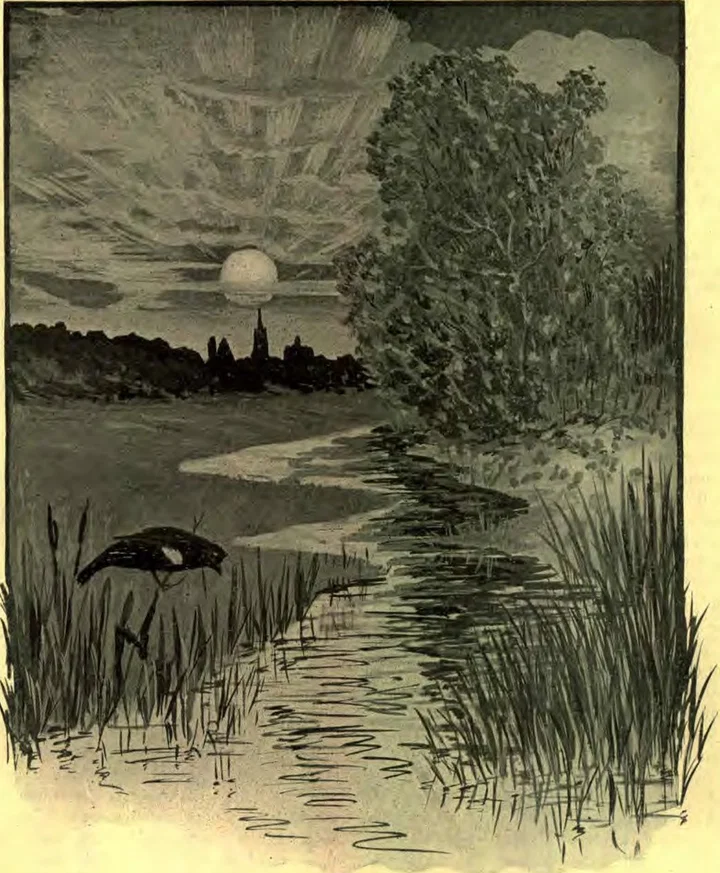
Study the marking of the bird very carefully. Do not trust your memory. Put it down in your note-book. The shape of tail and wings should be distinctly noted, with any special marks or colorations. If the bird has any notes, calls, or a song, the same should be given attention. The location of the bird may also greatly assist in identification. The haunt of the redwing blackbirdp. 170 is beside some stream, pond, or lake, amid rushes and cat-tails. The meadow-lark will be found mostly in the open field. If you notice anything peculiar in the flight or habits of the bird, make careful note of the feature. Having everything carefully in mind, you will doubtless have little trouble in learning the name of the bird, but, what is more important, will have made a closer acquaintance with one of God’s creatures.
Sometimes you will be able to secrete yourself in some sheltered spot haunted by birds, where you can see them at close range, and with slight effort. Such a place, near the edge of some stream or body of water, will be especially fruitful in results.
But do not confine yourself to any one section. Range the lowland; you will find birds there you can not find in the wooded hill country. Scurry the woods; you will there find birds that never visit the meadow. Hide in some old, deserted orchard; here you will find birds you had not seen elsewhere. Skirt the ponds and marshes; each kind of country has its favorites.
But remember it is not how far, but how much. A city park will furnish you all the ground you need. A back orchard, a wooded field, or a strip of meadow is sufficient. Do not tramp, but look. Have your eyes open. It takes sharp eyes and keen minds to see anything, and especially the things of nature. As you try, your powers and abilities will grow. The mere contact with nature alone will be an education. L. A. REED.