THE KING OF FISHERMEN

9%

Review and Herald Publishing Company · Battle Creek, Mich. · Jun 27, 1901

FromThe Youth’s Instructor, Vol. 49, No. 26.

Read the full edition

THE KING OF FISHERMEN

The Belted Kingfisher is a sprightly creature. He is not above making some noise, and his movements are as swift as they are certain. His note is very peculiar, and he certainly can not be offended with us if we term it a rattle.
He is ever on the watch for food, and he needs but the glint of a shining fin, or the flash of scales just beneath the water, to make his silent, headlong plunge. In another moment he emerges from the water with the fish in his bill, shakes the water from his plumage, and with victorious shout, or rather rattle, flies away to some favorite perch.
THE HAUNT OF THE KINGFISHER
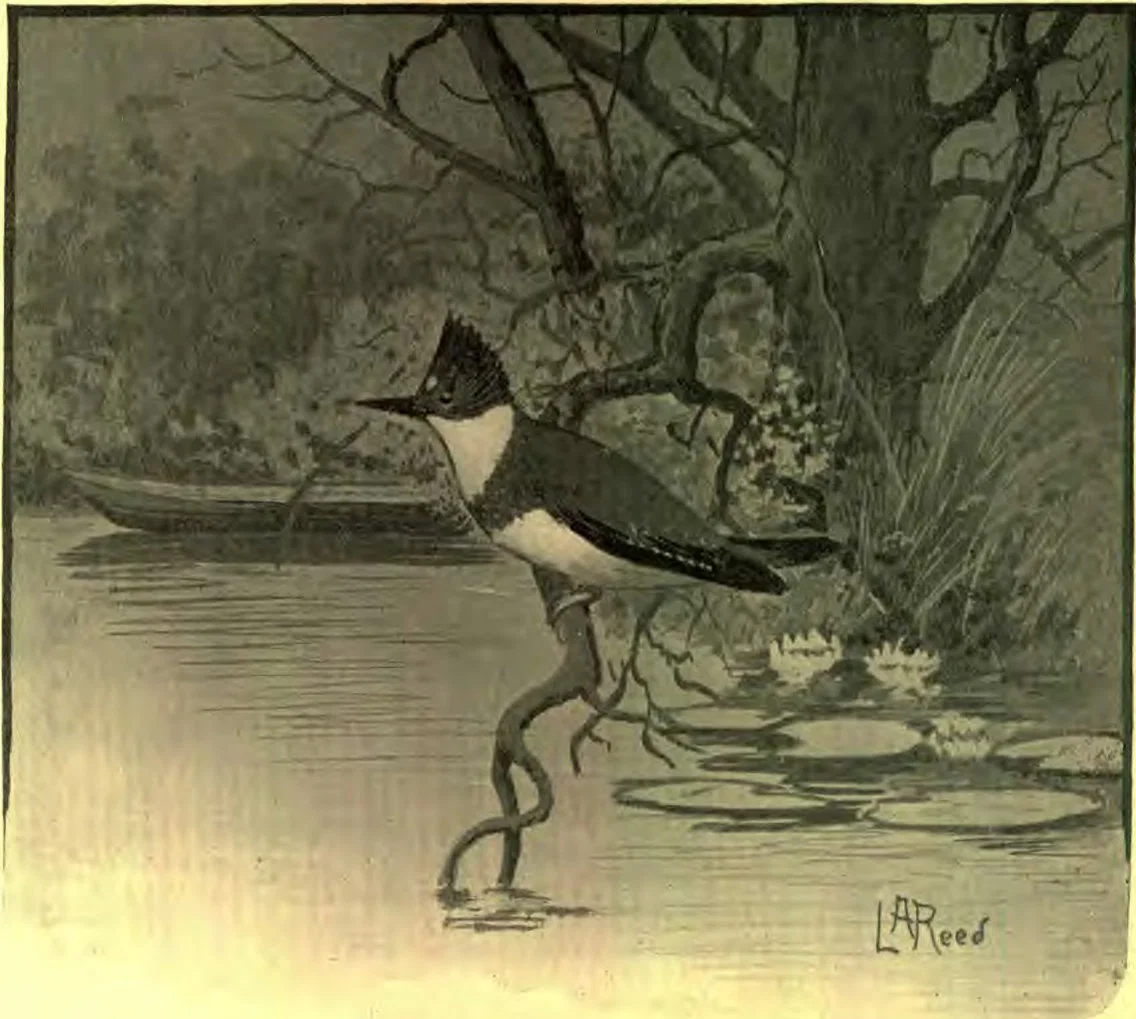
In our illustration we see him in a common position. His favorite haunt is the shores of a wooded stream or lake or pond. Here, perched on some limb which overhangs the water, he silently waits for fish or foe. It may appear that he is looking straight ahead; but do not be deceived by him. He is looking down at the surface of the water, on the watch for some unsuspecting fish. Besides, he is on the alert for any danger that may threaten him. Try him once, and you will see.
Paddle toward him now, as quietly as you please. Just as you are near enough for what he thinks is danger, he drops from his perch, and with a loud, rattling cry, flies on ahead. Paddle toward him again if you wish. When you think you are in fair sight of him, away he flies once more; and so it continues until he has gone quite a distance, when he will make a detour, and return to the spot whence he started.
You will find his nest, if you are shrewd enough, built in a hole in the bank, where, early in May, his mate lays from five to eight white eggs. The birds use their feet as trowels in excavating these holes in the bank of earth. It has been said that they are about three weeks in excavating their nest. Sometimes they dig a tunnel over five feet long; and the male bird has been known to burrow a second hole over three feet deep, in which to sleep. You see he believes in having a bedroom all his own. The young, when first hatched, have no feathers, and remain in their nests for several weeks.
The Kingfisher does not confine himself to a diet of fish. Though he is the king of fishermen, he eats crustaceans, grasshoppers, crickets, June bugs, and beetles with relish if opportunity offers; and in Arizona, where rivers are scarce, and the country largely desert, he lives principally on beetles, grasshoppers, and lizards.
Though naturally very crafty and timid, he becomes quite tame if well treated. Miss Merriam says that at Lake Placid, when moored in a boat alongshore, she has had one perch almost over her, and dive so near that the water spattered her paddle.
The Kingfisher is certainly a very interesting bird, and well worthy of study.
L. A. REED.