MANY excellent lists of answers are sent to the editor, the questions being intelligently and correctly answered, the papers neatly written, and all the rules of the Finding-Out Club fulfilled. There are some persons, however, who fail to meet the demands for membership in the club by writing on both sides of the paper, using pencil instead of ink, and not giving the date of the paper containing the list of questions answered.
You may be interested to know that only one person was brave enough to attempt to answer the list found in the INSTRUCTOR of Dec. 5, 1916. Mr. Reese sent in a good list of answers. But the next list that appeared brought in fifteen sets of answers. In the main these were all good papers. The following persons would have graced our club membership if they had answered accurately the fifth question of this series:—
Irene MacDonald Lenna Hough Lois Lillian Gilstrap C. W. Bruce W. S. Reese Nellie M. King Pearl L. Goodrich Helen Dykstra Beguelin
These must have failed to note that President Wilson was born in the Old Dominion State.
If one uses ruled paper, please do not write anything at all above the first ruled line. The line itself suggests that the writing should begin on it, and not above it.

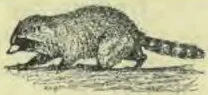
The names of the animals shown in the picture never appeared in the INSTRUCTOR. They are herewith given in the order they appear in the picture from left to right:—
Toucan, painted turtle, flying squirrel, octopus, angel fish, raccoon, meadow lark.
The papers of Mrs. McIntire and Miss Laing answering the last list of questions in 1916 came too late to be counted in on the 1916 list, so we welcome them to membership in the 1917 club.
Members of the 1917 Finding-Out Club
C. W. Bruce Grace D. Bruce Herbert F. Demorest2 Mrs. Grace Hoover2 Mae C. Laing Mrs. F. M. McIntire
W. S. Reese2 Susan A. Walde2 George F. Webb May Wilhelm William F. Woodp. 11
For the Finding-Out Club
1. WHAT is the Septuagint?
2. What is the Douay Bible?
3. What place did vowels have in the original Hebrew text?
4. When was the Bible divided into chapters?
5. When was it divided into verses?
6. What queen inaugurated her long and prosperous reign by pressing to her heart and lips a copy of the Bible?
Answers to Questions in “Instructor” of February 6
1. Submarine boats are fitted with gyroscope compasses, so that they may be able to steer correctly when submerged. They also have one or more periscopes.
2. The origin of London will probably always remain a subject of dispute, for want of decisive facts. There is practically no record of British London. Bishop Stillingfleet held that London was of Roman foundation, and not older than the time of Claudius.
3. When chemically pure, iron is silver-white in color. It is a metallic element which is malleable and ductile, strongly attracted by magnets, readily oxidized in moist air, and attacked by many corrosive agents. Steel is iron which is malleable at least in some one range of temperature, and also is either cast into an initially malleable mass, or is both so cast and so capable of hardening. It is much harder and more elastic than iron.
4. A whale is not a fish. It is a mammal.
5. Glass is an amorphous substance, consisting ordinarily of a mixture of silicates, but in some cases, of borates, phosphates, etc. Most glass is made by fusing together some form of silica, as sand; an alkali, as potash or soda; and some other base, as lime or lead oxide.