Our Summer Boarders

8%

Review and Herald Publishing Assn. · Takoma Park Station, Washington, D. C. · Sep 14, 1915

FromThe Youth’s Instructor, Vol. 63, No. 37.

Read the full edition

Our Summer Boarders

THERE are four of them now, and we started with only one—which speaks well for the table we set. Don't you think so?
Two of our patrons wear black hoods all the time, even at table; and the other two wear speckled collars.
Now of course my secret is out, so I will tell you how it all came about. Last summer we discovered that the Oregon junco is fond of crumbs, and can easily be induced to come even into the house for them. That was late in the season, so we did not have much chance to get acquainted then; but one day early this spring I put cracker crumbs and rolled oats on the kitchen window sill, and that very morning I heard a tap, tap, and there was Mr. Junco. He ate a hearty meal and flew away, only to return soon with his little lady. She, too, approved of the menu, and the next day we were delighted to see her bring the baby.
Such a time as she had filling that hungry mouth! The little scamp was almost as large as she, and could fly perfectly; but when his mother was near, he pretended to have no idea whatever of how to pick up his own food. Then the other baby was brought, and the same performance gone through with. It was enough to wear out any mother, for the babies seemed never satisfied.
Then, one day, something very funny happened: the mother junco and one baby came, and Lady Junco tried to coax him to pick up his own food; but he would only sit there with his saucy little head up in the air, squealing out his queer little “chee, chee” hunger call. Then the mother bird filled her bill full of oats, and the baby was sure he had gained his point, so sidled up to her to be stuffed as usual. But here came his first shocking surprise; for Mother Junco swallowed those oats herself, and gave Master Squeaker a sharp rap on the head instead of the coveted food. Then she was off like a flash, and the astonished birdling was left alone on the window sill with food all around him.
For some time he looked about in vain for his mother, but could not see her. We could see her high up in a near-by tree, watching to see what would happen.
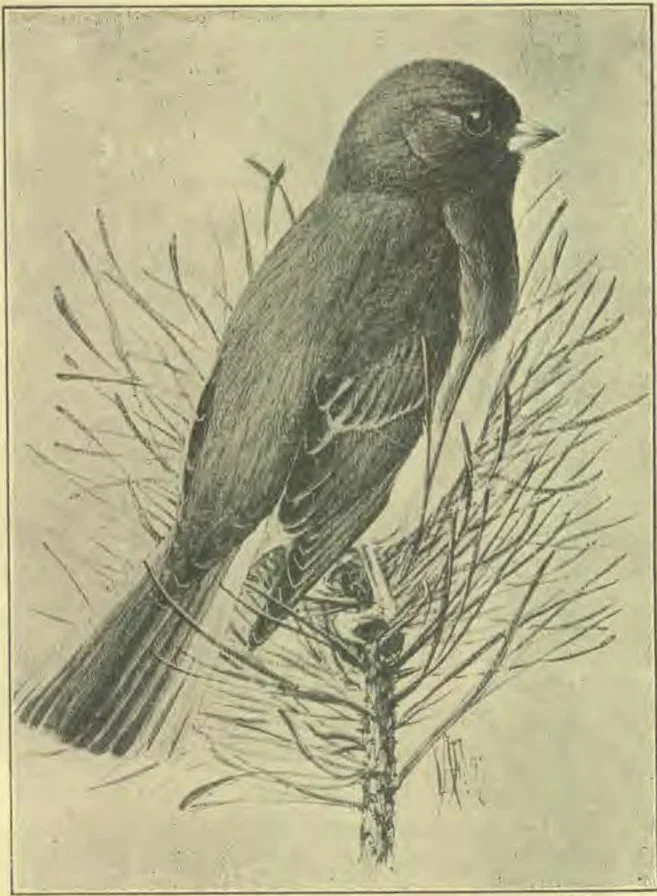
SLATE-COLORED JUNCO
SLATE-COLORED JUNCO
Then he saw the food, and must really have been hungry, for he began picking it up just as if he had always eaten in that way. The other baby soon learned, too, and now they come regularly to our window table, and do not seem at all disturbed because we are in the room.
It is really very easy to tame them. When grown, they are about the size of a sparrow. They have brown backs and gray breasts, and a jet black hood and collar. Their song is sweet but not at all loud, just a dainty warble. The birdlings are speckled, brown and gray.
The farmers value these little birds highly, because they live chiefly on weed seeds. Even so high an authority as our Oregon Agricultural College advises the public of their value to the country because of their diet.
So, you see, our summer boarders are rather noted people, even if they are small, and wear feathers.—Etta Squier Seley, in Sunday School Times.