One day as Pastor Parker and I were journeying with some of our native brethren among the mountain tribes of Fiji, we found ourselves at mealtime some distance from any native town. We came to a beautiful stream of fresh water, but we had no cups with which to dip up the water. Our native brethren had some taro, a vegetable, but where was the vessel to cook it in? There were fresh, crisp leaves often used for greens, but how, I queried, could these be cooked? We had crackers with us, but we wanted in addition some hot water for coffee, but how could this be secured? Pastor Meciusela Naisogo, a native of the mountain district, noticing our fears, said, “We shall show you a new thing today.”
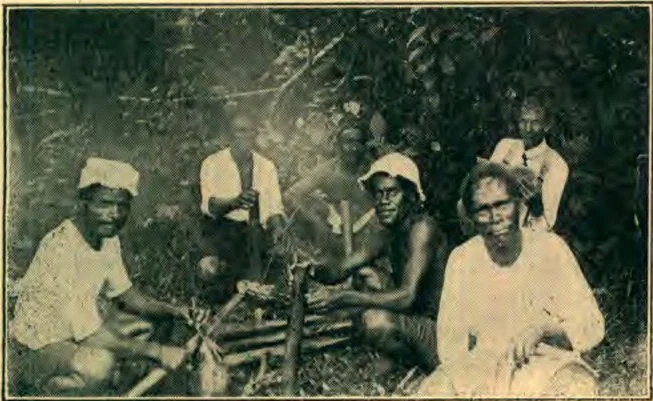
Halting to rest in the valley by the stream, one of our Fijian evangelists cut down some bamboo trees, then cut them up into sections, each about three feet long, so that a closed joint was at one end, the other being open, thus making a hollow tube, each holding about a half gallon of water. There were perhaps ten of these tubes prepared. Water was dipped up in some of them and from one of these we drank.
While some were gathering wood and making a fire, others were paring and cutting up vegetables in slices just large enough to slip into the bamboo tubes. The young, fresh leaves of the taro were gathered, rolled up in balls, and placed in other tubes. To the vegetables and greens a little water was added, and after a stopper of leaves was placed in the open end of each of the bamboo tubes, they were placed on the fire, the open ends being slightly elevated to keep the water from escaping. The native brethren kept the bamboos moving back and forth in the fire, rolling them over and over, the fire meanwhile charring the green bamboos to a sooty black. They were carefully watched, so as not to burn through. The bamboo wood is fine and hard, and being green does not burn readily, and so serves well as cooking vessels. It was quite a surprise to us, and also to a Fijian with us who was from the coast, to see how quickly and how perfectly everything was cooked.
After the Fijian brethren declared the dinner cooked, large green leaves were plucked and laid down as plates and tablecloth. Then in just the right way one of the brethren slit each bamboo tube with a knife—and out came the vegetables and greens steaming hot, onto the green leaves. The food was simple, but sweet and clean, and with our crackers made a refreshing meal. While partaking of the vegetables, the water was heating in a bamboo. I was doubtful about its actually boiling and laughingly expressed my fears. But soon the bamboo reached me, after having been carried fully twelve feet from the fire, with the water still boiling. Thus had the native sons found a means of cooking food away off in the mountains far from ordinary supplies. J. E. Fulton.