The Publishing Work

2%

Review and Herald Publishing Assn. · Takoma Park Station, Washington, D. C. · Feb 7, 1911

FromThe Youth’s Instructor, Vol. 59, No. 6.

Read the full edition

The Publishing Work

An Agent of the Gospel

E. R. PALMER
The printing-press is one of God's great universal agencies for carrying the gospel of the kingdom to all nations. It may be called a universal agency from two points of view.
First, because it is an efficient agent in all nations; and second, because it is so varied that all, both old and young, and those who have many talents or few, can engage successfully in the work.
The printing-press is doubtless one of the greatest of the latter-day inventions which were foreshadowed in the prophecy, “Many shall run to and fro, and knowledge shall be increased.”

A Powerful Factor in the Reformation

It was given to the world near the close of the fifteenth century, at the very time it was needed to make the Reformation of the sixteenth century possible.
The leaders of the Reformation recognized in the printing-press an agent which all the power of the Papacy could not overthrow. During the first ten years of that mighty movement, upward of four hundred fifty publications, in the form of books, pamphlets, and tracts were issued from the Reformation presses, as compared with only thirty publications which at that time had been published by the Papacy.
Printers were engaged, tract societies were established, agents were trained, and large bodies of students from the universities upon which the Reformation had laid hold, were sent out two and two. Luther, Melanchthon, Zwingle, and others among the brightest stars of the Reformation were organizers and leaders in the work.
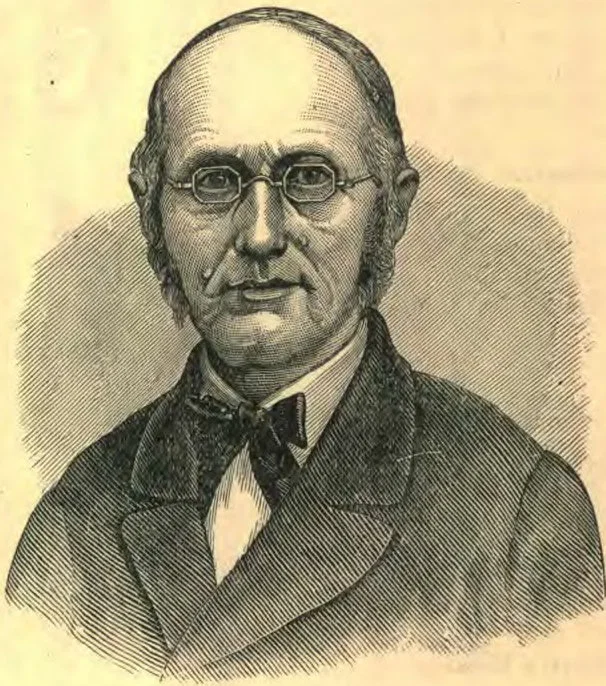
JOSEPH BATES
JOSEPH BATES
This literature found its way, not only to the nobility and the common people in Germany, but to England, the Netherlands, across the Alps to Italy, and to Rome itself, and even into the home of the Inquisition in Spain. Some of the writings of Luther were sold on the streets in Jerusalem six weeks after the date of their publication.
It was this movement, with the literature of the Reformation, which was symbolized in that wonderful dream of the elector of Saxony. In his dream he saw a monk writing “on the door of the church of the castle of Wittenberg,” in characters so large that they could be read at the elector's castle, and with a pen so long that it “reached as far as Rome, where it pierced the ears of a lion that was crouching there, and caused the triple crown upon the head of the Pope to shake.”
Literature has also been the foundation of the great, permanent foreign missions of the past century. One of the most striking illustrations of this fact is found in the work of Robert Morrison, who gave the Bible and a dictionary to China, as the fruit of twenty-five years of earnest labor. William Carey is called the “father of missions” in India, because of his great work in translating the Bible, or portions of it, into twenty-four of the languages and dialects of India. Judson, also, in Burma, and John Williams, the great missionary to the islands of the Pacific, made their work permanent by the translation of the Scriptures and other gospel writings, into the native tongues.

The First Seventh-day Adventist Literature

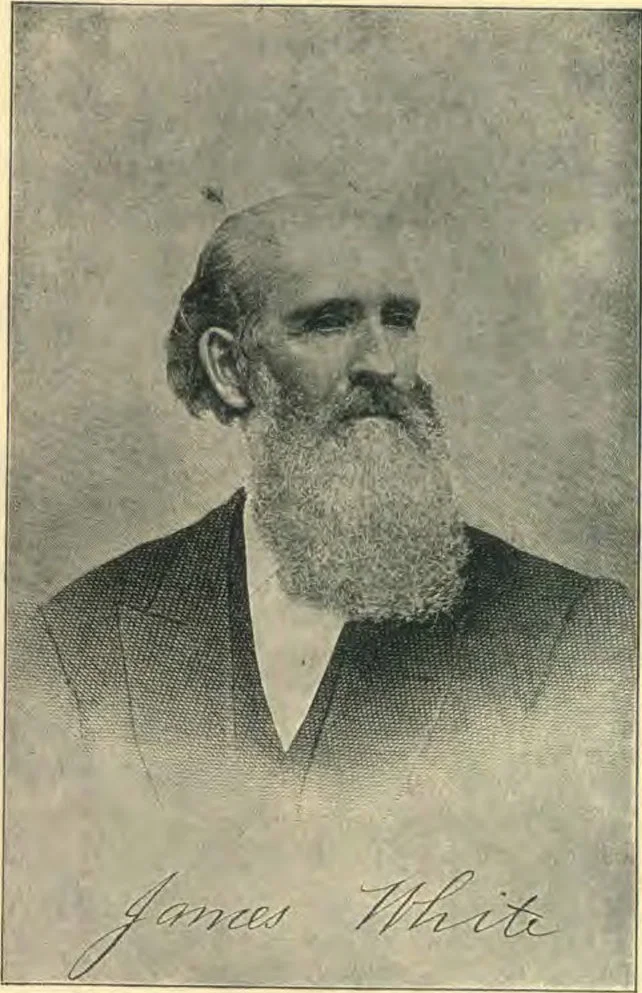
The first leaflet which might be considered definitely as Seventh-day Adventist literature, was published April 6, 1846, by Mrs. E. G. White, before her marriage, and was signed, Ellen G. Harmon. It was her first vision, and as far as we know, the first production which appeared from her pen. It was printed on the whole of one side and on one half of the opposite side of a sheet of foolscap paper. A foot-note invited the reader to write out his impressions on the half-page of blank space, and return the same to the author. Two hundred fifty copies were printed, and the expense was paid by Brother H. S. Gurney and a young man by the name of James White, the latter name appearing on the leaflet, as publisher.
About one month later, May 8, 1846, Elder Joseph Bates published a tract entitled “The Opening Heavens.” In August of the same year Elder Bates also published a forty-eight-page tract entitled “The Seventh-day Sabbath a Perpetual Sign.” This was doubtless the first tract published by Seventh-day Adventists on the Sabbath question.
The year 1849 was a most interesting one in the history of our publishing work. Three important publications were issued; namely, the first testimony, the first number of the Review and Herald, then called Present Truth, and the first collection of hymns.
The first testimony was addressed “To Those Who Are Receiving the Seal of the Living God,” and was signed, E. G. White.
The first number of the REVIEW was published in July, by Elder James White, at Middletown, Connecticut, the money for the enterprise having been earned by cutting grass with a hand scythe; and the first edition was carried by Elder White eight miles from Middletown to Rocky Hill and back again, in a carpet-bag.
The first hymn-book was also published by Elder James White. The little book was 3⅜ x 5 inches, and contained forty-eight pages with fifty-three hymns. Hymn No. 3 begins with the stanza:—
“We speak of the joys of the blest— Of that country so bright and so fair; And oft are its glories confest; But what must it be to be there? We speak of its pathway of gold; Of its walls deck'd with jewels so rare; Of its wonders and pleasures untold— But what must it be to be there?”
At this time all our literature was given away, people who became interested being asked to contribute what they were able toward the publication of another edition.

The First Literature Sold

The first effort to sell our literature was in the year 1854, when Elder J. N. Loughborough, while holding a short series of tent-meetings in Rochester, Michigan, conceived the idea that our publications could be sold. The total value of one copy each of all the tracts and pamphlets published at that time was thirty-five cents. These were made up into parcels and offered for sale at the close of the meeting, by Elder Loughborough, at thirty-five cents a package. The literature sold in this way on three successive Sunday evenings amounted to fifty dollars.

An Interesting Comparison

It may be of interest to compare the parcel of literature at that time with what the volume and cost would be of one copy each of our tracts, pamphlets, books, and periodicals at the present time. The figures are as follows:—
NUMBER PAGES VALUE
Books 333 103,261 $377.03
Pamphlets 287 21,086 35.87
Tracts 1096 15,174 15.97
Periodicals 118 28,855 59.13
Totals 1834 168,376 $488.00
NOTE.—If convenient, these figures may be placed upon the blackboard or upon a large sheet of paper, where they can be more easily explained by the reader, and appreciated by the congregation.

A Pioneer of the Third Angel's Message

Since those early days of small beginnings, when God by his providence was planting the mighty seeds which were destined to spring up and bear fruit in all the world, the publishing work has kept in the van in the progress of the gospel to all nations, and has been the active pioneer to make a way for the living preacher.
Recently, Elder O. A. Olsen made the statement in a missionary talk that, so far as he has observed, our literature has really pioneered the way into every country which the third angel's message has entered.

Sixty-Five Years of Growth

We now have twenty-seven publishing-houses publishing our literature in sixty-seven different languages. The following figures show the value of literature sold from the beginning of our work until the close of 1909, the totals being given by decades during the first sixty years, or until 1904; and then the totals for each year are given during the first five years of the seventh decade:—
PERIOD VALUE
1845–1854 $2,500.00
1855–1864 17,500.00
1865–1874 73,000.00
1875–1884 371,000.00
1885–1894 3,969,000.00
1895–1904 3,144,000.00
Total for sixty years $7,577,000.00
1905 548,000.00
1906 824,000.00
1907 1,035,000.00
1908 1,290,000.00
1909 1,402,000.00
Total for five years 5,099,000.00
Grand total $12,676,000.00
NOTE.—These figures, also, should be placed upon the blackboard, where they can easily be seen and studied.
It will be observed that the total sales of literature during the past five years have been nearly two million dollars above the sales during the preceding ten years, and equals two thirds as much as the total sales for the previous sixty years. If the work continues to grow, as we trust it will, the sale of literature during the seventh decade in which we are now living, will be far above all the sales of the previous sixty years.

The Better Proofs of Progress

It seems almost a cause for regret that we are largely limited to figures expressing dollars and cents, in our effort to show the advance of a department of work, which includes the life, the prayers, the earnest labors, and the very heart-beats of a people who are carrying the last gospel message to all nations. Yet, from time to time we are uplifted and cheered by other evidences of progress. The Lord gives to his workers some visible fruit of their labor in the salvation of souls.
One of the members of our first tract and missionary society testified, near the close of her life, that she knew definitely of one hundred persons who accepted present truth through reading the Signs of the Times she had sent to them by post, and had followed up by correspondence.
A missionary worker sent the Signs for a long time to an address, without any response. These papers were used by the family, who were poor, to paper the walls of their kitchen. Finally, they moved out, and the family who next rented the house, read the papers on the walls, and accepted the truth. A few months ago, when the writer was narrating this incident before a congregation at one of our conferences, a gentleman stood up in the rear of the room, and asked to give his testimony. He said that a few months before, he had accepted the truth through reading the Signs which he found pasted on the walls of the milk-room in the house last rented.
Some years ago a sea-captain threw a roll of papers in a pouring rain upon the wharf in Port of Spain, Trinidad. A passer-by picked them up and read them. The result was a little company of Sabbath-keepers, and a call for missionary workers. Some of these same papers were sent to Barbados to friends, who accepted the truth, and also sent for a missionary.
In one of our largest conferences it was ascertained through personal inquiry from all the members, that over one third, numbering more than one thousand members, had accepted the truth through reading our literature.
When one of the conferences in Australasia was organized, it was ascertained that sixty per cent of the churches in the conference had sprung up as the result of the sale of subscription books.
A lady in a large city purchased a copy of “Bible Readings for the Home Circle.” She hid it away for fear of her husband, for two years, reading it only when he was away. Finally the husband became interested in the truth through reading one of our papers in the public library. He mentioned his interest to his wife, who informed him that she had a book which taught those same doctrines. The book was brought out. The family accepted the message, and, in turn, published it to their neighbors, fifteen of whom decided to obey God's commandments. In the same city a gentleman purchased a copy of “Great Controversy.” He was greatly offended with its teaching, and lent the book to his son, that the son might share his disgust; but he accepted the truth, and became the elder of this little church of fifteen members.
By such small but powerful means the truth of God is winning its way. The seed sown is watered by the tears of the sower and by the Spirit of God, and is warmed by the love and the prayers of the worker until the seed springs up and bears a bountiful harvest.
It is a beautiful truth, which should be both an encouragement and an admonition to us, that the cause of God still prospers as in the past, through the earnest labors of the children of God, under faithful leadership. “The Lord gave the word: great was the company of those that published it.” This is the testimony of the psalmist. And after the victory over their enemies, Deborah and Barak sang: “For that the leaders took the lead in Israel, for that the people offered themselves willingly, bless ye Jehovah.”