M. E. OLSEN
When Moses gave those noble farewell addresses, which are recorded in Deuteronomy, he repeatedly expressed his concern lest the children of Israel, having settled themselves at ease in the promised land, should forget the God who had led them out from Egypt, had watched over them during their wanderings in the wilderness, and had given them for a peculiar possession the land flowing with milk and honey. Joshua, at the close of his strenuous life, addressed a similar warning to the people; but it was not heeded by future generations. How pathetic is the record! “Israel served God all the days of Joshua, and all the days of the elders that overlived Joshua, and which had known all the works of the Lord, that he had done for Israel.” With a new generation apostasy comes in. The people forget Moses and Joshua, and they forget God.
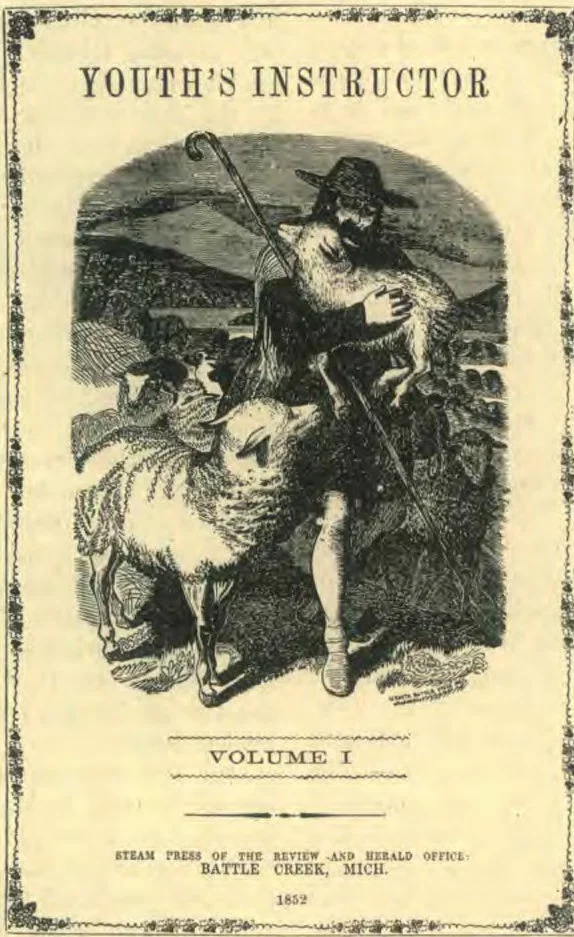
Sometimes I think that the young people now growing up are in danger of losing sight, not only of the many divine providences in connection with the early history of this people, but also of the zeal, self-denial, and devotion to duty which characterized the pioneers. Those were heroic times, and they bred heroic men and women. It does us good to associate with them by reading their writings, and trying to put ourselves in their places. Wherever we look we shall see hardships borne with the utmost cheerfulness, and incredible difficulties overcome by earnest prayer and persevering labor. We may see Elder Joseph Bates, with want staring him in the face, sitting down with perfect composure to write his tract on the Sabbath, and later follow him in his fruitful work in many places, dependent upon God’s opening providence, and cheerfully doing the thing that needed to be done whether it was preaching a sermon, or, in those days when cook-books were scarce, going into the kitchen to explain the mysteries of hygienic cookery to some housewife eager to learn.
We may see Elder James White in the intervals of those strenuous labors which were so successful in gathering the scattered believers together and forming the nucleus of a work which was to embrace the world, — we may see him at such intervals, in order not to be chargeable to the work of God, earning money by hauling stone, or chopping cord-wood at fifty cents a day, or cutting hay, and that, too, while suffering from severe bodily weakness, so much so that his nights were often sleepless from pain. We may see him in the face of apparently insuperable obstacles forging steadily ahead, alert, watchful, vigilant, doing the work of a true minister of the gospel, and at the same time with rare foresight laying firm foundations for our publishing work, and for our system of schools and sanitariums. We see him doing all this for the love of the Master, buoyed up by the blessed hope, and looking forward to the crown which shall be given to all the faithful workers in that day.
There is something more than sentiment involved in a remembrance of these earlier men and earlier times. We need to study the lives of the pioneers in order, not only to understand the men, but to understand the message itself. We must study the men in such a way as to enter into the spirit of their work. It is not what is told us of the truth that will save us, but that which we are able to weave into our lives. We never fully possess a truth until we have had a spiritual experience growing out of it. We never really know anything until we have obtained a heart knowledge of it,—till it has cost us something.
Especially do the young people who have, as we say, been born into the truth need to study the soul experiences of these early pioneers, and emulate their example. While it is a blessing thus to grow up in the truth, there are also some drawbacks connected with it. The young man or young woman who has always kept the Sabbath, at least outwardly, has missed that deeper experience which comes to those who give up friends and associates, perhaps even father and mother, and all that the world holds dear, in order to obey the truth. To miss the trial, is to miss the purification of all the affections which it involves, and to miss the consequent strengthening of character.
Fortunately, there are still experiences that may be bought. If the pioneer work has been done in this country, it remains to be done in the regions beyond. The young men and women who have grown up in the truth may fix their eyes on China, India, Africa, and other great and needy fields, where millions of precious souls are waiting to hear the gospel. There, in pioneer missionary work, they may, in some degree, live over again the strenuous times experienced by the noble, disinterested men whom God called to lay the foundations of this work. And we who remain behind by practising self-denial in little things and in large things, may be able to contribute liberally of our means toward their support. Thus we may all emulate the example of the pioneers.