E. J. URQUHART
THE sun and moon behold strange pictures out here in Korea, and wind and forest listen to sad stories. The pictures that greet the sight every day and night, and the stories that are wafted out upon the air are not common to the people of America. So I am going to pass along a few of them that the readers may get a better idea of the conditions that prevail in this land.
Scene One
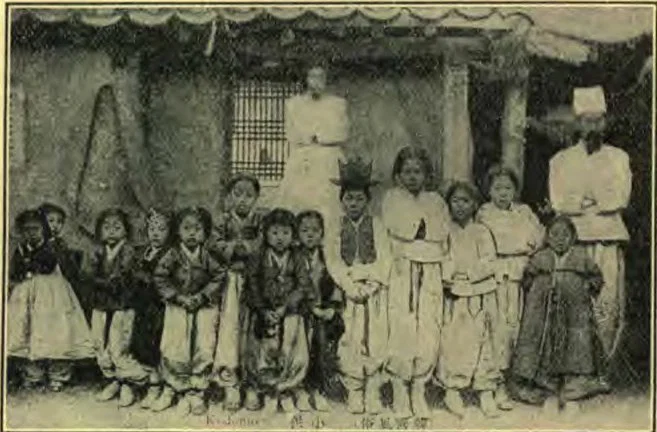
It was an autumn day, not the dry dead autumn so common in most parts of the world, but one that was filled with growing grass and flowers; the very air held the breath of life just as does early spring in California. The sun looked down with more warmth, but upon a sadder picture. The children of Korea were sporting over a thousand hills and fields, for summer’s extreme heat was over, and two of the best months of the year were before them. The cruel winter that lay beyond held no terrors for them, for their young minds had almost forgotten the pangs of the last one, and today they had life and warmth. Why should they worry for the future when today was theirs, theirs with its green grass and flowers and life? And so they ran over the hills and fields, free and happy as the birds, the majority of them unencumbered even with clothes.
But those who were older in years realized that beyond those two months of warmth was winter, cold, relentless, austere, and they were busy preparing for it. On a thousand hills the sun beheld them at their work, cutting grass, stripping branches from the trees, and even cutting the trees themselves where it was allowed. They were gathering fuel for winter. They were doing this work now because the harvest would soon claim them, and some day before the harvest was all gathered and threshed, with the suddenness of a thunderstorm, the bitter Siberian winds would sweep down from the north, and Korea would be folded in the arms of winter.
Then there were other children, but the sun never beheld them; still their moans and dying whispers were heard by the autumn breezes that passed through the village lanes and into the mud huts of the dwellers. These were the children that had failed in the great game of life; the hot summer with its tainted water, unnourishing food, and other unfavorable conditions, had left them with fevers and disease. Hid away in the dark, dismal houses they spent their days of misery, and upon this autumn day the sun seemed to lose his cheery smile as he beheld these little ones carried forth to the hillsides and laid to rest on the bosom of mother earth. The fresh little mounds among the thousands made in former days, told their sad story as the sun dropped from sight beyond the western horizon.
Scene Two
It was late winter. The snow lay in patches over the ground, for the north wind had been blowing for weeks and had swept the ground bare in places. The bright, warm sun came up over the eastern hills, but even his warmth could not absorb all the frost that was in the air. However, as he looked down into a hundred valleys, he did his best to bring hope to the people as he smiled his good cheer. He saw as he glanced down on the network of villages that his warm smile enticed the children from their hiding. He saw them slip out through a hundred thousand doorways, and glide along the sunny sides of the walls. For days they had been huddled under the tattered bedclothes on the floor, for Jack Frost had been busy. He had crept into the rude huts and had made them more drear and cold; even the fires under the floors had failed to drive him away.
In some cases Jack Frost not only entered the houses, but penetrated the forms of the children themselves, and their stiff little bodies had been carried forth and laid to rest on the frozen hillsides, while the moaning of the north wind mingled with the moans of the mourners.
Scene Three
The fury of the winter was spent, and the fresh sunshine of spring flooded the world, and the wind that had blown from the north for months had ceased. In its stead a gentle south wind came from the tropics, carrying with it the breath of flowers. As the sun looked down, he saw the hills and fields covered with purple violets. The breezes listened to the songs of birds, and loath to lose their sweetness, bore the songsp. 4 along on their wings. The hum of bees mingled with the songs of the birds, and butterflies danced from flower to flower. The houses that had been sealed from light and air for many months were at last thrown open.
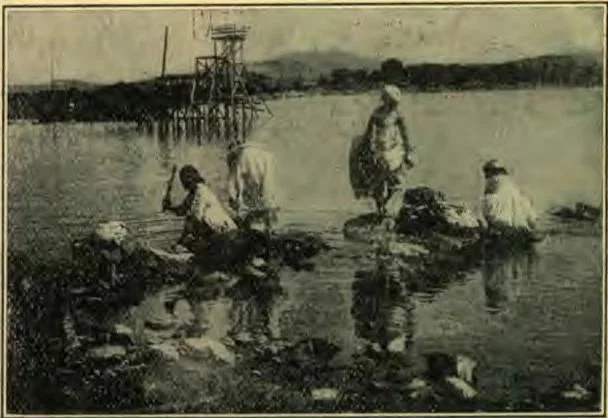
Every brookside was lined with women doing their washing, which the cold months of winter forbade, for even the natives would imitate the spirit of nature and put on clean, fresh garments in springtime. The sun looked down upon the little graves on the hillsides, and spread over each a carpet of green, and then dropped over the western hills, leaving a scene of peace behind him.
Scene Four
It was a summer’s night, and the moon, almost at her full, slowly rose over the eastern hills and majestically wended her course across the heavens, flooding the watery rice fields with glory and beauty. She glanced into the small doors of the mud huts of Korea, and beheld parents and children sleeping on the floor. She saw fewer children, two or three or less in a home; the others were under the little green mounds on the hillsides. And the sad, patient moon knew a story of poverty and ignorance, of vice and false religion; but the children in the rude huts slept on. They could not realize, they could not comprehend, the mists were so thick about them.
However, hope was mingled with sadness, for as the moon told off her cycles she had seen improvements. The sunshine of the Son of God had shined into some homes and some hearts, and others would see the light.