W. W. PRESCOTT
The Bishop and His “Cavalcade”
On the third day of March, 1913, Bishop Ampuero, the Roman Catholic bishop of Puno, Peru, led a company along the road or trail connecting Puno with La Paz, Bolivia. For about twenty miles or more out from Puno this road follows the shore of the famous Lake Titicaca to the department of Plateria, where is located the headquarters of our Lake Titicaca Mission to the Aymara Indians.
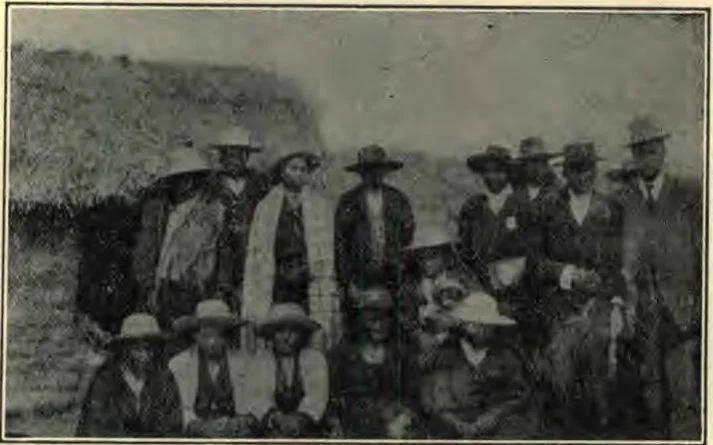
What kind of company was the bishop leading? And what was the purpose of his visit to our mission station? It might be expected that a high church official would certainly be on a peaceful errand, and that he would be accompanied by well-disposed persons. Perhaps he was planning to pay a congratulatory visit to the superintendent of this mission, Brother F. A. Stahl, and to offer to coöperate with him in the good work which he is carrying on. Not so, however. The bishop was on an entirely different errand. A Puno paper reports him as “accompanied by a band of poor devils from the town of Chucuito, in an infernal cavalcade, like a new Attila,” swooping down upon the Indians of Plateria. The homes of the Indians were forcibly entered. They looted the house of Brother Stahl. They bound eight of the Indians who had professed the Protestant religion, lodged them in the jail at Chucuito, and later they were brought to the public prison in Puno. After being held some days as common criminals, they were released through the efforts of Brother Stahl, the superintendent of our Plateria mission.
The explanation of this remarkable occurrence can be made in a few paragraphs. The constitution of Peru at that time contained this article: “The nation professes the Catholic religion, apostolic and Roman, and the state protects it, and does not permit the public exercise of any other.” The Roman Catholic bishop was taking matters into his own hands, and seeking to enforce this article of the constitution.
The provision making Roman Catholicism the exclusive religion of Peru had become a dead letter, to a large extent, as with the growth of more liberal ideas public sentiment would not sustain an enforcement of this restrictive article.
By working upon the superstition of the lower class of Peruvians, and of the Indians who still profess the Roman Catholic faith, the Bishop of Puno was able to lead a mob, ready to commit any lawless deeds in the supposed interest of the Roman Catholic Church.
The Real Nature of the Mission Work at Plateria
What was the real nature of the work which aroused this attack upon the mission at Plateria? In its issue of March 10, 1913, La Union, a paper published in Puno, contained an editorial in which the work of the mission is thus described:
“It is well known that through the benevolence of a Yankee there has been established a center of evangelistic propaganda in the department of Plateria, six miles from this capital, with such marked results that in three years of beneficent labor the Indians have been transformed into useful citizens, exempt from the vices which are such a strong characteristic of this race. The Indian who has been evangelized does not drink alcohol; does not chew coca. He is clean, is moral; he knows how to read; he has habits of order and industry; he is also sociable and charitable. There has been erected among these Indians a commodious lodging place for travelers.”
In his effort to break up the mission work at Plateria, the bishop of Puno overreached himself, and his expedition of March 3, 1913, was the first step toward such a change in the constitution of Peru as brought religious liberty to that republic. The story of this movement is an interesting one.p. 4
A Report from the “New York Christian Advocate”
Soon after the release of the Indians from the prison at Puno, our Brother Comacho, through whose agency the mission work at Plateria was started, was sent to Lima, the capital of the republic, by his Indian brethren, to give the government information concerning the persecution to which he and his associates had been subjected. His plea received attention. Public sentiment had been so far aroused by the outrageous conduct of the Roman Catholic bishop and his band of looters, that the way was prepared for decided action. The following report of the matter is taken from the New York Christian Advocate (Methodist):
“A man of ordinary intelligence should have recognized that public opinion, even in Peru, would not forgive him, though thrice a bishop, for binding men and women with a common rope, and personally forcing them to walk over miserable roads to jail for the crime (?) of being helped in times of sickness by a Protestant physician! The hue and cry which compelled their release was local. But when the papers in the case reached the civil authorities in Lima, public indignation burned to white heat. Senatorp. 5 Bezada, from the district of Puno, immediately introduced a bill in the upper house calling for the suppression of the much-debated last clause of Article IV, and the battle was on.
“Our Peruvian pastor in Lima, the Rev. Ruperto Algorta, and John Ritchie, of the Evangelical Union, both saw the brief mention which the Commercial, the chief Peru daily paper, made of this bill, and they at once sought Senator Bezada. To their amazement, they found that he appeared to have no interest in the success of this bill, being a Catholic, and having been pushed into presenting the bill by his Puno constituents , who were up in arms over the two cases mentioned and other equally exasperating experiences at the hands of their intolerant bishop. When these Protestants offered to help him, he was frightened, and begged them not to say a word—‘not one word.’”
“But they had learned the name of the chairman of the committee to which the bill had gone in regular course of congressional business, Senator Mariano Cornejo, one of the most eminent members of the Peruvian bar, and a sociologist of international repute. Within a few minutes after quitting the timorous, trimming author of the bill, they were being heartily welcomed by Senator Cornejo, and assured that he had every confidence that the bill could be put through.”
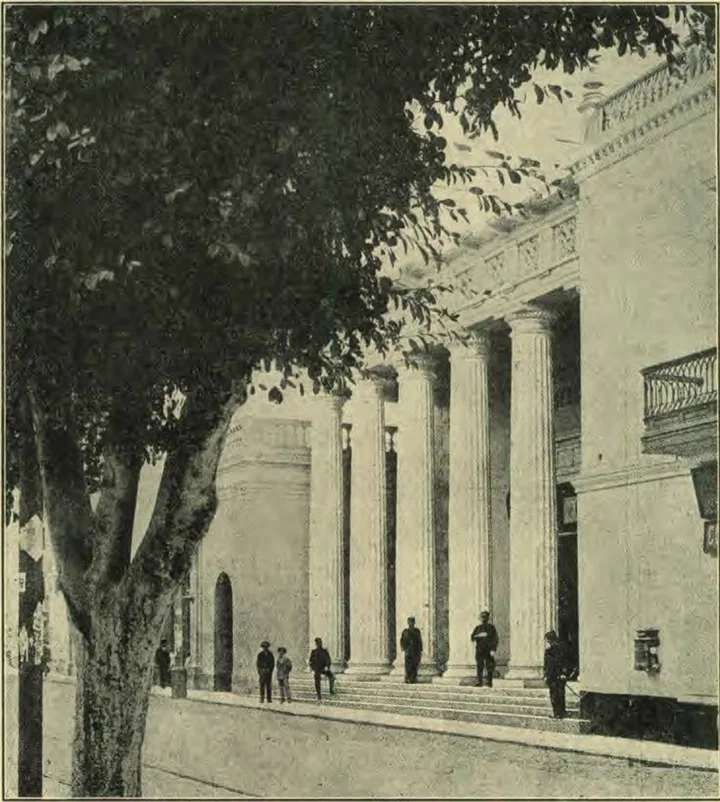
“His plan was to avoid debate and get action before opposition could do its worst. Within a day or so, he had secured the signatures of all the members of his committee, as he passed the report to each member in the senate chamber. The signed report was then placed upon the speaker’s table for consideration before the opposition knew that it had been reported. By prompt action and good parliamentary tactics, Senator Cornejo not only secured an early order of the day for his report, but what is called ‘preferential consideration.’ Though he is one of the most eloquent members of the senate, he piloted the bill through to the voting stage with the least possible debate.
“The bill passed with but three dissentient votes, two of these having been cast by the only two priests present and voting!
“So sudden and so complete a victory astonished the nation. Catholic leaders bestirred themselves to secure the defeat of the measure in the lower house,—the chamber of deputies,—and Liberals united with the missionary forces of the country to carry the fight to victory.
“During the two weeks which elapsed before securing the vote in the chamber of deputies, the Inca Press (evangelical) was not long idle, and mails were heavy with blank petitions going out and signed petitions coming to deputies urging that Peru fall into line with the modern world in granting freedom of worship to all her citizens.
“The students in the universities and colleges, together with the independent papers of Lima and Callao, used all their influence in favor of the reform.
“Roman Catholic opposition took many forms. . . .”
“At last it became evident that the bill would have enough votes in the lower house to insure its passage, and every device of Jesuitism was exhausted to prevent a quorum. The speaker of deputies was in favor of the bill, and when he saw that he had a quorum with a margin of two members, he had the measure brought up. There was no debate, and the bill passed—66 to 4. And two of the four dissentients were priests!”
When the Constitution Was Changed
In order to amend the constitution of Peru, it is necessary that the proposed change should be adopted by two successive congresses. This gave a full year for further agitation of the subject, and during that time every effort was made on the part of representatives of the Roman Catholic Church in Peru to defeat the measure granting religious liberty by striking off the last clause of the article already quoted. All this opposition, however, was in vain, and the congress of 1914 adopted the proposed amendment by a very large majority.
The public promulgation of this change was attended by a remarkable scene. This is described byp. 6 Bishop Stuntz, in the Christian Advocate of Jan. 6, 1916:
“When the leader of the reform movement, Señor Quimper, entered, he was greeted by the Roman Catholic women with shouts of ‘Renegade!’ ‘Death to the child!’ ‘Death to Quimper!’ ‘Death to the heretics!’ ‘Death to religious liberty!’ ‘Traitors!’ ‘Down with Pilate!’ ‘He’s bought by the Protestants!’ ‘Away with him!’ ‘Away with him!’”
“A few university students had slipped into the center of the crowd of Roman Catholic women, and so occasionally one heard among the shrill voices of the women the husky shouts of these men in behalf of religious freedom. The president of the deputies had hunted up an excuse to stay at home that day, so the duty of presiding fell to the vice president of the deputies, Dr. Peña Murietta. His arrival called forth a storm of protests, and amid the noise of fire-crackers he was showered with crowns of alfalfa. When the senators arrived in a body, they were greeted with ‘Traitors!’ ‘Death to the representatives!’ ‘Death to the reformers!’ ‘Death to liberty!’ and when the meeting was finally called to order, the tumult of the galleries was such that the presiding officer had to order that one of the balconies should be emptied.”
“In the meantime, the priest Sancho Diaz, the leader of the Roman Catholic forces, and a half dozen others were drinking tea and beer in the barroom adjoining, in the hope of preventing a quorum, but finally hearing Dr. Peña Murietta proceed with the business of the day, they rushed in shouting, ‘There is no quorum! There is no quorum!’ The other congressmen laughed, and said that it would have been their fault if there were not. And so it happened that the very enemies of the bill were present and helped to swell the quorum that made possible the formal announcement of the law.”
“By this time the noise in the galleries was enormous. Women prayed and yelled at the same time, firecrackers were set off, and more alfalfa crowns were hurled at Dr. Peña Murietta as he arose and with his bell in one hand (to call for order) and the official document in the other, shouted out, ‘The honorable congress being in session in order to formally announce the reform of Article IV of the constitution, I shall announce it.’ Like a tiger, Sr. Sancho Diaz sprang from his seat, ran to the table, seized the document, and tore it to pieces. Some of the congressmen tried to stop him, but were unable to do so. Dr. Peña Murietta, having ordered the offender to be detained, announced the adjournment of the day’s session. (A few moments later the priest formally apologized for tearing up the document.) And so closed one of the most extraordinary sessions of the Peruvian congress.”
This is the outline of the story of the triumph of religious liberty in Peru. While since the promulgation of this amendment to the constitution the public exercise of the Protestant religion has been legally established, it is yet true that in some parts of the republic, away from the centers of population, the same reprehensible methods have been employed by Roman Catholic priests in their efforts to interfere with freedom of worship. On one such occasion, while Brother Stahl was visiting a district at some distance from Plateria, a mob, led by two Roman Catholic priests, attacked the house where he and his helpers were staying. An effort was made to set the house on fire, but, after frightening the mob away, Brother Stahl and his associates escaped under cover of darkness.
For nearly four centuries Peru has been under the almost absolute control of representatives of the Roman Catholic Church. Their rule has been a blight upon the country, both spiritually and industrially. With every opportunity to work for the uplift of the people, they have signally failed to bring forth such fruits as might properly be expected. And when Protestant missionaries have attempted to meet the demands of the situation, they have been persecuted, and vigorous efforts have been made to blot out their work.
The character of the work carried on at our Plateria mission is well described in another paper of Peru, in these words:
“The Protestants who are working among the Aymaras in these regions do not occupy themselves with politics, but seek to teach men how to be good and to civilize them. They are not thinking of how they can combat or become heads of the government. Their mission is more holy, more noble, and more elevated.
“One cannot help but admire the consecration and energy that these missionaries in Plateria have displayed in trying to transform the Indians, who were dirty, drunkards, hypocrites, shiftless, and savage, into beings of sound judgment, temperate and industrious. We cannot do less than to send to Mr. Stahl, the head of the mission, our most sincere congratulations, and offer to him the modest columns of our periodical to be used for the benefit of this great work which they have begun, the good results of which we have had occasion to witness personally.”
The writer of this article has seen for himself the nature of the mission work done on the shores of Lake Titicaca for the benefit of the Aymara Indians. It was his privilege to meet with the mission workers and their converts in their religious services, and to speak to the Indians through interpreters. He is, therefore, able to bear personal testimony to the character of the work being carried forward by this mission. In spite of all this, however, there are enemies of this good work who are seeking to overthrow it. At the time of the writer’s visit to the mission, in 1916, charges were lodged with the government authorities for the purpose of securing, if possible, an action to interfere with the further progress of the work. One of the charges was to the effect that the leaders at this mission station were defrauding the judges and attorneys of their legitimate fees, by teaching the Indians to settle their difficulties out of court. A few testimonies of this kind ought to give the mission such a reputation as would establish it firmly in the good graces of the authorities of Peru.
Those who are familiar with the whole history of this successful effort to secure religious liberty in Peru are free to give credit to the experiences in connection with this mission station for starting this movement which ended so auspiciously.