GREAT JAPAN

11%

Review and Herald Publishing Company · Battle Creek, Mich. · Mar 21, 1901

FromThe Youth’s Instructor, Vol. 49, No. 12.

Read the full edition

GREAT JAPAN

THAT is what the Japanese call their beautiful little island empire. There are many things to indicate that it deserves the adjective.
Many thousands of islands are in the Japanese group, but only five or six are of much importance. Taking them altogether,—these important ones,—they are not larger than the State of California. But forty-two millions of persons live in them.
There are many interesting things for the children to learn concerning Japan. About fifty years after Columbus discovered America, Jesuit priests brought an imperfect Christianity to Japan, and labored zealously to win the people to believe it. They were very successful. Japanese historians tell us that they had a million converts. But the Dutch and Portuguese traders became jealous of their success, and circulated untrue stories about them, saying they had come hoping to win many Japanese to this new religion. By and by, when all looked favorable, military force would come from the land of the priests, and they would win victories over the Japanese, and rule their country. So the leading statesmen in Japan said: “No; we will not allow this to occur. We will expel all these foreign barbarians, and kill the Japanese Christians if they will not recant: thus we will put this new religion forever away from us.”
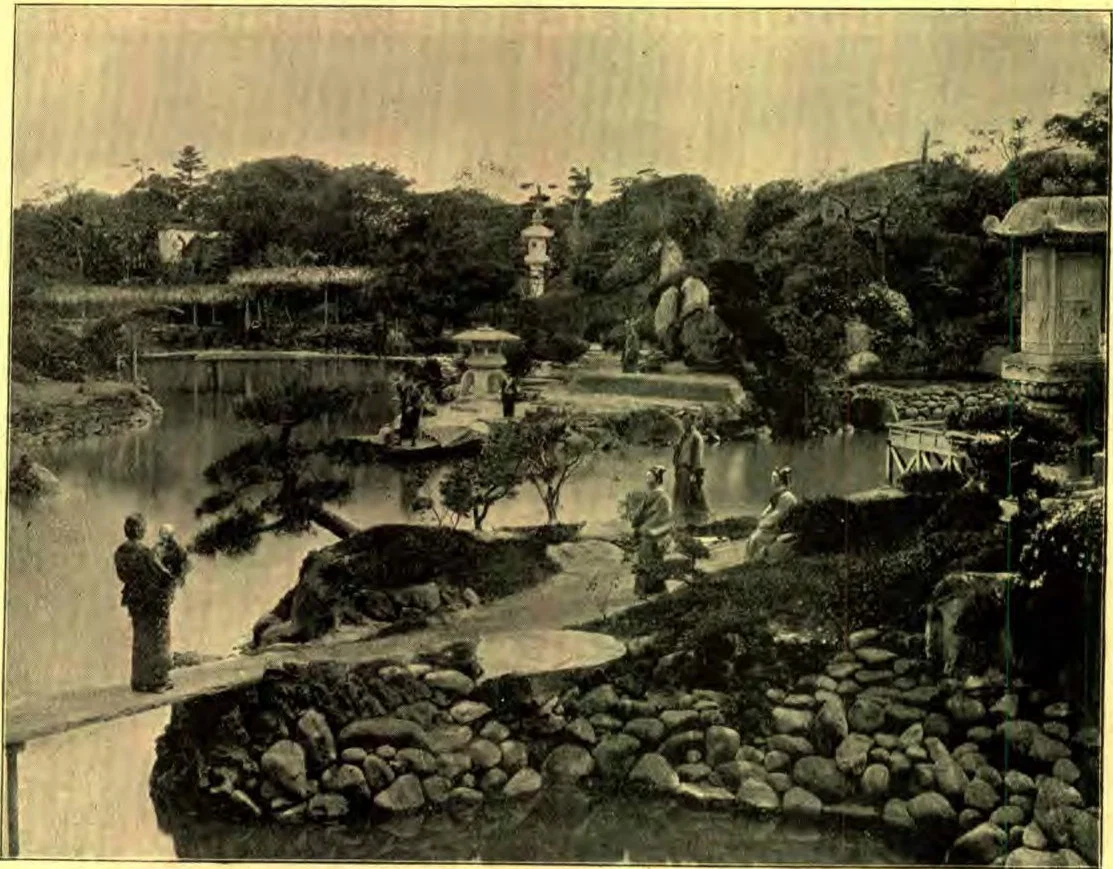
A JAPANESE GARDEN
A JAPANESE GARDEN
Then a terrible persecution was begun. Thousands of Christians suffered a dreadful death rather than deny their Saviour. History tells us that they were sewed up in great rice-sacks, heaped in piles, and burned; they were starved to death in cages, in sight of food; they were hung by their hands or feet over precipices, and tortured through lingering agonies till death came to their relief; the picture of their blessed Saviour on the cross was laid before them, and if they refused to trample on it, they were killed; they were crucified, and banished. In spite of all this fierce savagery on the part of their persecutors, some of the Christians escaped. Is it not wonderful to know that in 1868, in southern Japan, there was found a church of three thousand members, who had kept their faith in face of such frightful obstacles?
Could you and I suffer for Jesus as they did? Let us live for Him faithfully day by day, and rest assured that if the time ever comes when we must die for him, we shall have “dying grace” given us. Even as late as 1872, men, women, and children were exiled, and condemned to hard labor in coal-mines, because they would not deny Jesus. Some of them died in exile. And before that, in 1829, seven Japanese were crucified because of their faith in the dear Redeemer.
Many were the seeds that sprang up from this early sowing and persevering watering. And God gave a wonderful increase later.
LAURA DE LANY GARST.