W. W. RUBLE
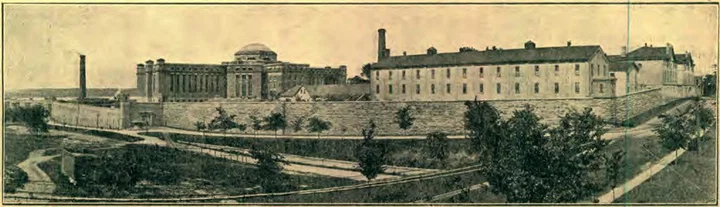
The great iron-barred door closed with a clang. The tumblers in the large padlock slid smoothly into place with a positive click, click, and we were surrounded by high stone walls and were facing the mammoth eight-winged building, the Federal prison, Leavenworth, Kansas. A guard escorted us to the adjutant’s office, where we asked permission to see some Seventh-day Adventist soldiers who were confined in the prison.
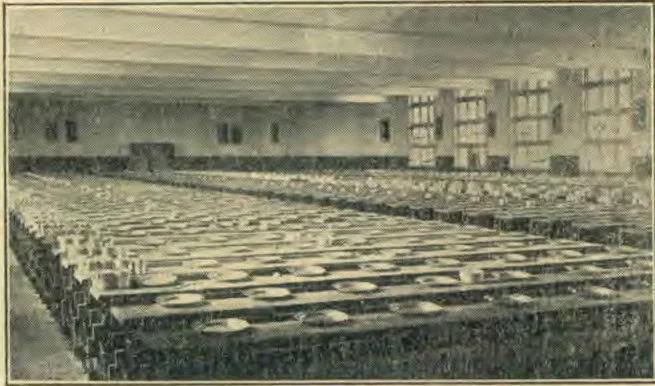
The officers in charge were courteous, and seemed pleased to do anything possible to make our visit pleasant and profitable. One of the officers in charge personally conducted us about the grounds and through the buildings. He showed us through the modern, sanitary kitchen, the bakery, and the great dining hall with a seating capacity of fifteen hundred. He took us to the assembly hall, where meetings are held every Sunday and where amusements are provided for the men during the week. We visited the printing office, where the excellent monthly magazine, Stray Shots, written and edited by men confined there, is printed. After passing through the different wings where are rows of cells, tier upon tier, six stories high, he showed us through the wing where the solitary confinement cells are located.
Though these cells are in what is known as the sub-basement, two floors below the main floor, the corridors extending around the outside of the cells are well lighted and are heated by steam. The sun can shine into the corridors on either side of the wing, making even this part of the prison sanitary and as comfortable as consistent with its purpose.
The dark cells are small, and each has two doors; one a barred door, the other a solid door with a small grating at the top and bottom which, when closed, admits some light and air into the so-called dark cell where men are placed in solitary confinement. While here they are provided with plenty of good bread and water. In these dark cells, with blankets on the cement floor for a bed, and on rations of bread and water, some Seventh-day Adventists were confined for fourteen days. Ten days, for ten hours each day, they were handcuffed to the barred doors of the cells, unable to sit down or to move to any extent.p. 4
These men, twelve in number, were sent here on the charge of disobeying military orders. While it is true the order was to do regular service on the Sabbath, the officers at Leavenworth did not know this, and could not know that these men were different from others, so they dealt with them on the basis of the charge until they became acquainted with their characters by personal contact.
The officer said that if he and his fellow officers had known these men when they came and had been acquainted with their belief, this would not have happened. He said, “Every one of these men is a Christian and never makes any trouble. We permit them to rest on Saturday and work other days to make up time, and everything is moving smoothly. Seventh-day Adventist boys who come to us now from the army do not have to go through this ordeal. We find them all exemplary young men.”
The officer then took us to a large room where we were permitted to visit with our boys for several hours. Let one of them tell the story of his experience as he related it to us.
“I became a Christian while serving in the regular army at Vancouver, Washington, under the preaching of Elder P. C. Hayward, of Portland, Oregon. Soon after accepting the truth, our troops moved to the Mexico border, and I was not baptized until the following year. I was allowed to keep the Sabbath, and was shown every consideration by my officers until I was transferred to the field artillery. The colonel of this regiment refused to allow me the Sabbath, and I applied for a transfer to the medical department. Before the transfer came, I was placed under arrest for refusing to obey military orders, which were to do regular work on the Sabbath.
“I was arraigned and tried in Camp Upton, New York, while on my way to France, and was given a sentence of five years’ hard labor, to be served in the station of my company. Up to this time I had never been even placed under arrest. ‘If ye be reproached for the name of Christ, happy are ye; on their part he is evil spoken of, but on your part he is glorified.’
“At Camp Upton I was placed in the guardhouse, but here I found many precious souls hungry for truth, and improved my opportunity to help them.
“I was taken to England on an old English passenger boat in company with thirteen others, and made the trip in sixteen days. We went immediately to Winchester, where I was given my freedom for three days to see the old relics. I was then placed in confinement on short rations and slept on a stone floor. All England seemed to be on short rations. The children were constantly begging us for food.
“We soon entrained for South Hampton, and from there were placed on an old side-wheeler, the ‘Margarette,’ where we were packed in with scarcely standing room, and to add to our discomfort we were soaked with rain and spray. In the morning we landed at the old historic port of Havre, France. Here we were given hard-tack and coffee. As I do not drink coffee I ate my hard bread, and was thankful for that after thirty-six hours of fasting. I was allowed two days’ freedom before being again placed in confinement. Here again I found two men who were seeking the way of life, and who gladly accepted the truth for this time. After three weeks’ stay in Valdohon we were sent to the front, and I received word that I was transferred to the medical department. I was soon placed in charge of the medical work with Battery B, where many opportunities were offered me to testify to the love of Jesus.
“Very soon after this I was called back to Leavenworth, by whom I do not know. On the return trip I was taken to Brest, France, where I was placed in solitary confinement in an old Napoleon prison. The cells were about fifty feet long and about four and one-half feet wide. One window, six by twenty-four inches, at the end furnished all the light. The bed was of solid iron, and the springs heavy oak planks. After ten days of this, I was placed in a similar cell with nine other prisoners; but this was better, for we could sing and pray together.
“Soon we were taken to Leavenworth, and were kindly received by the guards and those in authority. We have received good treatment here. In fact, we have received the best treatment here that we ever received at any place where I have been confined. The officers are men, and recognize that they are dealing with men, and are very considerate. Every Sabbath morning we are permitted to meet at 9:30 for Sabbath school and meeting. We greatly enjoy this, and are grateful to our officers for this privilege. My courage in the Lord is good, and I am learning better each day that ‘all things work together for good to them that love God.’”
When we think of the thousands of Seventh-day Adventist boys who have been connected with the army during this past war, it is remarkable that so few have had serious difficulty in living up to their faith. It certainly speaks well for the men of authority in the Government, and the officers of our army, and shows them to be broad-minded, just, and honorable men; men whose hearts throb with the principles of liberty and justice; men who believe that every man has a right in this great country of ours to worship God according to the dictates of his own conscience. Truly, we are living in the “land of the free and the home of the brave,” and our hearts should respond to the spirit of patriotism and liberty that has been born into this land with a new and fuller meaning.