Barton R. Pogue
The following article by Mr. Pogue, of Taylor University, Indiana, won first prize, seventy-five dollars, at the intercollegiate oratorical contest given under the auspices of the Intercollegiate Prohibition Association in connection with the Anti-Saloon League Convention at Washington, D. C., Dec. 12-17, 1917.
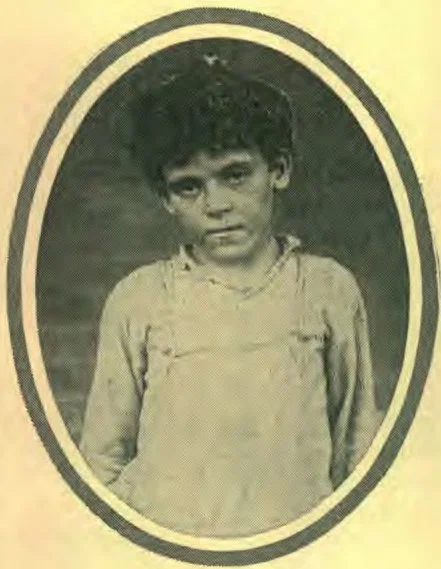
In an epoch of moral advancement we have witnessed the reconstruction of American thought and purpose. Within a single generation we have seen humanity lifted on a mighty wave of righteousness and reform; and in this hour of the world's supreme sacrifice many new forces have caught the spirit of redemption for the human race. But in the stress of this world struggle we must not forget that in some issues the rule of America is still the rule of Gold.
This fact is undeniably substantiated by the ruthless sacrifice which Corporate Greed is making of the nation's lifeblood, our “Golden Boys and Girls.” Into the grist hopper of our seething industry, into the roar of factory, the rattle of coal breaker, whir of cotton mill, and tumult of city streets, monopoly has drawn this precious seed wheat of the next generation. Two millions of tomorrow's citizens, fathers and mothers to be, move daily at the command of this Pharaoh of finance who compels them to make bricks without straw. Is not this slavery? And can we expect that a practice which engenders illiteracy and industrial inefficiency, which breeds disease and low standards of living, which minimizes wage, creates long hours, mothers crime, blasts hope, and destroys souls, shall add to our assets as a nation of prosperity and plenty? Thoughtless America has made a gigantic loan of her priceless boys and girls; and the society of tomorrow must compute the compound interest of illiteracy, ill health, and degeneracy which will come to her across the money-worn counters of industry.
This picture of the future has powerfully stirred the reformers of our age. Our citizens have discovered the crimson in their cotton; they have awakened to the fact that hosts of precious souls are becoming little slaves of the lamp and loom. Agitation has followed this vision; and on the first day of September, nineteen hundred sixteen, our Congressmen, animated by the demands of a national conscience, enacted a stringent child-labor law, which reformers said would be of unending benefit to the child life of America.
At the Factory Wheel
Consider, however, the effect of such a law. Children are not born into the world to take upon themselves the burdens of toil so early in life. The natural impulse of child life is to play, not work. Why then, when employers pay such a ridiculously low wage, do our young boys leave the playgroundp. 2 of youth for the dangers and evil companionship of the street and the factory? Why do girls with the instinct of motherhood in their hearts leave their blue-eyed dolls to toil amid the flying lint and whirring wheels of the cotton mills? Do the shop, the factory, the glass-house, and the coal breakers furnish more attraction than the home, the school, and the playground? Human nature answers, No. The child of tender years does not love the mill better than pleasure and education; but an unseen force, a power irresistible, goads these trembling, weak-kneed, pinched, and white-faced children into the grinding mills of industry. What is this force, we ask? Judge Ben Lindsey, Owen R. Lovejoy, and a score of other leading social workers unite in assigning involuntary poverty as the fundamental cause of this evil.
But if poverty is the cause of child labor, what are the causes of poverty? Ralph H. Crowley, visiting physician to the Bradford Union Hospital of England, shows by his investigations that pauperism is due to a number of causes, among which are old age, inability to find work, the destitution of women, and immorality. In each instance the figures when added together account for 49.5 per cent of England's poverty. When we look about for the other 50 per cent we have not far to seek. Outtrebling any one of these causes, totaling more than all of them together, is a cause which is so destructive that Lloyd-George placed it on a plane of equality with the strategy, strength, and destructiveness of Europe's central powers. That cause is drink; and to drink, England ascribes 50.5 per cent of her poverty, the alleviation of which requires the enormous sum of $60,000,000 a year.
Rum's Talon-like Fingers Crush Homes
Nor does the verdict of America differ from this European pronouncement. A straw vote of nearly twenty thousand destitute men, taken by a charity organization on the streets of New York City, shows that 60 per cent of these fellows ascribe their poverty to intemperance. The Committee of Fifty in its report for 1889 declares that as a nation our rate of poverty, due to drink, runs from 30 to 60 per cent, and that 45 per cent of all child burdens are traceable to intemperance. Owen R. Lovejoy, of the National Child-labor Committee, speaks more emphatically, declaring that 50 per cent of the child labor in America is due to drink.
It is the power of rum, then, with its bony hand and talon-like fingers, that reaches down into thousands of homes, takes the last morsel of food from the family board, extinguishes the fire on the hearth, denudes the babes of comfortable clothing, and leaves want, sickness, and despair in its wake. It is rum more than any other force that has made the home a place of squalor, cursing, and low morals. It is the rum-produced phantom of penury which has struck terror into the very soul of sinking humanity and has sent the tiny representatives of the home scurrying away like frightened sheep to find a shelter in the rattle and roar of industry, to die of toil rather than suffer the pangs of starvation.
With these facts before us we are forced to admit that child labor is not a separate evil, not a cause but an effect; and that to correct the wrong we must not legislate against the child, the victim of the evil, but against its principal cause—the licensed liquor traffic.
What, then, can we say of the child-labor legislation of 1916? This, and this only: that we as a nation, although moved by humanitarian impulses for the relief of our boys and girls, have virtually said to these little toilers: “You shall not work. Get yourselves back to the suffering and shame of your tenement houses, where your fathers are steeped in rum, and where drunken brawls are the rule, and woe is your daily bread.” Instead of gaining the small amount of comfort they have hitherto had, these children must now go forth to the worst of want, to end their days in the streets, in gambling joints, bawdy houses, and brothels. We have tried to remedy an effect; but the legalized outlaw of sin and desperation continues to force from the lips of a million little wanderers a wail of blasted hopes and undying despair. The cry of the children of today is: “When you raised the mailed fist of law to smite the foe of childhood, you struck a blow at innocence in its misery; but to the cause of the misery, the curse of rum, you continue to make a profound bow.”
America Chains the Lamb but Frees the Lion
Could any worse accusation be brought against the people of America than this? You have chained the lamb, but the roaring lion of vice and crime you have let loose upon the citizens of our land. Patriots of America, lovers of native land and of justice, shall we not band ourselves together, and under God make a solemn vow, never again to take a hand in legislation which militates against the innocent and lets the guilty go free? Rather let us thunder at senate doors and cry aloud in public forum and demand the submission and ratification of the amendment to the Federal Constitution, which shall vanquish rum, the destroyer that out-Herods Herod, and signal for true child liberty all over this just land of ours.
Would we take such an oath and toil as those who have no hope?—Not if the gathering thunderclouds of liquor reform have any significance. For under the shadow of a stupendous world-conflict the thought-life of America has been strangely solemnized, and today we are joining with others in an international agreement that sobriety, like all righteousness, exalteth a nation. In the white light of suffering, struggle, and turmoil we are beginning to understand how prohibition will not only conserve our food supply, our man and brain power, but will make it possible for a sober America to vindicate the cause of world democracy, and lead the nations in paths of righteousness and peace. This vision of duty and opportunity has gripped the soul of our countrymen, and today from North, South, East, and West reverberates the tramp, tramp, tramp of temperance armies, State by State wheeling into rank and gathering on parade; while far away, yet clear and strong, a bugle blows a call to charge,—a charge which shall vanquish this modern Herod of the nations, rehabilitate the home, give the school its full quota of laughing children, and save a nation from disgrace. For on that day we shall have won the fight for prohibition, child freedom, and right living in America.