(February 9)
LESSON SCRIPTURE: Gen. 8; 9: 1-19.
MEMORY VERSE: “I do set my bow in the cloud, and it shall be for a token of a covenant between me and the earth.” Gen. 9: 13.
STUDY HELPS: “Patriarchs and Prophets,” pp. 105-110; “Bible Lessons,” McKibbin, Book One, pp. 53-59.
“If all were rain and never sun, No bow could span the hill; If all were sun and never rain, There’d be no rainbow still.”
Questions
1. In the experience of Noah what evidence is given us that the Lord does not forget those who trust and obey him? Gen. 8: 1. Note 1.
2. How did God cause the waters to abate? Verses 1-3.
3. Where did the ark find a quiet resting place? As the waters decreased, what were seen? Verses 4, 5.
4. What efforts did Noah make forty days later to find out if the earth was dry? Verses 6-12.
5. When the earth was dry, what did God say to Noah? Verses 13-16.
6. What effect did the flood have upon the earth? Note 2.
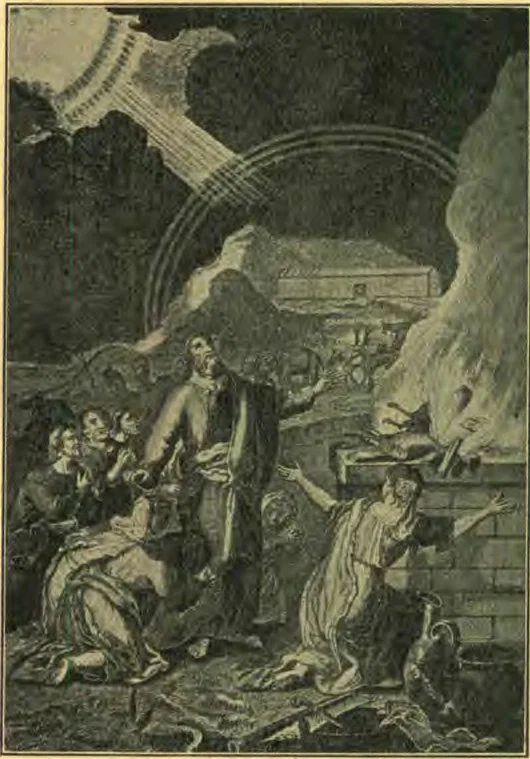
7. When Noah left the ark, what did he at once do? Verse 20. Note 3.
8. What did the Lord say in his heart? What will continue as long as the earth remains? Verses 21, 22.
9. After this what did God say to Noah? What were men not permitted to eat? Gen. 9: 1-3.
10. What covenant did the Lord make with Noah? Verses 8-11.
11. What was given as the sign of this covenant or promise? Verses 12-16.
12. What did John see in heaven? Rev. 4: 2, 3. Note 4.
Problems
How long was Noah in the ark? See Gen. 7: 9-11; 8: 13-16. What causes earthquakes and volcanoes? See “Patriarchs and Prophets,” page 108.
What makes a rainbow? What colors compose it?
Notes
1. It often seemed to the family within the ark that they must perish, as for five long months their boat was tossed about, apparently at the mercy of wind and wave. It was a trying ordeal; but Noah’s faith did not waver, for he had the assurance that the divine hand was upon the helm.”—“Patriarchs and Prophets,” p. 105.
2. “The entire surface of the earth was changed at the flood. . . . The mountains, once so beautiful in their perfect symmetry, had become broken and irregular. Stones, ledges, and ragged rocks were now scattered upon the surface of the earth. In many places, hills and mountains had disappeared, leaving no trace where they once stood; and plains had given place to mountain ranges. . . . At this time immense forests were buried. These have since been changed to coal, forming the extensive coal beds that now exist, and also yielding large quantities of oil. The coal and oil frequently ignite and burn beneath the surface of the earth. Thus rocks are heated, limestone is burned, and iron ore melted. The action of the water upon the lime adds fury to the intense heat, and causes earthquakes, volcanoes, and fiery issues. As the fire and water come in contact with ledges of rock and ore, there are heavy explosions, . . . volcanic eruptions follow; and these often failing to give sufficient vent to the heated elements, the earth itself is convulsed, the ground heaves and swells like the waves of the sea, great fissures appear, and sometimes cities, villages, and burning mountains are swallowed up.”—Id., pp. 107-109.
3. “Noah had come forth upon a desolate earth; but before preparing a house for himself, he built an altar to God. His stock of cattle was small, and had been preserved at great expense; yet he cheerfully gave a part to the Lord, as an acknowledgment that all was his. In like manner it should be our first care to render our freewill offerings to God.”—Id., p. 106.
4. “In heaven the semblance of a rainbow encircles the throne, and overarches the head of Christ. . . . When man by his great wickedness invites the divine judgments, the Saviour, interceding with the Father in his behalf, points to the bow in the clouds, to the rainbow around the throne and above his own head, as a token of the mercy of God toward the repentant sinner.”—Id., p. 107.